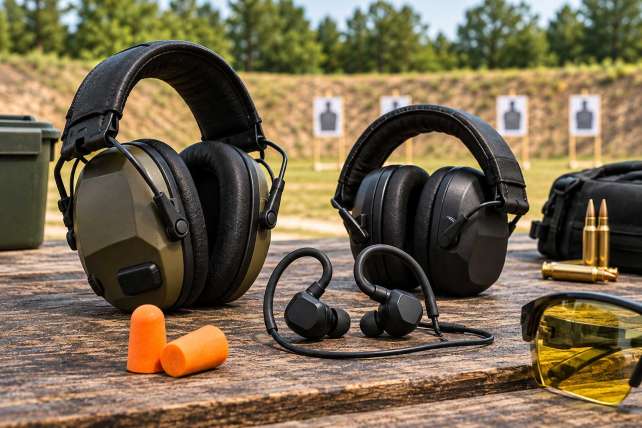
Hearing protection is essential for anyone who spends time at the shooting range. Gunfire can cause permanent hearing damage, making it important to choose equipment that provides reliable noise reduction, a comfortable fit, and the right features for your shooting environment.
This guide covers everything you need to know about hearing protection for shooting, including electronic earmuffs, earplugs, noise reduction ratings, fit, and the features worth considering before you buy.
Best Hearing Protection for Shooting: Where to Start
Not all hearing protection offers the same level of noise reduction, comfort, or convenience. The best option depends on whether you shoot indoors or outdoors, the firearms you use, and whether you prefer electronic earmuffs or in-ear protection.
If you’re ready to compare options, start with our guide to the best hearing protection for shooting. It compares seven options across different budgets, including electronic earmuffs, shooting earbuds, and affordable foam earplugs.
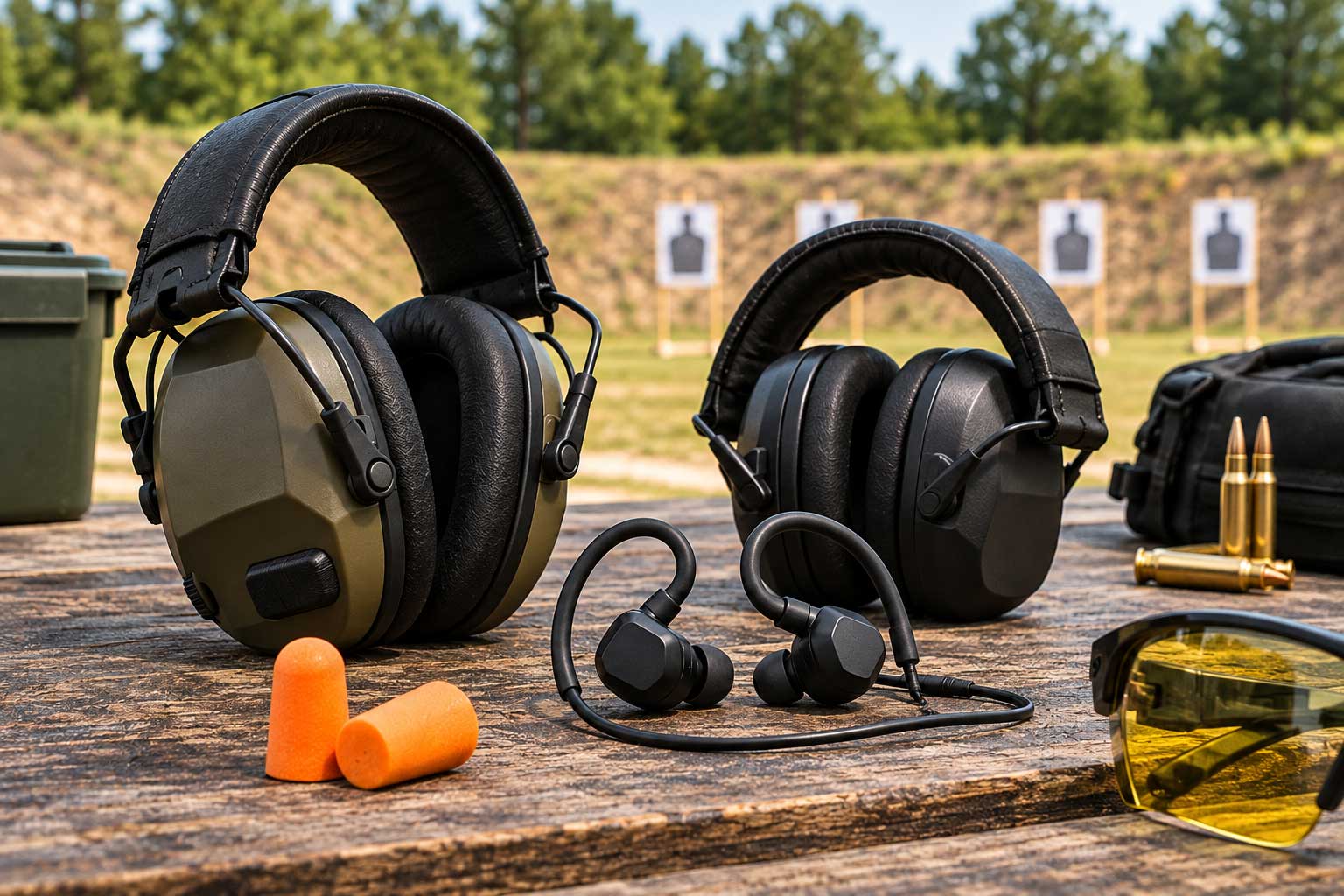
Best Hearing Protection for Shooting (2026): Top Picks for Every Budget
What Is Hearing Protection?
Hearing protection refers to equipment designed to reduce the amount of harmful noise reaching your ears. For shooting activities, the most common options are over-ear earmuffs, disposable foam earplugs, reusable earplugs, and electronic hearing protection.
Firearms produce extremely loud impulse noise that can damage sensitive structures inside the ear. Unlike some other types of noise exposure, a single unprotected gunshot may be enough to cause permanent hearing damage.
Proper hearing protection helps reduce this exposure, but its effectiveness depends on the product’s noise reduction capabilities, fit, and how consistently it’s worn.
Types of Hearing Protection for Shooting
Hearing protection comes in several designs, each offering different advantages depending on your shooting environment, comfort preferences, and budget.
Electronic Earmuffs
Electronic earmuffs combine traditional over-ear noise protection with microphones that allow you to hear quieter sounds, such as conversations and range commands.
When loud sounds occur, the electronic system limits amplified audio while the earmuff cups continue providing passive noise reduction. Electronic earmuffs are popular among recreational shooters because they make communication easier without requiring you to remove your hearing protection.
Passive Earmuffs
Passive earmuffs reduce noise using insulated ear cups and sound-absorbing materials. Unlike electronic models, they don’t require batteries or use microphones to amplify surrounding sounds.
They’re generally simple to use, dependable, and available at a wide range of prices. Some passive earmuffs also provide higher noise reduction ratings than compact electronic models.
Foam Earplugs
Foam earplugs are among the most affordable forms of hearing protection. They’re compressed before insertion and expand inside the ear canal to create a noise-reducing seal.
Properly fitted foam earplugs can provide substantial noise reduction. They’re also useful underneath earmuffs when additional protection is needed.
Reusable Earplugs
Reusable earplugs are typically made from silicone, rubber, or other flexible materials. Some feature multiple flanges, while others can be molded to better fit the shape of your ears.
They’re convenient for shooters who prefer compact hearing protection without replacing disposable earplugs after every use.
Electronic Shooting Earbuds
Electronic shooting earbuds combine in-ear noise protection with microphones and electronic sound processing. Some models also offer Bluetooth connectivity and rechargeable batteries.
Their compact design makes them appealing for rifle and shotgun shooting because they don’t interfere with a cheek weld the way bulky earmuffs sometimes can.
Understanding Noise Reduction Ratings (NRR)
One of the most important specifications to consider when choosing hearing protection is the Noise Reduction Rating, commonly abbreviated as NRR.
NRR is a standardized laboratory rating that indicates the potential noise reduction provided by hearing protection when worn correctly.
Generally, a higher NRR indicates greater potential noise reduction. However, the actual protection you receive depends on fit, proper use, and the type of noise you’re exposed to.
For example, earmuffs with a 26 dB NRR won’t necessarily reduce every gunshot by exactly 26 decibels. Real-world noise reduction can be lower than the labeled rating, particularly if the earmuffs don’t seal properly.
When comparing products, consider the NRR alongside comfort, design, and how well the hearing protection fits your ears or head.
What to Look for When Buying Hearing Protection
Choosing hearing protection involves more than finding the highest noise reduction rating or the lowest price. Several factors affect how well the equipment performs during a shooting session.
Noise Reduction
Adequate noise reduction should be your first priority. Look for hearing protection with a verified NRR appropriate for your shooting environment.
Indoor ranges, repeated gunfire, and particularly loud firearms may require additional protection beyond a single pair of earmuffs or earplugs.
Comfort and Fit
Hearing protection should fit securely without creating excessive pressure or discomfort. Earmuffs should form a consistent seal around your ears, while earplugs should fit properly inside the ear canal.
If you regularly wear shooting glasses, pay attention to how the frames interact with your earmuffs. Thick glasses temples can create gaps in the ear cushions and reduce their effectiveness.
Electronic Features
Electronic hearing protection can make range communication more convenient by amplifying quieter sounds while limiting electronic output during loud noise.
Depending on the model, additional features may include directional microphones, adjustable volume, Bluetooth connectivity, and rechargeable batteries.
Low-Profile Design
Rifle and shotgun shooters may benefit from slim earmuffs or in-ear hearing protection that doesn’t interfere with the firearm’s stock.
A bulky ear cup can shift when you establish a cheek weld, potentially breaking the seal and reducing noise protection.
Durability and Weather Resistance
If you frequently shoot outdoors, consider how well your hearing protection handles moisture, dust, temperature changes, and regular transport in a range bag.
Replaceable ear cushions, durable headbands, and weather-resistant electronics may be worth paying extra for if you use your equipment regularly.
Price and Overall Value
More expensive hearing protection doesn’t automatically provide better noise reduction. Premium models often cost more because of improved electronics, comfort, materials, or additional features.
For occasional shooters, affordable electronic earmuffs or properly fitted passive protection may provide better overall value than premium equipment with features they rarely use.
Hearing Protection for Indoor vs. Outdoor Shooting
Your shooting environment plays an important role in choosing the right hearing protection.
Indoor Shooting Ranges
Indoor ranges can be especially loud because gunfire reflects off walls, ceilings, and other hard surfaces. Multiple shooters firing nearby can increase your exposure to hazardous noise.
Wearing properly fitted foam earplugs underneath well-sealed earmuffs is a sensible approach for indoor shooting. Electronic earmuffs can help preserve some awareness of range commands, although earplugs will also reduce the volume of those sounds.
Outdoor Shooting Ranges
Outdoor ranges generally have fewer sound reflections, but gunfire can still cause permanent hearing damage.
Electronic earmuffs, passive earmuffs, and properly rated earplugs can all be useful outdoors. The best choice depends on firearm noise, shooting frequency, fit, and personal comfort.
Hunting and Field Use
Hunters often prioritize lightweight equipment, environmental awareness, and compatibility with rifle or shotgun stocks.
Low-profile electronic earmuffs and in-ear electronic hearing protection can be convenient choices, provided they offer suitable noise reduction and fit securely.
Should You Wear Earplugs and Earmuffs Together?
Wearing earplugs underneath earmuffs is commonly called doubling up. This approach provides additional noise reduction and is especially useful in loud shooting environments.
Doubling up is worth considering at indoor ranges, around firearms with muzzle brakes, and during extended shooting sessions.
However, noise reduction ratings aren’t additive. Wearing 29 dB earplugs with 26 dB earmuffs doesn’t provide a combined 55 dB NRR.
Proper fit remains essential. Earplugs must be inserted correctly, and earmuffs must maintain a complete seal around the ears.
Hearing Protection FAQs
What is the best hearing protection for shooting?
The best hearing protection depends on your shooting environment, comfort preferences, and budget. Electronic earmuffs are popular because they allow you to hear conversations and range commands, while properly fitted foam earplugs provide an inexpensive option with substantial noise reduction.
Are electronic earmuffs better than regular earmuffs?
Not necessarily. Electronic earmuffs offer the convenience of hearing quieter sounds through microphones and speakers, but they don’t automatically provide greater noise reduction than passive earmuffs. Compare tested NRR values and fit rather than electronic features alone.
What NRR is best for shooting?
There isn’t one NRR that guarantees adequate protection for every shooting environment. Higher ratings generally indicate greater potential noise reduction, but fit and real-world conditions matter. For indoor ranges and particularly loud firearms, doubling up with earplugs and earmuffs is advisable.
Can you use regular earbuds for shooting?
Ordinary music earbuds and consumer noise-canceling headphones shouldn’t be treated as hearing protection for gunfire unless they’re specifically designed and tested for hazardous noise exposure.
Are earplugs or earmuffs better for shooting?
Both can provide effective protection when properly fitted. Earplugs are compact and often inexpensive, while earmuffs are convenient to put on and remove. Electronic earmuffs also make communication easier. For particularly loud environments, combining both types is often the better approach.
Can shooting cause permanent hearing loss?
Yes. A single unprotected gunshot can cause permanent hearing damage. Repeated exposure can increase the risk of hearing loss and tinnitus, making consistent use of properly fitted hearing protection essential.
Is expensive hearing protection worth it?
Premium hearing protection may offer better comfort, clearer environmental audio, improved durability, and additional electronic features. However, expensive models don’t necessarily provide more noise reduction than affordable alternatives.
Explore More Hearing Protection Guides
Looking for more information? Browse our hearing protection articles below for buying recommendations, comparisons, noise reduction explanations, and practical advice to help you choose the right protection for your shooting needs.