
Firearms

Firearms

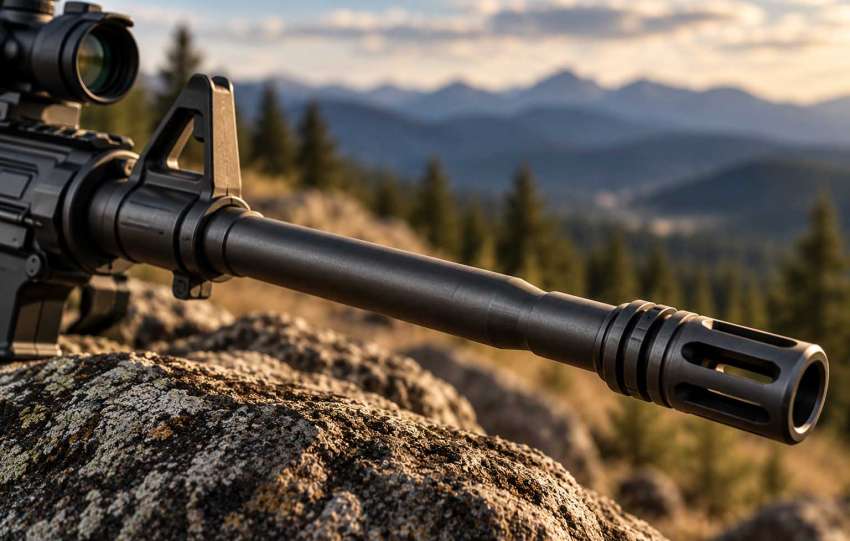
Close-up of an exposed AR-15 barrel with front sight and muzzle device against a mountain landscape.

What Is an AR-15 Barrel? Parts, Types & How It Works

An AR-15 barrel is the metal tube that guides a bullet as it travels through the rifle and exits the muzzle. It is one of the most important components of the AR-15 platform, influencing bullet velocity, accuracy, handling, and overall firearm performance. Although an AR-15 barrel may appear to be a simple piece of steel,…
Read more

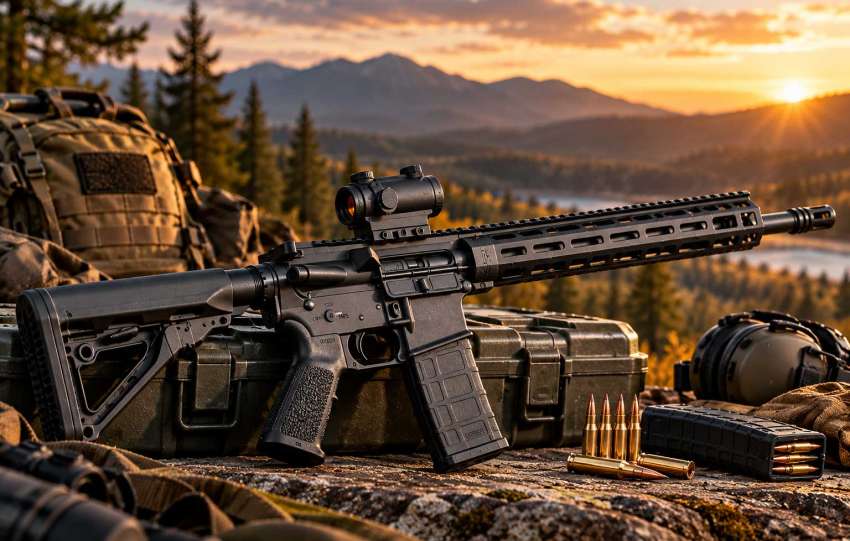
Black AR-15 rifle with red dot optic resting on a rifle case at an outdoor shooting range during sunset

What Is an AR-15?

The AR-15 is one of the most recognizable rifles in the United States, yet its name, operation, and history are frequently misunderstood. Some people associate it with military firearms, while others know it primarily as a sporting rifle used for target shooting, competition, hunting, or collecting. So, what is an AR-15? An AR-15 is a…

Read more

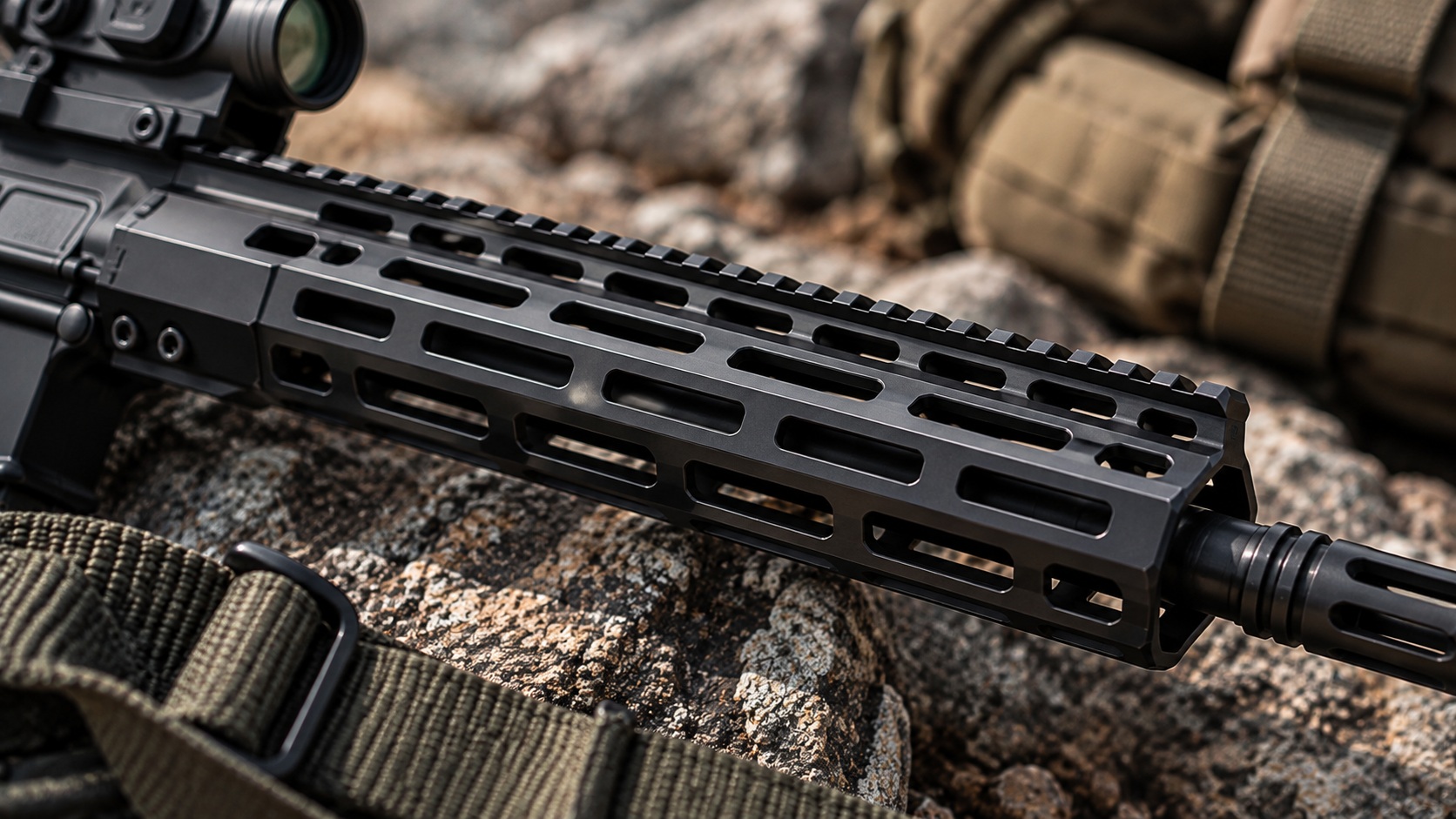
AR-15 free-float handguard with M-LOK slots and top Picatinny rail

What Is an AR-15 Handguard? Handguards & Rail Systems Explained

An AR-15 handguard is the part that surrounds the barrel and gives you a safe, practical place to support and control the rifle without grabbing a hot barrel. On modern AR-15s, the handguard also commonly provides mounting points for accessories. It’s one of the largest components on the rifle, and it has a bigger effect…

Read more

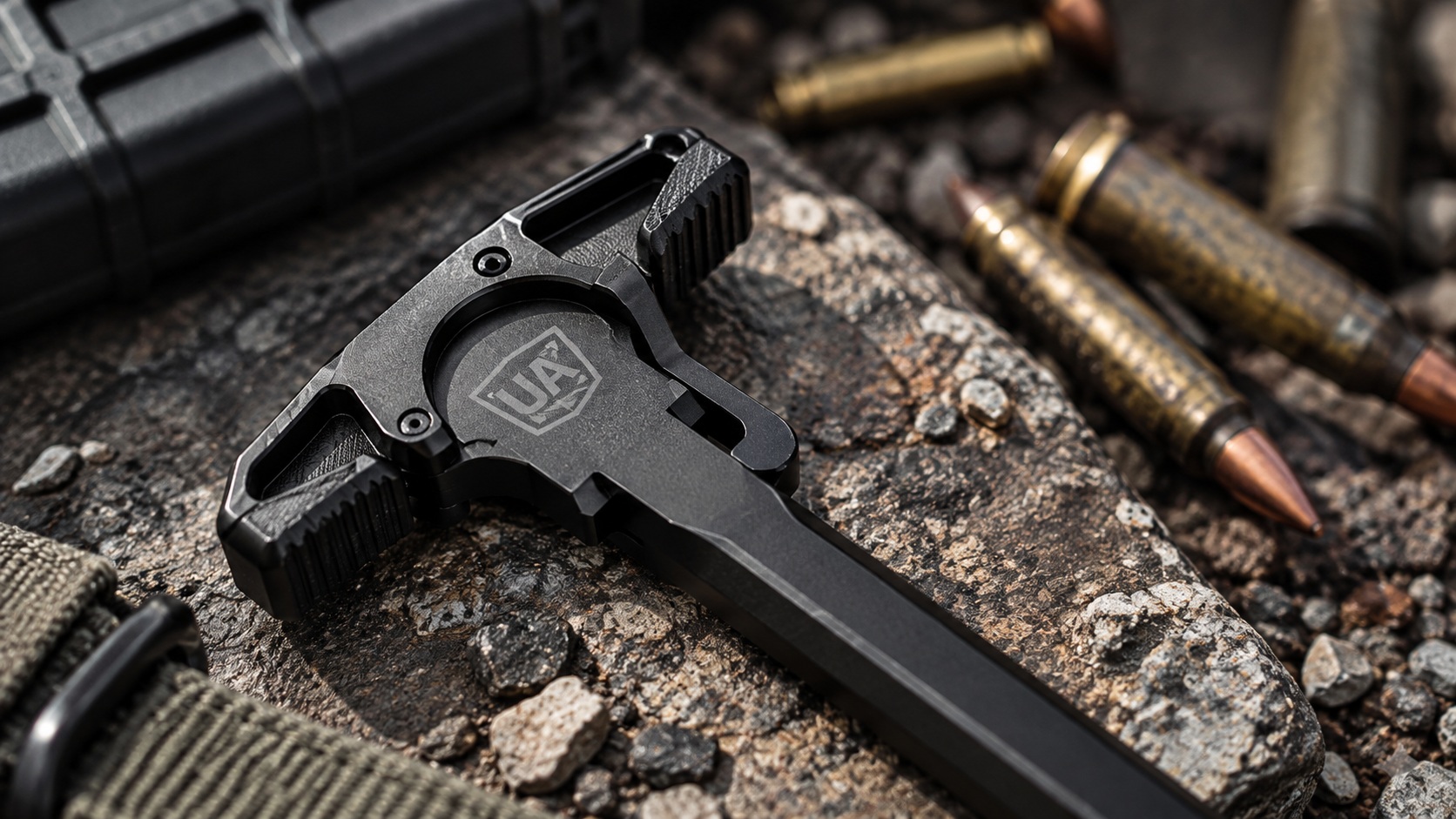
AR-15 ambidextrous charging handle

What Is a Charging Handle? How an AR-15 Charging Handle Works

The charging handle is the manually operated control used to pull an AR-15's bolt carrier group to the rear. It allows the shooter to manually cycle the action when loading the rifle, clearing the chamber, or checking its condition. It looks simple because it is simple. But the charging handle is one of the first…

Read more

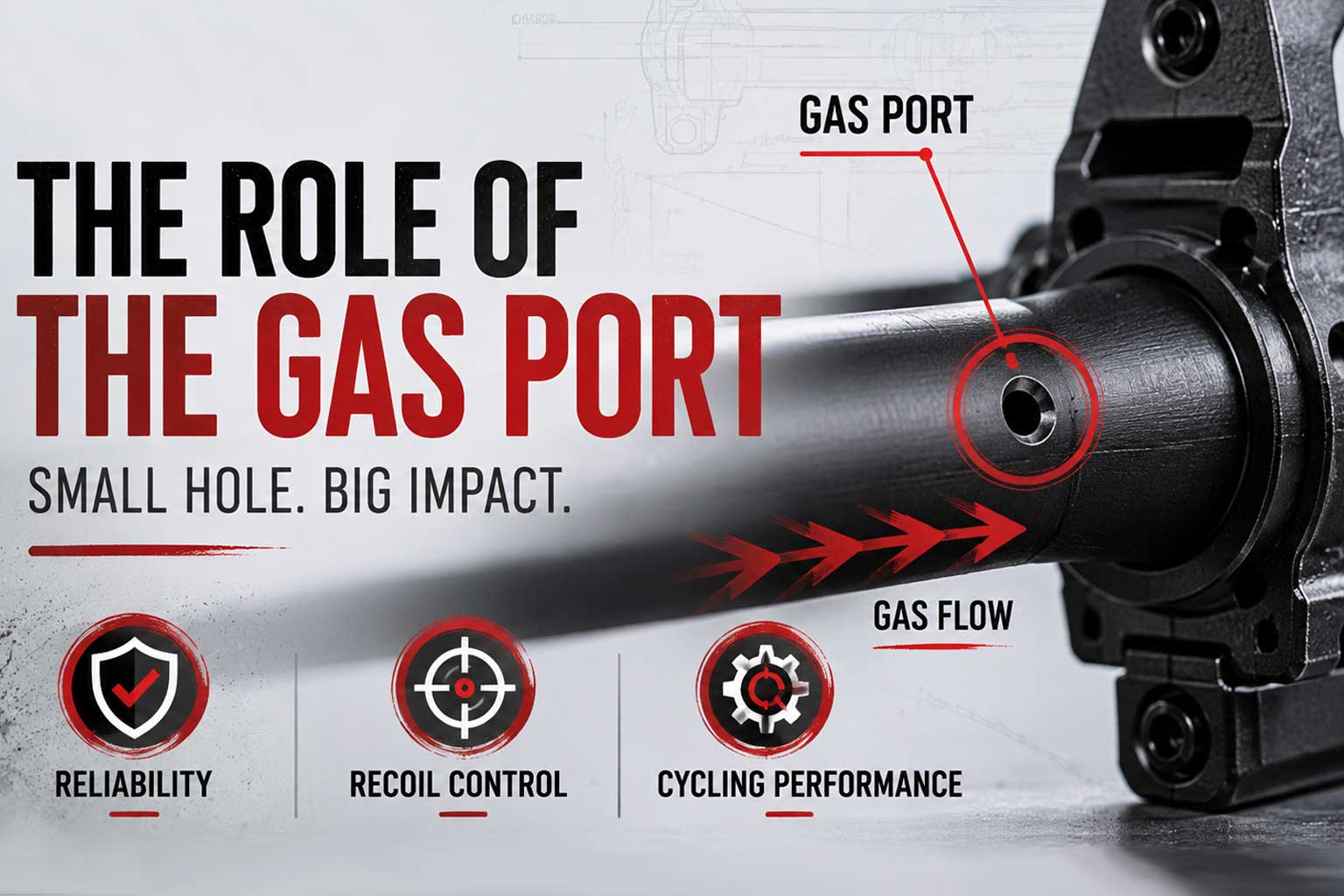
Close-up of a rifle barrel showing a highlighted gas port with directional gas flow arrows.

AR-15 Gas Port Size Explained: Reliability, Recoil, and Cycling

An AR-15’s gas port is a small hole drilled into the barrel, but its influence over rifle behavior is much larger than its size suggests. Gas port sizing affects how aggressively the rifle cycles, how much recoil impulse the shooter feels, how reliably the bolt carrier moves under different conditions, and how forgiving the system…

Read more

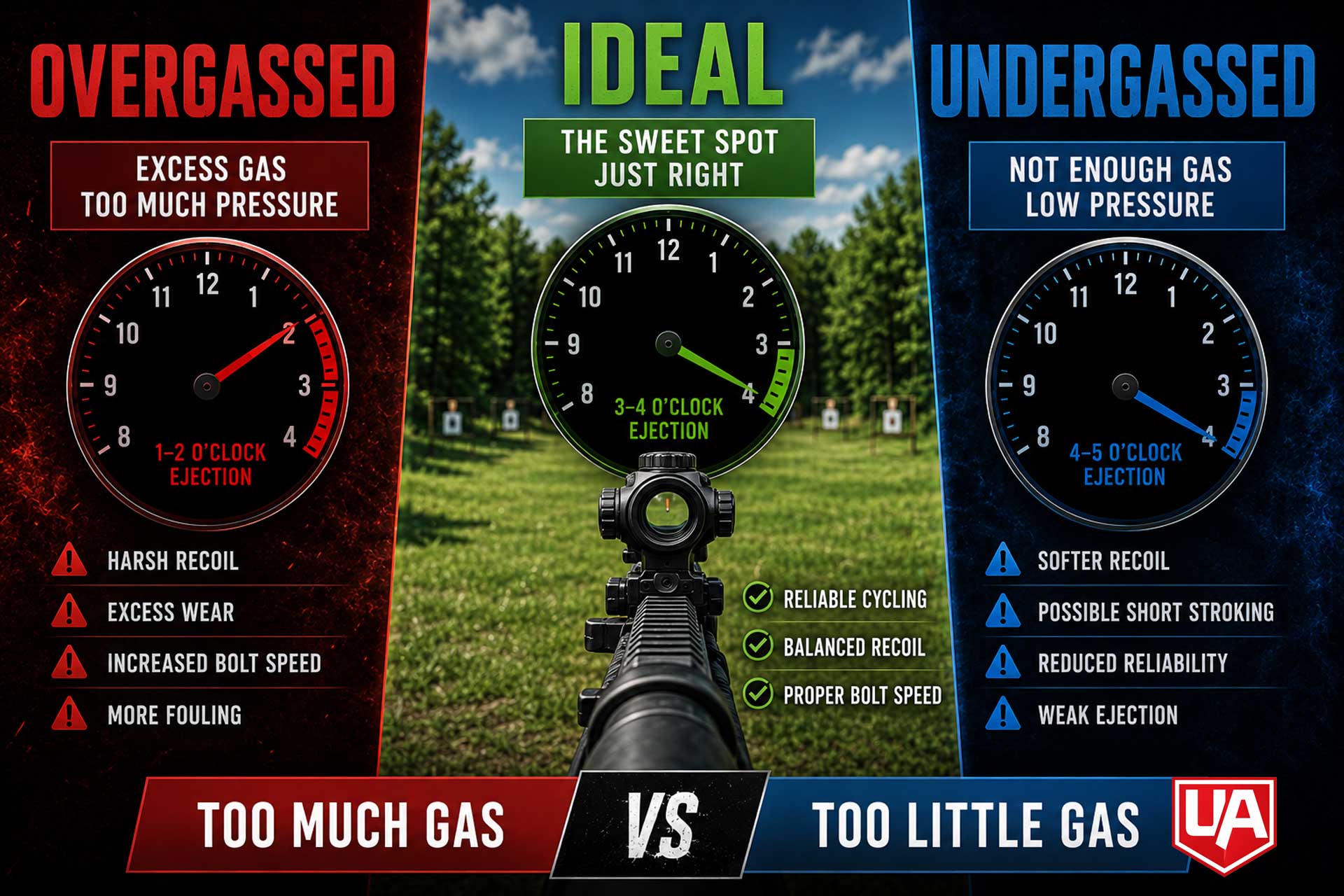
Infographic showing overgassed, ideal, and undergassed AR-15 ejection patterns with recoil and cycling characteristics.

Overgassed vs Undergassed AR-15: Symptoms, Causes, and Fixes

An AR-15 does not need excessive recoil or violent cycling to function reliably. In fact, the most dependable rifles usually operate within a fairly balanced gas window where bolt speed, extraction timing, and buffer resistance all work together predictably. When that balance shifts too far in either direction, the rifle begins showing symptoms that shooters…

Read more

AR-15 gas block and stainless steel gas tube resting on a weathered log in an outdoor setting.

What Is an AR-15 Gas System?

The AR-15 gas system is the operating system that uses a portion of the expanding gases produced when a cartridge is fired to cycle the rifle's action. It provides the energy needed to unlock the bolt, extract and eject the spent casing, and prepare the rifle to chamber another round. Most conventional AR-15 rifles use…

Read more

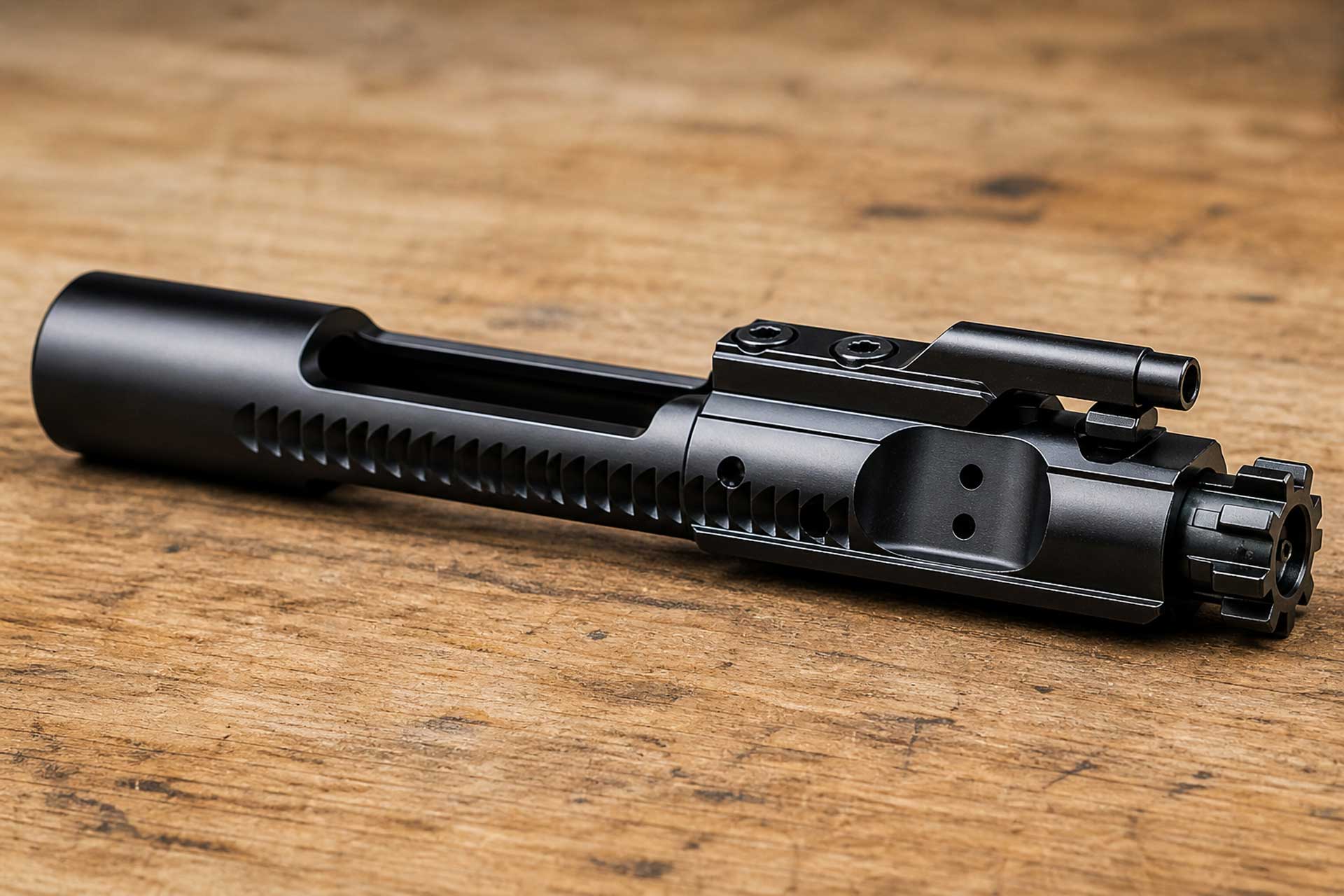
assembled AR-15 bolt carrier group resting on a wooden surface

Best Bolt Carrier Groups by Use Case and Reliability

Choosing the right bolt carrier group is one of the most important decisions in any AR-15 build. It directly affects reliability, durability, cycling consistency, and how well your rifle handles different conditions. While many parts contribute to performance, the BCG sits at the center of the system, interacting with gas pressure, cycling speed, chambering, extraction,…

Read more