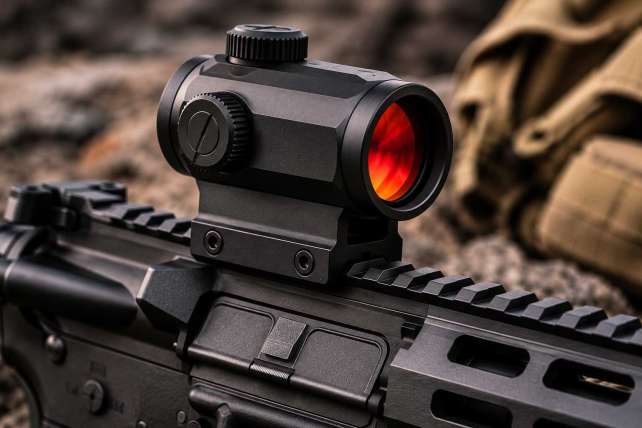
Red dot sights make aiming faster and simpler by replacing
traditional sight alignment with a single illuminated aiming
point. Whether you’re shopping for your first optic or
comparing upgrades, understanding the different types,
features, and price ranges can help you choose the right one.
This guide covers everything you need to know about red dot
sights, including how they work, what features matter,
how to use them, and which models are worth considering.
Best Red Dot Sights: Where to Start
With so many brands, features, and price points, comparing
red dot sights can feel overwhelming. The best option
depends on your budget, intended use, mounting requirements,
and the features you value most.
If you’re shopping on a budget, start with our guide to
the best red dot sights under $300 for AR-15s.
It compares affordable options and explains what to
consider before purchasing.
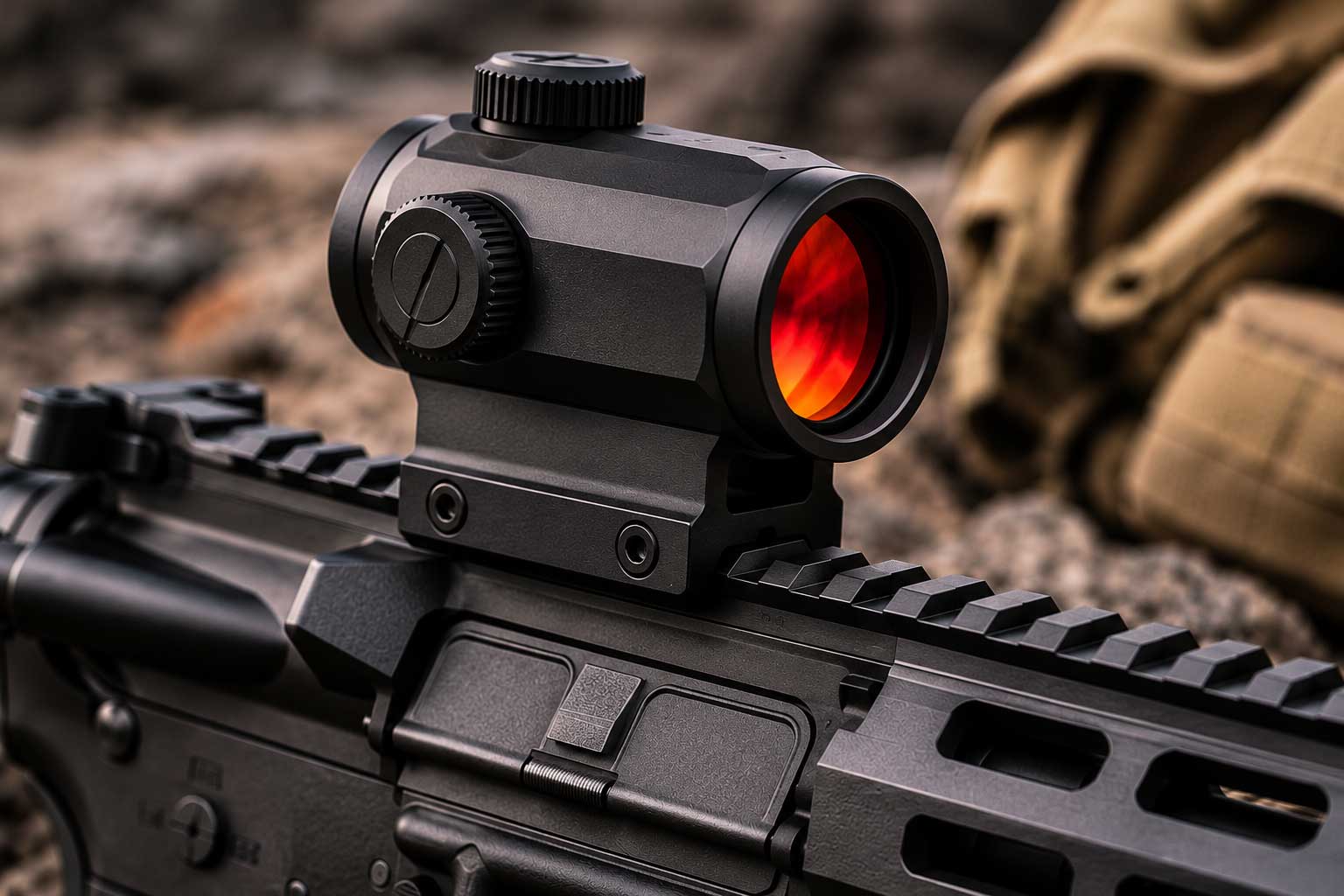
Best Red Dot Sights Under $300 for AR-15s (2026)
What Is a Red Dot Sight?
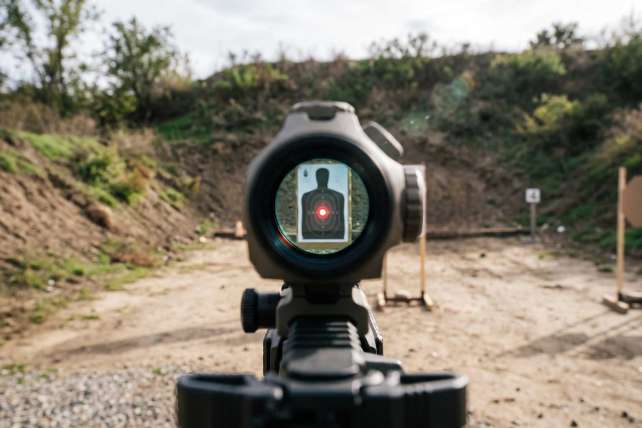
A red dot sight is an optical aiming device that displays an
illuminated aiming point, usually a red or green dot, through
a viewing window. Unlike traditional iron sights, which
require aligning a front and rear sight, a red dot allows
you to concentrate on your target while positioning the
aiming point where you want it.
Red dot sights are popular on rifles, shotguns, and handguns
because they offer an intuitive sight picture and can be
used with both eyes open.
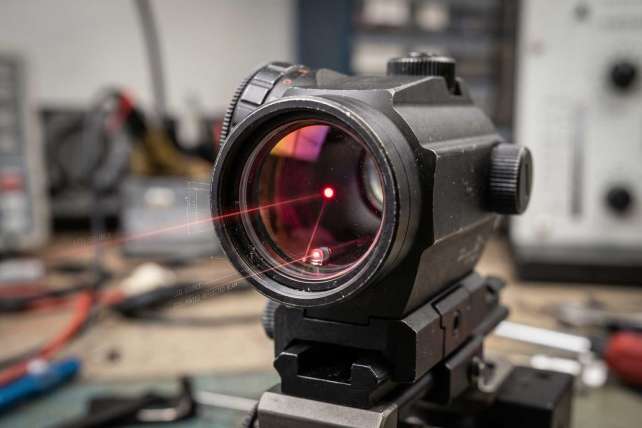
Want to understand the technology? Read our explanation of
how a red dot sight works
, including LED illumination, reflective lenses, and
the differences between red dot and holographic optics.
Types of Red Dot Sights
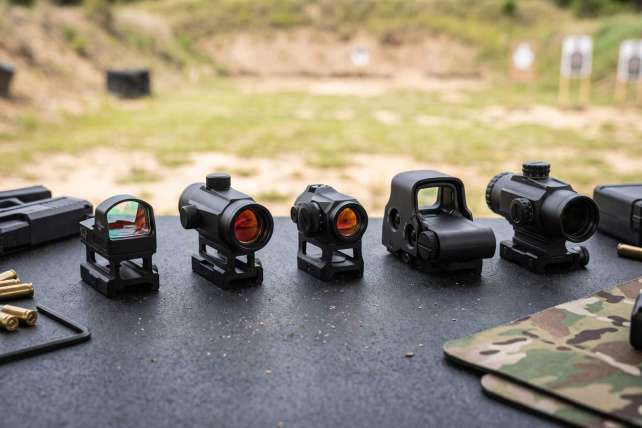
Not all red dot sights are built the same. The right design depends on your firearm, intended use, and personal preferences.
Open Reflex Sights
Open reflex sights use an exposed viewing window and are typically compact and lightweight. They’re commonly found on handguns and lightweight firearm setups where size and weight are important considerations.
Tube-Style Red Dot Sights
Tube-style red dots use a cylindrical housing that protects the optical components. They’re popular on rifles and provide a familiar sight picture with a wide range of mounting options.
Enclosed Emitter Red Dot Sights
Enclosed emitter optics protect the illumination system inside a sealed housing. This helps prevent rain, dirt, and debris from interfering with the emitter, making them worth considering for demanding outdoor conditions.
Want a closer look at how these designs compare? Our guide to the types of red dot sights explains the advantages, disadvantages, and best uses of each, including holographic and prism optics.
What to Look for When Buying a Red Dot Sight
Choosing a red dot isn’t just about finding the lowest
price. Several features can affect how well an optic
performs and whether it fits your needs.
Reticle Size
Red dot reticles are commonly measured in MOA, or minutes
of angle. Smaller dots, such as 2 MOA, cover less of the
target at a given distance, while larger dots, such as
6 MOA, may be easier to pick up quickly.
Battery Life
Battery life varies considerably between optics. Some
models offer thousands of hours of operation, while
others include motion-activated illumination or automatic
shutoff features to conserve power.
Durability and Weather Resistance
Look for a housing that can withstand the conditions in
which you’ll use the optic. Water resistance, impact
resistance, and reliable adjustment controls are all
worth considering.
Mounting Compatibility
Before buying, verify that the optic’s mounting system
is compatible with your firearm. Some red dots use
standard mounting patterns, while others require
specific plates, mounts, or adapters.
Price and Overall Value
More expensive doesn’t automatically mean better for
every user. Many affordable red dots provide useful
features and dependable performance for recreational
shooting and general range use.
How to Use a Red Dot Sight
Red dot sights are designed to simplify the aiming
process, but proper technique still matters. Understanding
target focus, sight picture, and reticle placement can
make the optic easier to use.
Our beginner-friendly guide explains
how to aim a red dot sight
, including both-eyes-open aiming, target focus,
and common mistakes to avoid.
Red Dot Sight FAQs
Are red dot sights good for beginners?
Yes. Many beginners find red dot sights easier to understand
than traditional iron sights because they eliminate the
need to align separate front and rear sights.
What’s the Difference Between a Red Dot and a Holographic Sight?
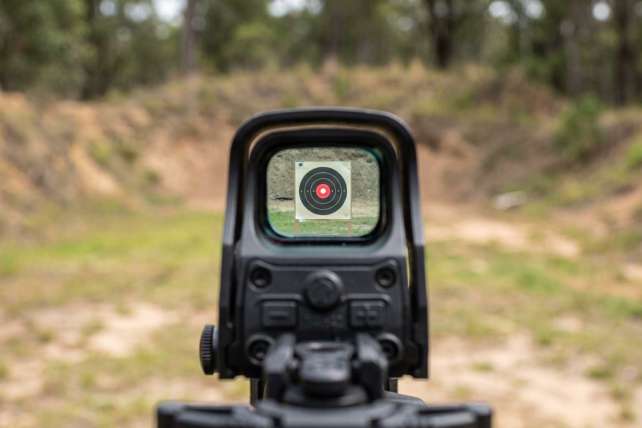
Most conventional red dot sights use an LED and a reflective lens to produce the aiming point. Holographic sights use laser-based technology to reconstruct a reticle image. Both provide illuminated aiming references, but their optical systems, battery requirements, and designs differ.
Not sure which is right for you? Our red dot vs. holographic sight comparison breaks down the differences in performance, battery life, reticles, and cost.
Can you use a red dot sight with both eyes open?
Yes. Using both eyes open is a common technique that helps
preserve peripheral awareness while maintaining focus on
the target.
How much should you spend on a red dot sight?
That depends on how you plan to use it. Budget models
can be suitable for recreational shooting, while more
expensive optics may offer additional durability,
specialized features, or longer battery life.
Explore More Red Dot Sight Guides
Ready to learn more? Browse our red dot sight articles
below for buying recommendations, explanations, and
practical tips.