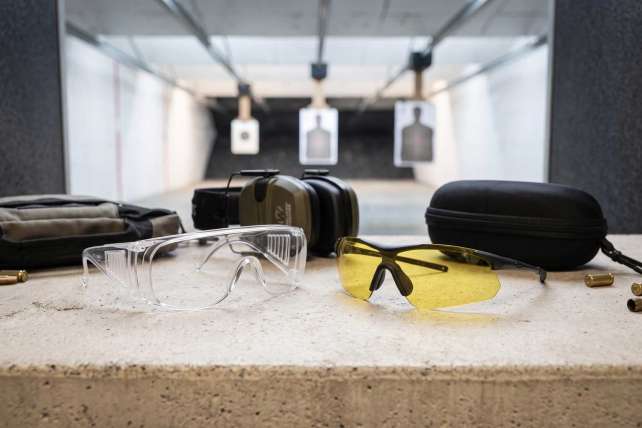
Shooting glasses are an essential part of protecting your eyes at the range. Whether you’re shooting indoors, practicing outdoors, or participating in competitive shooting, the right pair should provide reliable impact protection, clear vision, and a comfortable fit.
This guide covers everything you need to know about shooting glasses, including safety ratings, lens colors, frame styles, fit, and the features worth considering before you buy.
Best Shooting Glasses: Where to Start
Not all shooting glasses offer the same level of protection, comfort, or visibility. The best choice depends on where you shoot, your lighting conditions, whether you wear prescription glasses, and how much you want to spend.
If you’re ready to compare options, start with our guide to the best shooting glasses. It covers what to look for, which features matter, and how to choose a pair that fits your needs and budget.
Need vision correction? Our guide to the best prescription shooting glasses compares six options designed to combine clear vision, comfort, and protective eyewear features.
What Are Shooting Glasses?
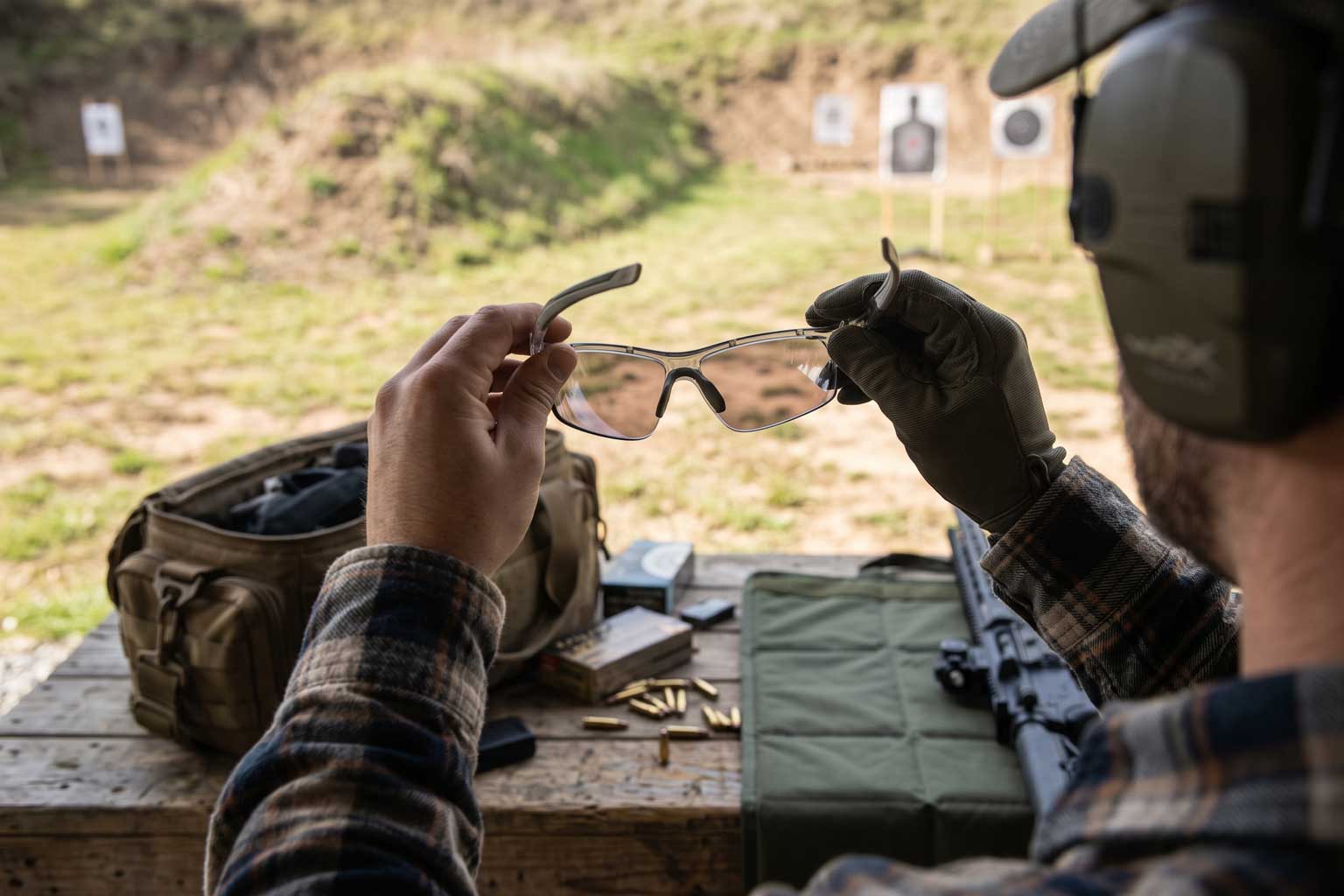
Shooting glasses are protective eyewear designed to help shield your eyes from flying debris, ejected cartridge cases, and other hazards encountered during shooting activities.
Unlike ordinary sunglasses or everyday eyeglasses, properly rated shooting glasses are designed and tested for impact resistance. Many also feature wraparound frames, extended side coverage, and specialized lenses that improve visibility in different lighting conditions.
While shooting glasses may look similar to regular sunglasses, appearance alone doesn’t indicate whether they provide adequate protection.
Types of Shooting Glasses
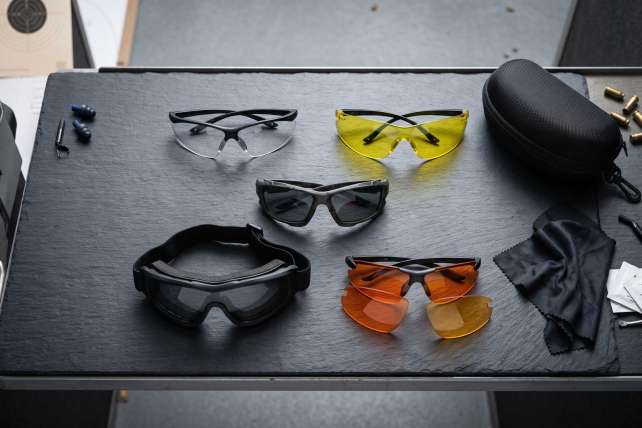
Shooting glasses come in several designs, each offering different advantages depending on your shooting environment and personal preferences.
Clear Shooting Glasses
Clear shooting glasses are a versatile option for indoor ranges, low-light conditions, and situations where you want maximum light transmission without changing how colors appear.
Tinted Shooting Glasses
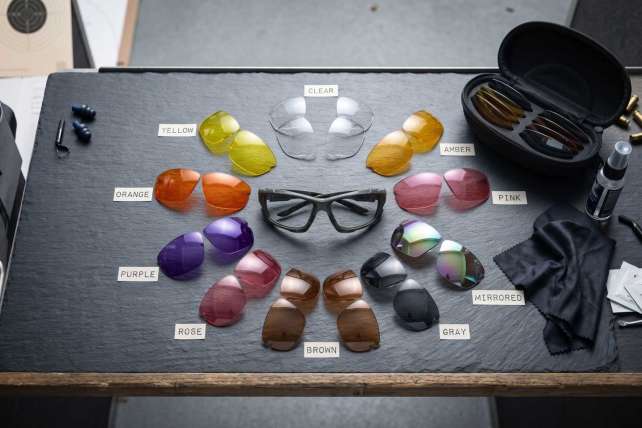
Tinted lenses help manage brightness and glare while potentially improving contrast between targets and their surroundings. Common colors include yellow, amber, orange, gray, and brown.
Interchangeable Lens Shooting Glasses
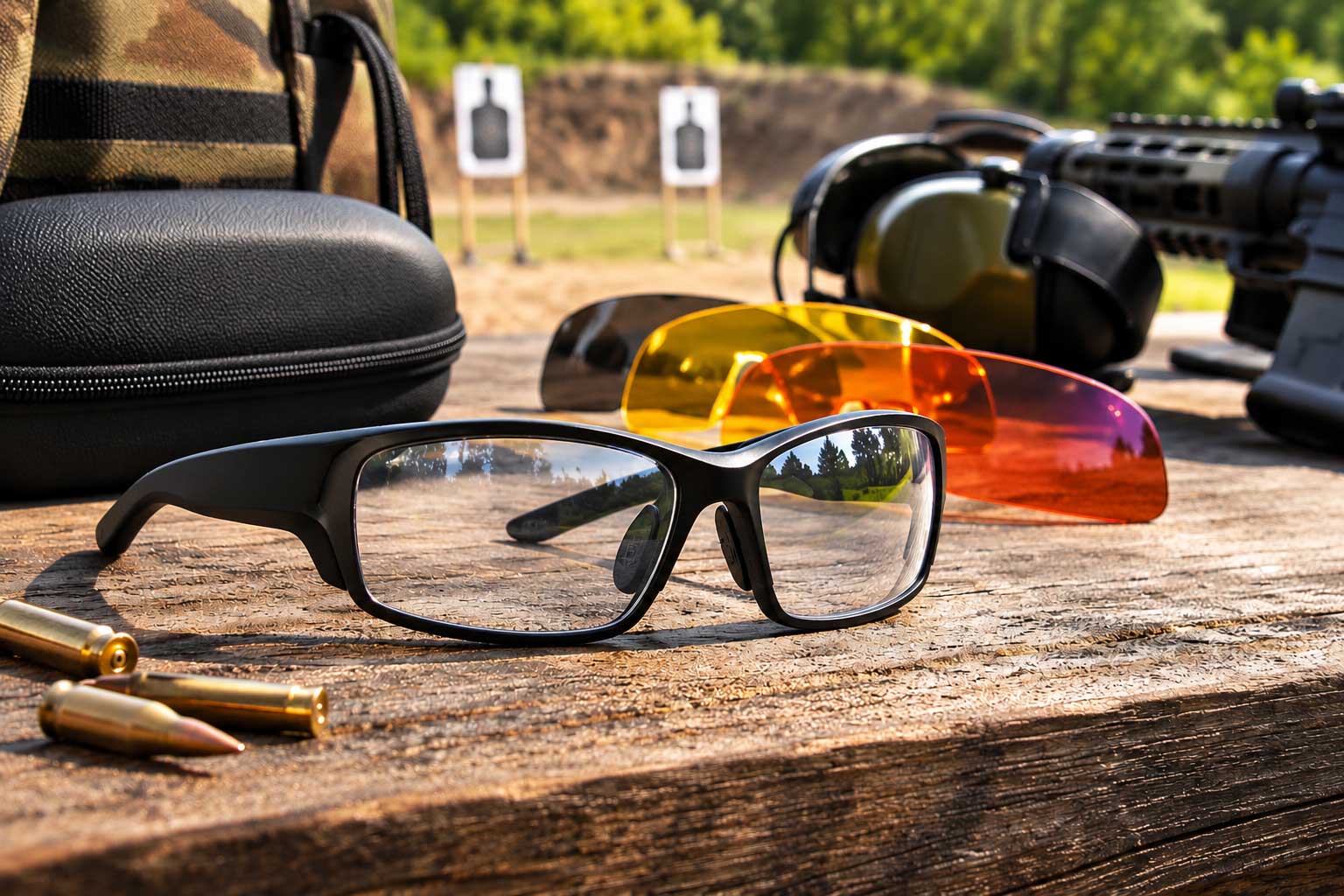
Interchangeable lens systems allow you to switch between different lens colors without purchasing multiple frames. They’re especially useful if you regularly shoot in changing lighting conditions.
Prescription Shooting Glasses
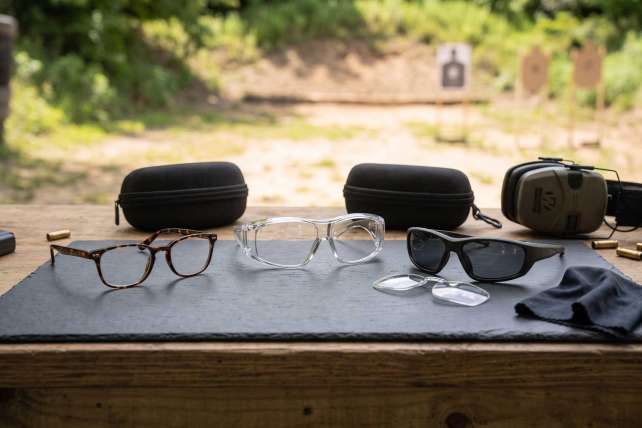
Prescription shooting glasses provide vision correction along with protective eyewear features. Some use prescription lenses, while others accommodate inserts or fit over existing glasses.
Want a closer look at the different styles? Our guide to the types of shooting glasses explains the differences in lens designs, protective features, and which options work best for different shooting environments.
Shooting Glasses Lens Colors Explained
Lens color can make a noticeable difference in how clearly you see targets, especially when moving between indoor ranges, bright sunlight, and overcast outdoor conditions.
Clear lenses are useful when maximum light transmission matters, while yellow and amber lenses can help some shooters distinguish targets against certain backgrounds. Gray lenses reduce overall brightness with relatively neutral color perception.
No single lens color is best for every situation. Your ideal choice depends on available light, target color, background, and personal visual preference.
Not sure which tint to choose? Our shooting glasses lens color guide explains what each color does and when it makes sense to use it.
What to Look for When Buying Shooting Glasses
Choosing shooting glasses involves more than finding a comfortable frame or attractive lens color. Several features affect protection, visibility, and overall performance.
Impact Protection and Safety Ratings
Impact protection should be your first priority. Look for eyewear that meets an appropriate recognized safety standard, such as ANSI/ISEA Z87.1, and verify the manufacturer’s specific impact-rating claims.
An ANSI Z87+ marking identifies eyewear meeting applicable high-impact requirements. For shooting activities, also consider whether the eyewear provides sufficient coverage for the hazards at your range.
Lens Material
Polycarbonate is commonly used in protective shooting eyewear because it’s lightweight and highly impact resistant. However, material alone doesn’t establish a product’s safety rating, so always check the complete eyewear’s certification or compliance information.
Fit and Comfort
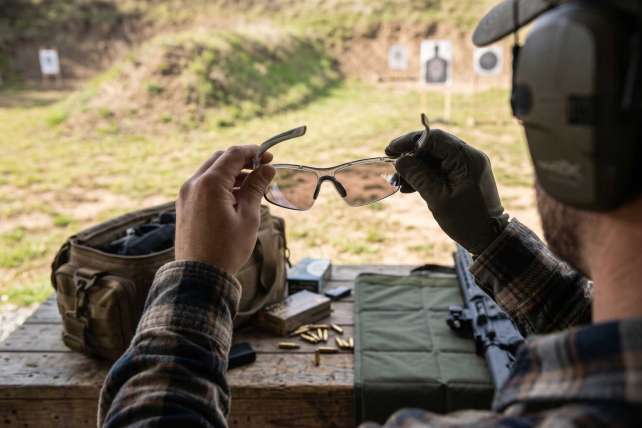
Shooting glasses should fit securely without creating uncomfortable pressure around your nose or temples. A good fit becomes especially important during extended range sessions.
Consider how the frames interact with your hearing protection. Thick temples can interfere with the seal of earmuff-style hearing protectors, potentially reducing their effectiveness.
Lens Coverage
Wraparound designs and side protection help reduce exposure to debris approaching from different angles. Look for a design that provides adequate coverage without restricting your field of view.
Anti-Fog and Scratch Resistance
Fogging can become frustrating when shooting in humid conditions or wearing protective equipment. Anti-fog coatings and ventilated frame designs can help maintain visibility.
Scratch-resistant coatings are also worth considering, especially if you frequently transport your glasses in a range bag.
Price and Overall Value
More expensive shooting glasses aren’t automatically the best choice. A reasonably priced pair with verified impact protection, adequate coverage, and a comfortable fit may be a better value than premium eyewear with features you don’t need.
Shooting Glasses for Indoor vs. Outdoor Ranges
Your shooting environment plays an important role in choosing the right eyewear.
Indoor Shooting Ranges
Indoor ranges typically have controlled lighting, making clear lenses a practical starting point. Lightly tinted lenses may also work, provided they don’t reduce visibility too much.
Outdoor Shooting Ranges
Outdoor conditions vary with sunlight, cloud cover, and target backgrounds. Gray or brown lenses may help reduce brightness, while amber or other contrast-enhancing tints may be useful in certain environments.
If you regularly shoot both indoors and outdoors, interchangeable lenses or separate pairs may offer greater flexibility.
Shooting Glasses FAQs
Are shooting glasses really necessary?
Yes. Shooting activities can expose your eyes to ejected cartridge cases, fragments, airborne debris, and other hazards. Proper protective eyewear helps reduce the risk of eye injuries and is commonly required at shooting ranges.
Can you wear regular sunglasses for shooting?
Regular sunglasses shouldn’t be assumed to provide adequate shooting protection. Unless they’re appropriately impact-rated and provide sufficient coverage, they may not offer the protection needed at a range.
What does ANSI Z87+ mean on shooting glasses?
ANSI Z87+ indicates that protective eyewear meets applicable high-impact requirements under the ANSI/ISEA Z87.1 standard. It’s an important marking to look for when comparing shooting glasses, although no protective eyewear eliminates every risk.
What color shooting glasses are best?
Clear lenses are a versatile choice for indoor and low-light conditions. Gray lenses are useful in bright sunlight, while yellow, amber, and orange lenses may improve perceived contrast in certain environments. The best color depends on your lighting conditions and visual preferences.
Can you wear prescription glasses while shooting?
Yes, but ordinary prescription glasses aren’t necessarily impact-rated safety eyewear. Consider prescription shooting glasses, appropriately rated over-the-glasses protection, or compatible prescription insert systems.
How much should you spend on shooting glasses?
You don’t need the most expensive pair to get useful protection. Prioritize verified impact ratings, proper coverage, comfort, and lens clarity before paying extra for interchangeable lenses, premium coatings, or specialized features.
Explore More Shooting Glasses Guides
Looking for more information? Browse our shooting glasses articles below for buying recommendations, lens color comparisons, safety information, and practical tips to help you choose the right eye protection.