
Tag: Gas Systems

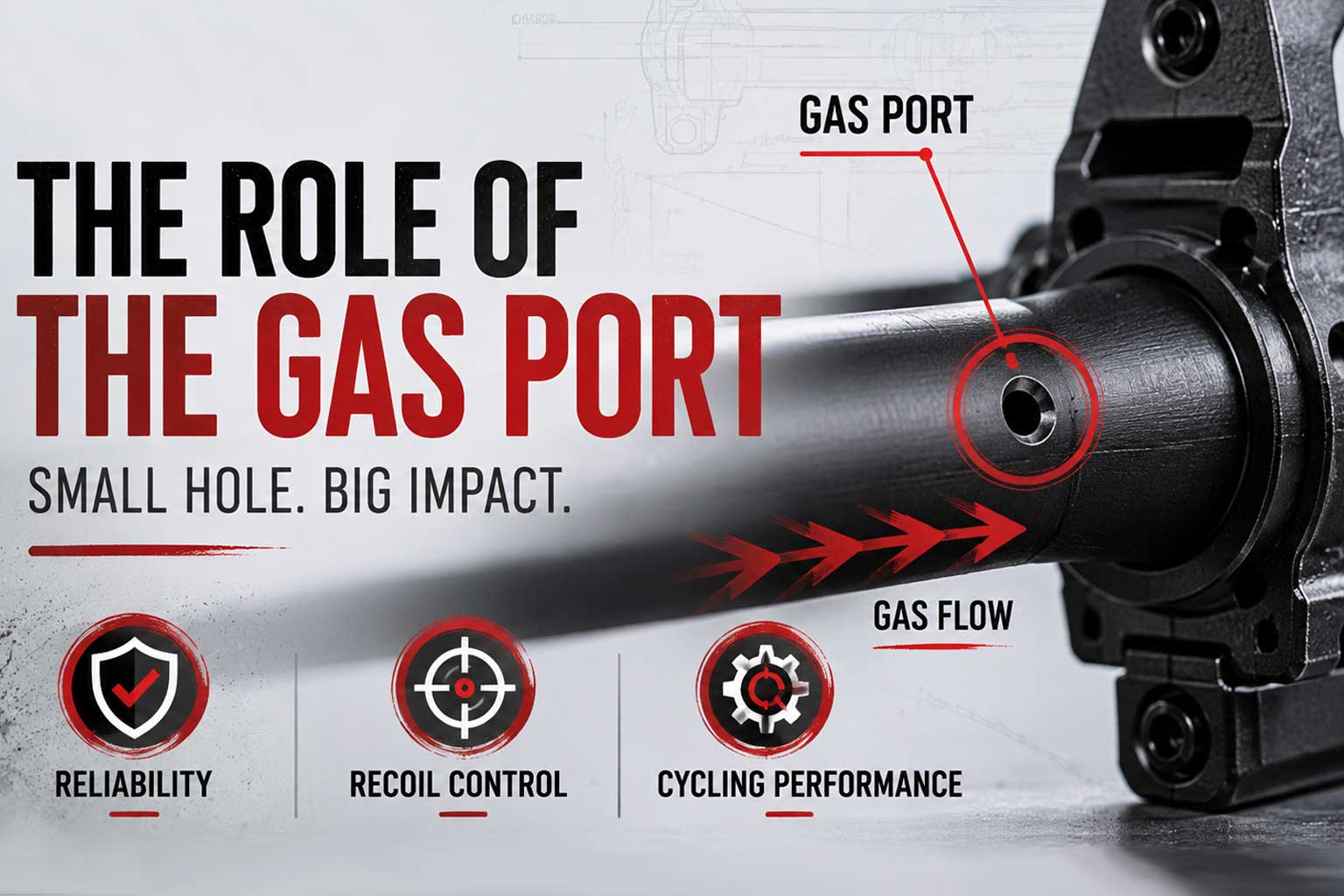
Close-up of a rifle barrel showing a highlighted gas port with directional gas flow arrows.
AR-15 Gas Port Size Explained: Reliability, Recoil, and Cycling
An AR-15’s gas port is a small hole drilled into the barrel, but its influence over rifle behavior is much larger than its size suggests. Gas port sizing affects how aggressively the rifle cycles, how much recoil impulse the shooter feels, how reliably the bolt carrier moves under different conditions, and how forgiving the system…
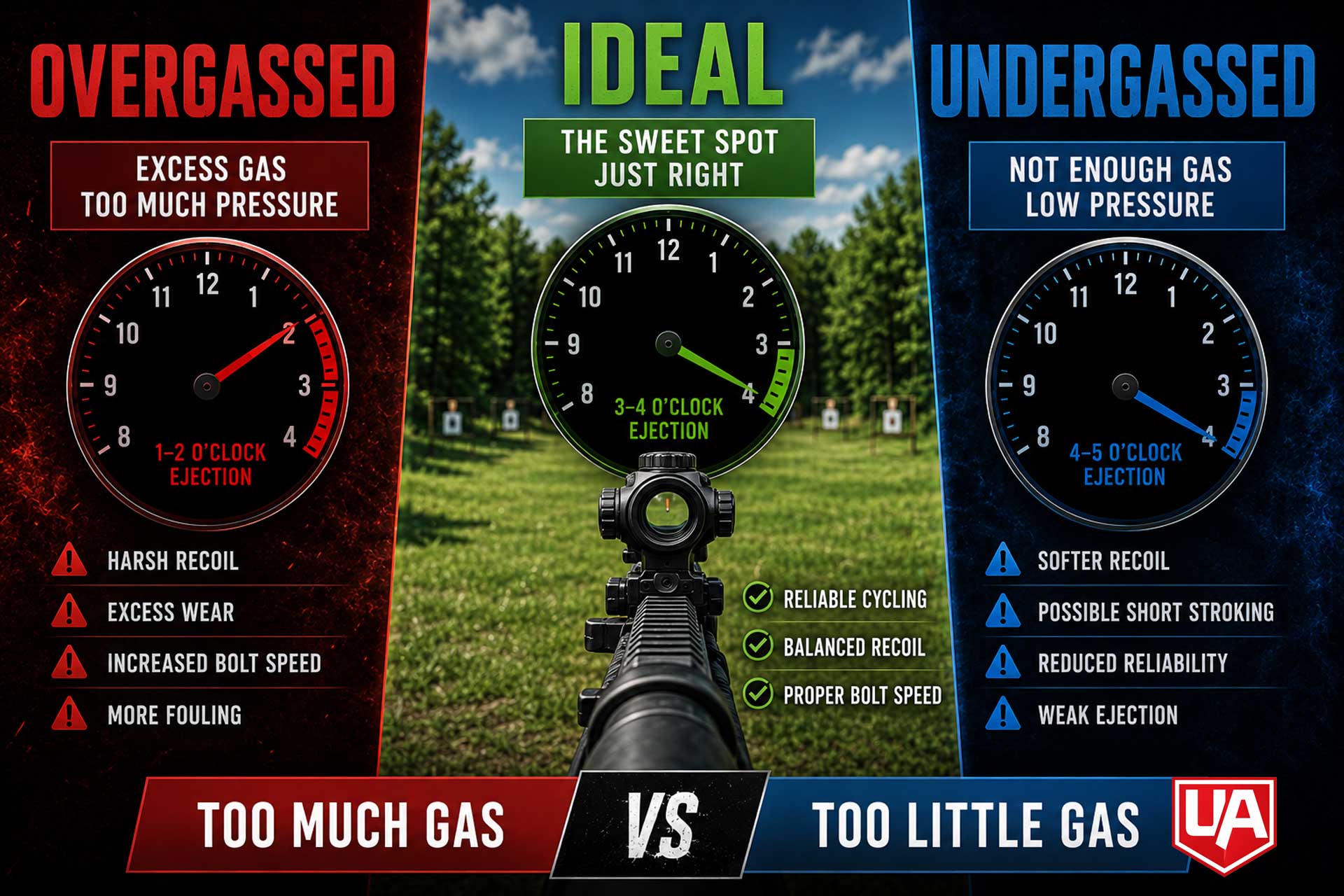
Infographic showing overgassed, ideal, and undergassed AR-15 ejection patterns with recoil and cycling characteristics.
Overgassed vs Undergassed AR-15: Symptoms, Causes, and Fixes
An AR-15 does not need excessive recoil or violent cycling to function reliably. In fact, the most dependable rifles usually operate within a fairly balanced gas window where bolt speed, extraction timing, and buffer resistance all work together predictably. When that balance shifts too far in either direction, the rifle begins showing symptoms that shooters…
AR-15 gas block and stainless steel gas tube resting on a weathered log in an outdoor setting.
What Is an AR-15 Gas System?
The AR-15 gas system is the operating system that uses a portion of the expanding gases produced when a cartridge is fired to cycle the rifle's action. It provides the energy needed to unlock the bolt, extract and eject the spent casing, and prepare the rifle to chamber another round. Most conventional AR-15 rifles use…
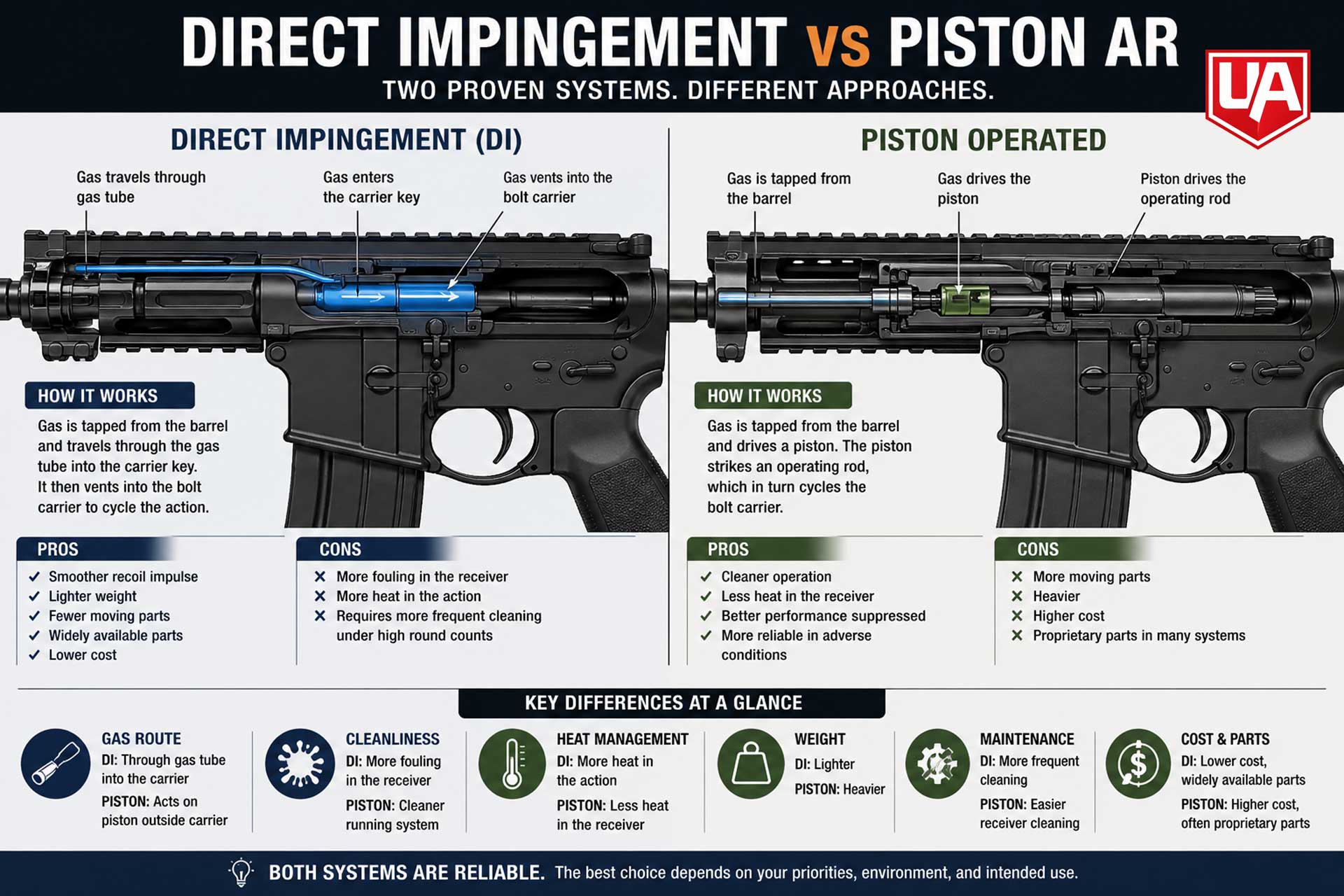
Side-by-side comparison diagram of two rifle operating systems showing gas flow in a direct impingement system and a piston-operated system
Direct Impingement vs Piston AR: Key Differences and Tradeoffs
Choosing between a direct impingement (DI) system and a piston-driven AR isn’t just a technical preference—it directly affects reliability, maintenance, recoil behavior, and long-term build decisions. While both systems operate within the same platform, the way they manage gas and cycle the action creates meaningful differences that show up in real-world use. At a high level,…
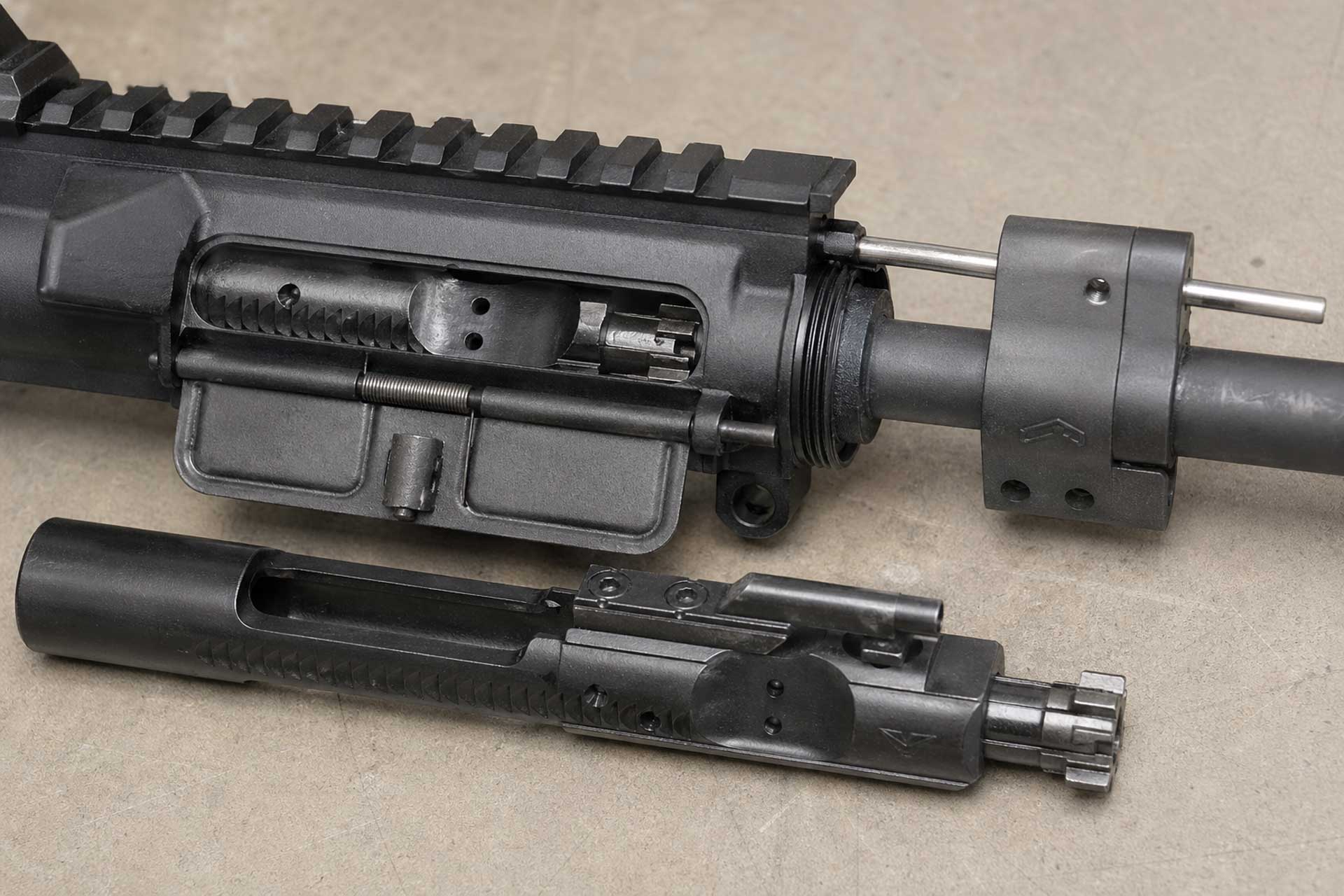
Close-up of an AR-15 upper receiver on a workbench with the gas block, gas tube, and partially removed bolt carrier group visible.
AR-15 Dwell Time Explained: How It Affects Cycling and Reliability
Dwell time is one of the least understood—but most influential—variables in how an AR-15 functions. It doesn’t refer to a visible part or a component you can easily swap. Instead, it describes a timing window inside the firing cycle that determines how long gas pressure remains in the system after the bullet passes the gas…
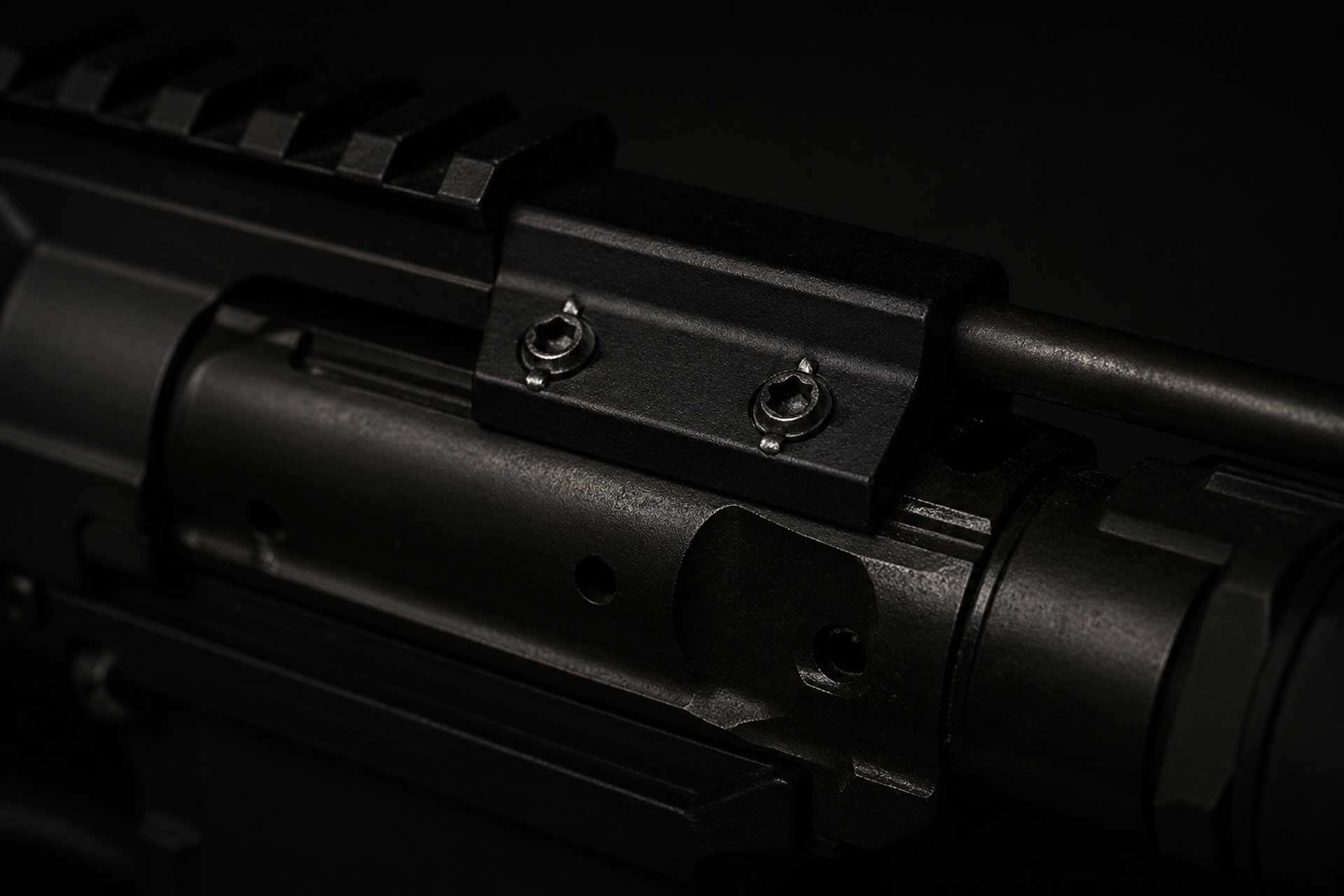
Close-up of an AR-15 bolt carrier group showing the gas key and mounting screws on top of the carrier
Gas Key Staking Explained: Why It Matters for AR-15 Reliability
Gas key staking is one of those details that looks minor until it fails. At a glance, it’s just a pair of screws on top of a bolt carrier. But those screws control whether your rifle maintains proper gas pressure during operation—and that directly affects reliability. To understand why staking matters, you have to place it…