



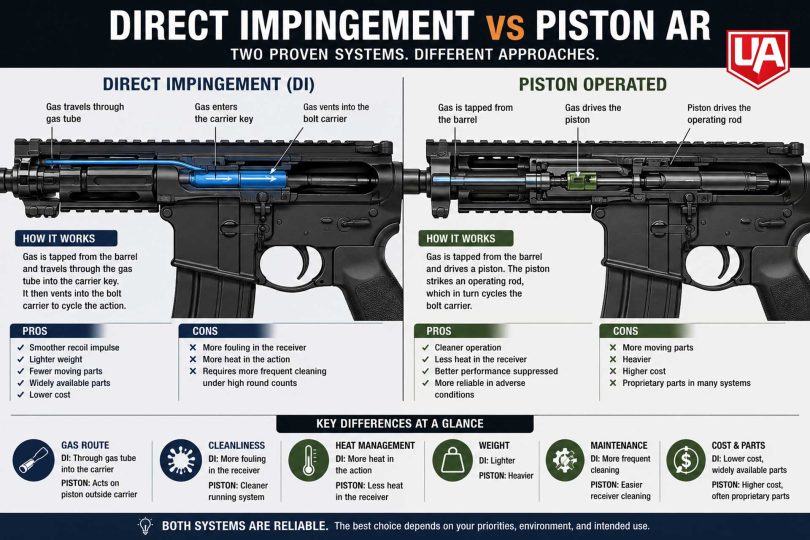

Choosing between a direct impingement (DI) system and a piston-driven AR isn’t just a technical preference—it directly affects reliability, maintenance, recoil behavior, and long-term build decisions. While both systems operate within the same platform, the way they manage gas and cycle the action creates meaningful differences that show up in real-world use.
At a high level, both systems rely on expanding gas from a fired cartridge to drive the rifle’s cycling process. Where they differ is how that gas energy is transferred. One routes gas directly into the bolt carrier group, while the other uses a mechanical piston to move the system. That distinction sounds simple, but it shapes everything from heat distribution to parts wear.
Understanding these differences matters because the AR platform is modular and adaptable. Decisions made at the gas system level influence compatibility, maintenance routines, and even how the rifle behaves under sustained use. This becomes especially relevant when evaluating AR platform fundamentals and how different components interact.
This guide breaks down both systems in a practical, use-case-driven way. You’ll see how each operates, where each excels, and what tradeoffs matter depending on your build goals. Whether you’re prioritizing simplicity, durability, or reduced maintenance, the goal here is clarity—not preference.
What Direct Impingement and Piston Systems Actually Do
Both direct impingement and piston systems serve the same core purpose: they use gas pressure from a fired round to cycle the rifle. That cycling process includes unlocking the bolt, extracting the spent casing, and chambering the next round—steps that are fully outlined in the AR-15 cycle of operations.
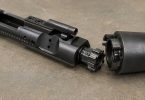
In a direct impingement system, gas travels from the barrel through a gas tube and is directed straight into the bolt carrier group. This gas expands inside the carrier, forcing it rearward and initiating the cycling process. Because the gas interacts directly with internal components, it also introduces heat and carbon fouling into the system.
A piston system takes a different approach. Instead of routing gas into the carrier, it uses gas pressure to move a piston located near the gas block. That piston physically pushes the bolt carrier rearward. The gas stays forward in the system, which reduces the amount of heat and fouling transferred into the receiver.
This difference in gas routing is the foundation for every performance distinction between the two systems. It affects how the rifle handles heat, how often it needs cleaning, and how forces are distributed across internal components.
How the Systems Compare: A Practical Framework
The easiest way to understand direct impingement vs piston AR systems is to evaluate them across four categories: heat, fouling, recoil impulse, and mechanical complexity.
Heat Management: Direct impingement systems channel hot gas directly into the bolt carrier, which increases internal temperatures. Piston systems keep most of that heat near the gas block, reducing thermal stress inside the receiver.
Fouling and Maintenance: DI systems accumulate carbon inside the carrier group, requiring more frequent cleaning. This is why understanding how the bolt carrier group works becomes important. Piston systems run cleaner internally but still require maintenance at the piston assembly.
Recoil Behavior: DI systems tend to have a smoother, more linear recoil impulse. Piston systems can introduce a sharper impulse due to the mechanical push of the piston.
Mechanical Complexity: Direct impingement is simpler, with fewer moving parts. Piston systems add components, which can increase weight and introduce additional wear points.
These differences don’t make one system universally better—they define tradeoffs. The right choice depends on how the rifle will be used and what factors matter most to the builder.
Use-Case Breakdown: When Each System Makes Sense
Direct impingement systems are well-suited for general-purpose builds. They offer a balance of simplicity, lighter weight, and smoother operation. For most users building a standard AR-15, DI systems align naturally with common configurations and are widely supported across components.
Piston systems become more relevant in specific scenarios. If the rifle will be run heavily suppressed, exposed to extreme conditions, or used in high-volume firing schedules, the reduced heat and fouling in the receiver can be beneficial. These advantages become clearer when considering how gas behavior interacts with timing, such as in AR-15 dwell time explained.
It’s also important to consider compatibility. Piston systems are often proprietary, meaning parts may not interchange as easily as DI components. This ties directly into AR-15 parts compatibility basics, where system differences can affect long-term flexibility.
For builders who prioritize simplicity and standardization, DI is usually the default. For those targeting specific performance conditions, piston systems offer advantages—but with added constraints.
Tradeoffs That Affect Real-World Performance
No system choice exists in isolation. The decision between direct impingement and piston affects other components and how the rifle behaves over time.
One key consideration is how forces are transferred through the system. In DI setups, gas pressure acts internally, distributing force more evenly. In piston systems, force is applied mechanically, which can introduce carrier tilt or uneven wear if not properly managed.
Maintenance is another factor. While piston systems keep the receiver cleaner, they shift maintenance requirements forward. DI systems require more frequent cleaning of the carrier, but their simplicity makes that process straightforward—especially when following a bolt carrier group troubleshooting guide.
Weight and balance also come into play. Piston systems typically add weight near the front of the rifle, which can affect handling. DI systems remain lighter and more balanced, which is often preferred in general-purpose builds.
These tradeoffs highlight why system choice should align with intended use. A mismatch between system design and use case can lead to unnecessary complexity or reduced performance.
Decision Logic: Which System Should You Choose?
If your goal is a reliable, lightweight, and widely supported rifle, direct impingement is the practical choice. It aligns with standard configurations, simplifies maintenance routines, and integrates easily with common components.
If your use case involves suppressors, high round counts, or harsh environments, a piston system may offer advantages. Reduced heat and fouling can extend component life and reduce cleaning frequency in demanding conditions.
However, those benefits come with tradeoffs. Increased complexity, potential compatibility limitations, and added weight should be considered before committing to a piston system.
For most builders, the decision comes down to priorities. Understanding how the system interacts with other components—such as AR-15 buffer system basics—helps ensure the final build performs as expected.
Frequently Asked Questions
Is a piston AR more reliable than direct impingement?
Piston systems can run cleaner under heavy use, but reliability depends more on overall build quality and maintenance. Direct impingement systems are highly reliable when properly maintained.
Do piston ARs require less cleaning?
They reduce fouling in the receiver, but the piston assembly still requires maintenance. Cleaning requirements shift rather than disappear.
Is recoil different between DI and piston systems?
Yes. Direct impingement systems typically produce a smoother recoil impulse, while piston systems can feel sharper due to mechanical force transfer.
Are piston systems compatible with standard AR parts?
Not always. Many piston systems use proprietary components, which can limit compatibility compared to standard DI setups.
Which system is better for suppressed shooting?
Piston systems often handle suppressed conditions better by reducing gas and heat in the receiver, though DI systems can still perform well with proper tuning.
Does one system last longer than the other?
Both systems can have long service lives. Longevity depends on usage patterns, maintenance, and component quality rather than system type alone.
Conclusion
Direct impingement and piston AR systems solve the same problem in different ways. One prioritizes simplicity and efficiency, while the other emphasizes heat management and cleaner operation. Neither system is inherently better—they are designed for different priorities.
The key is aligning system choice with intended use. For most builds, direct impingement offers a balanced and proven approach. For specialized applications, piston systems provide targeted advantages that may justify their added complexity.
Understanding these tradeoffs ensures that decisions are based on function, not perception. That clarity leads to better builds, more consistent performance, and fewer compromises over time.



Leave a Comment