
Tag: buffer systems

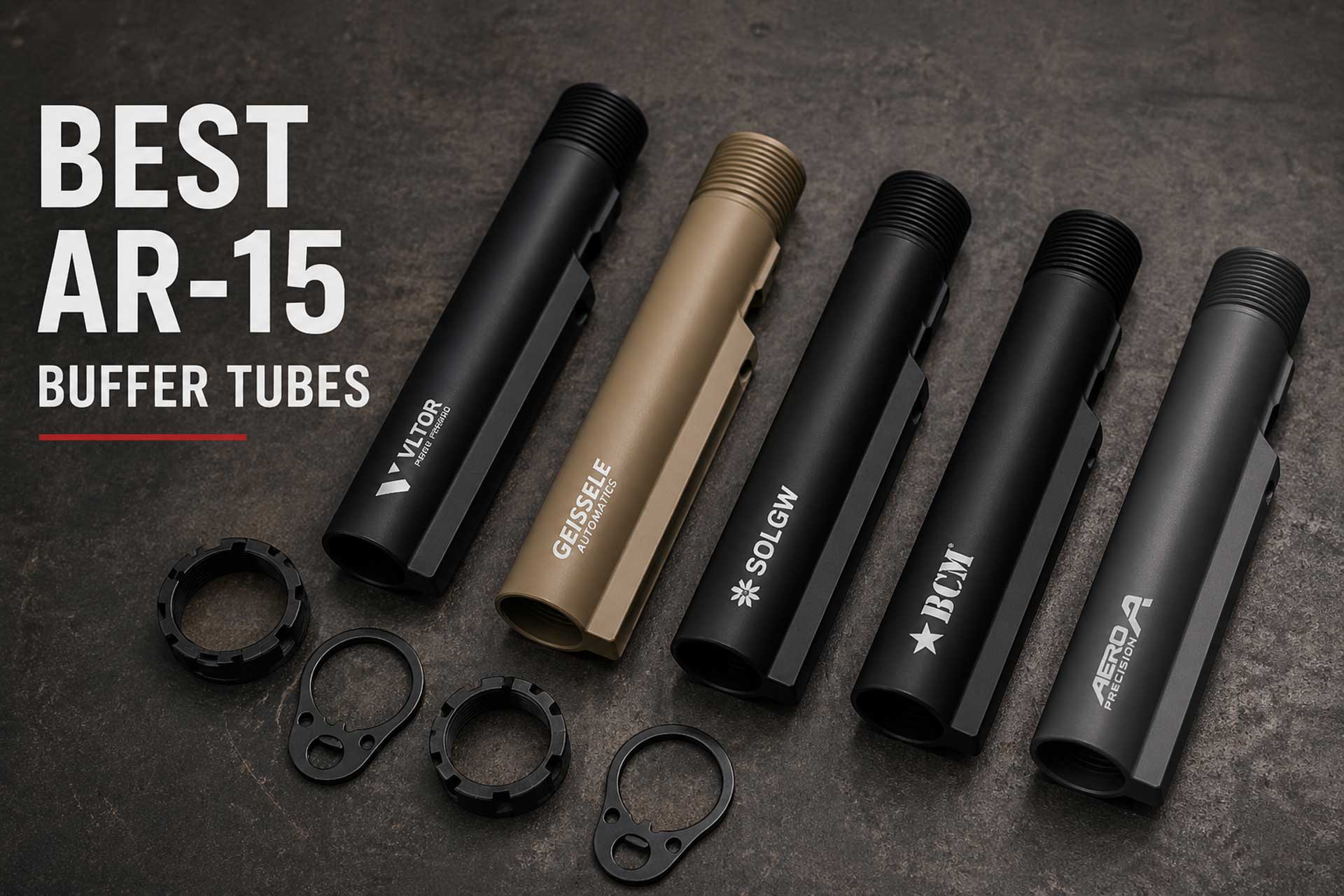
Several AR-15 buffer tubes and related components arranged on a dark workbench surface

Best AR-15 Buffer Tubes: What Actually Matters and What to Buy

Choosing the right buffer tube for an AR-15 build is one of those decisions that looks simple on the surface but quietly affects fitment, reliability, and long-term durability. It’s not a flashy component, and it’s rarely marketed as a performance upgrade—but it sits at the center of how your stock interfaces with the rifle and…
Read more

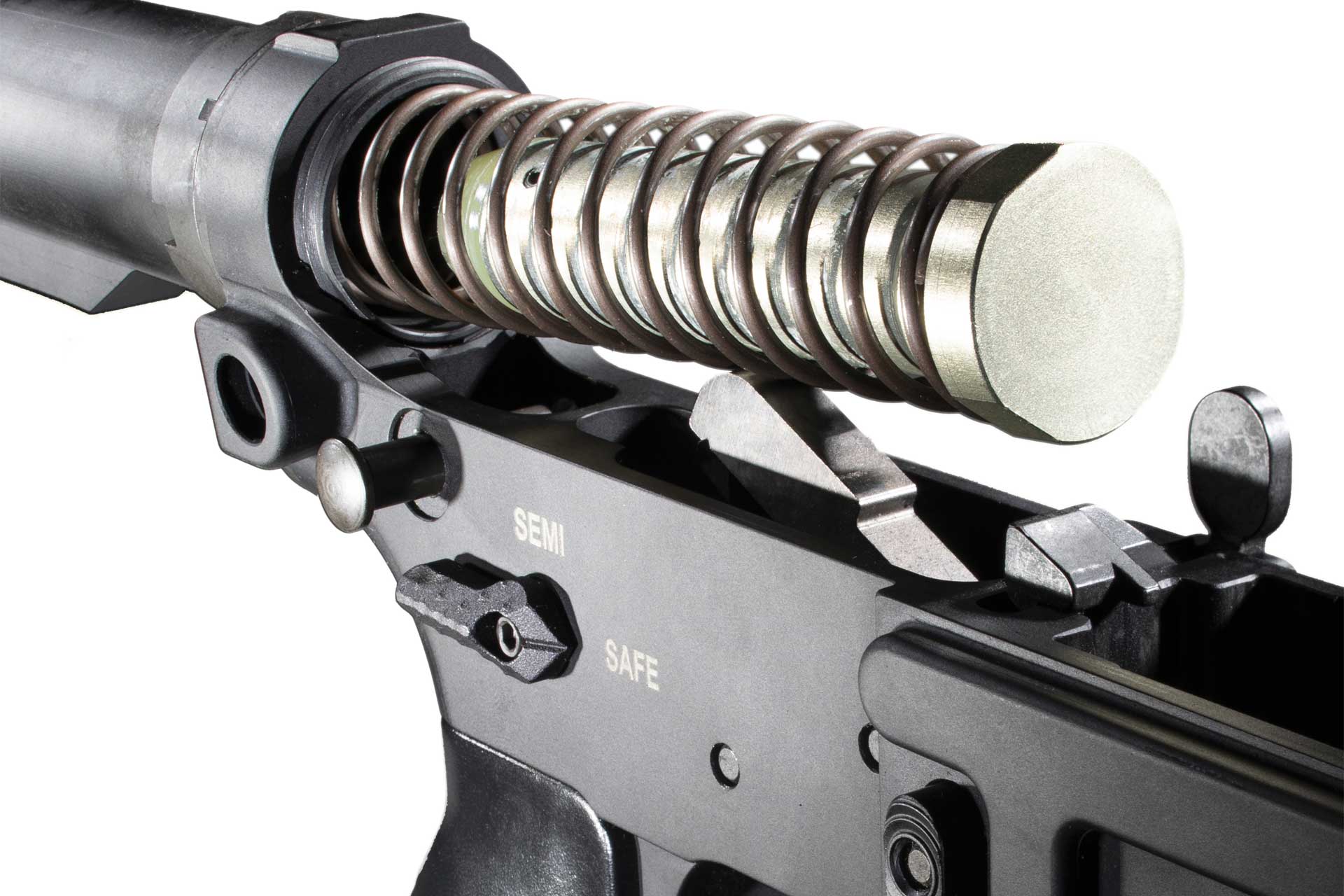
Close-up of an AR-15 lower receiver with buffer tube, buffer spring, and buffer partially removed

AR-15 Buffer System Basics: How It Works and Why It Matters

The AR-15 buffer system is one of the least visible but most important components in the rifle’s operation. It sits behind the action, out of sight inside the receiver extension, yet it plays a central role in controlling recoil, managing cycling speed, and ensuring reliability across different configurations. If you’re building, modifying, or troubleshooting an AR-15,…

Read more

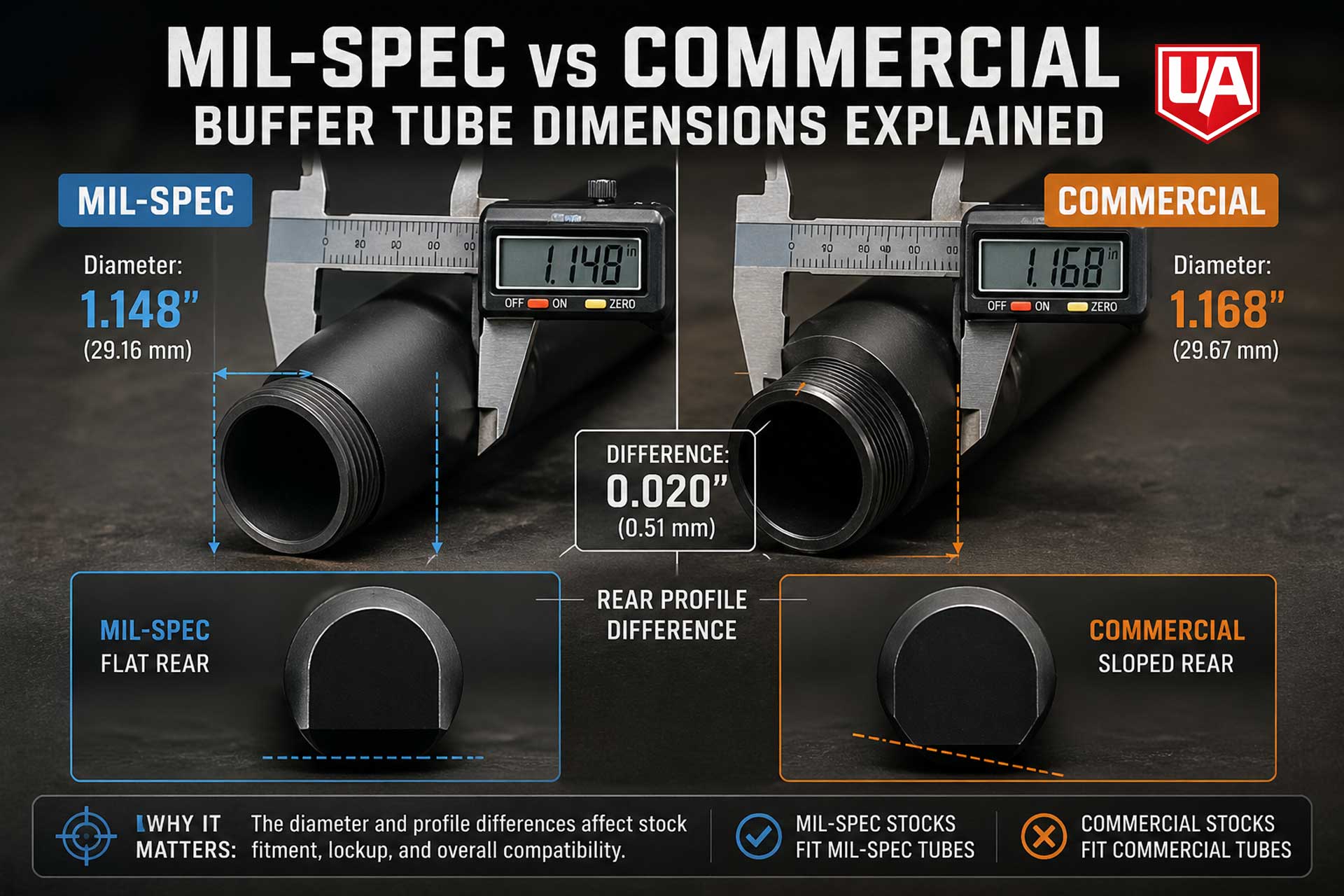
Side-by-side comparison of two buffer tubes measured with calipers showing diameter differences and rear profile shapes

Mil-Spec vs Commercial Buffer Tube Dimensions Explained

Understanding mil-spec vs commercial buffer tube dimensions is one of those details that seems minor—until it causes a compatibility problem that stops a build in its tracks. The buffer tube, also called the receiver extension, directly determines what stocks will fit, how securely they mount, and whether your rifle components align correctly. At a glance, mil-spec…

Read more

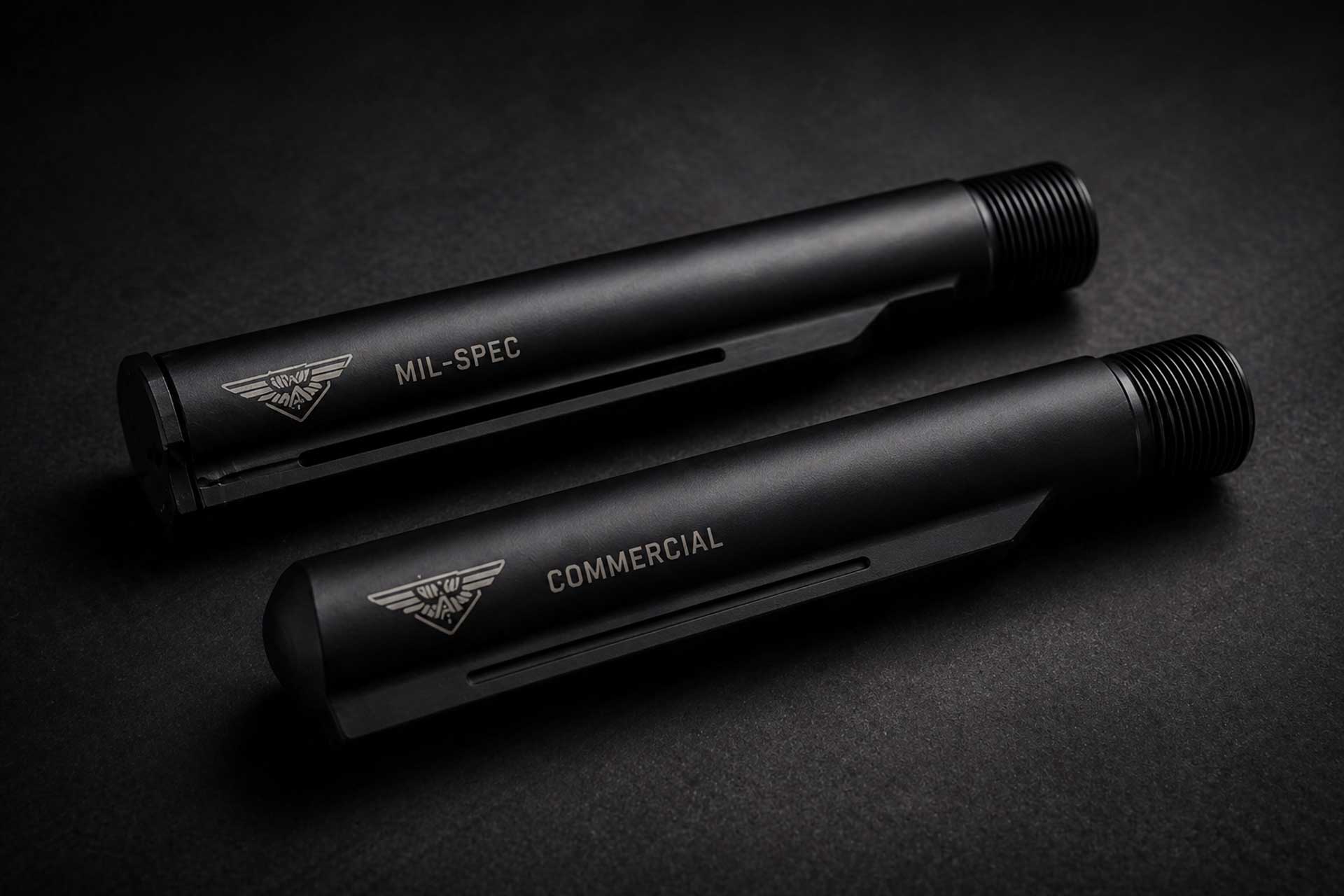
Two black AR-style buffer tubes labeled mil-spec and commercial placed side by side on a dark surface

AR Buffer Tube Compatibility Chart

Understanding buffer tube compatibility is one of the simplest ways to avoid build errors that don’t show up until the rifle is assembled. Many AR-15 issues that appear to be related to cycling, recoil, or stock fitment actually begin with mismatched buffer tube dimensions or incompatible components. At a glance, buffer tubes look interchangeable. They thread…

Read more

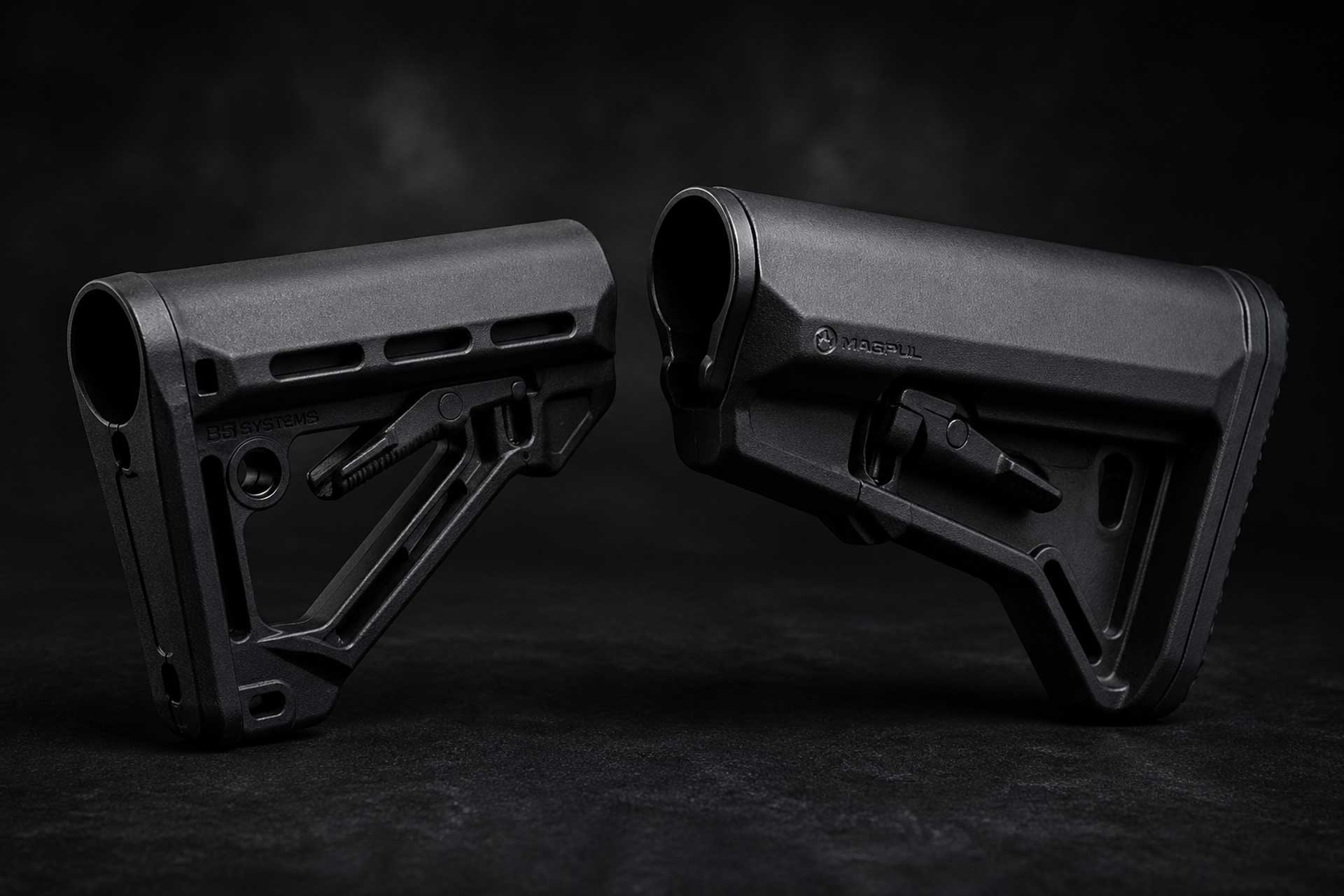
Two black AR-15 buttstocks placed facing each other on a dark textured surface with soft studio lighting

AR-15 Stock Compatibility Guide: What Fits and Why It Matters

Stock compatibility on the AR-15 platform is often misunderstood because most parts appear interchangeable at a glance. The platform’s modular design encourages that assumption. But when it comes to stock fitment, small dimensional differences—especially in the buffer tube—determine whether a setup feels solid and reliable or loose and inconsistent. Understanding stock compatibility is not just about…

Read more

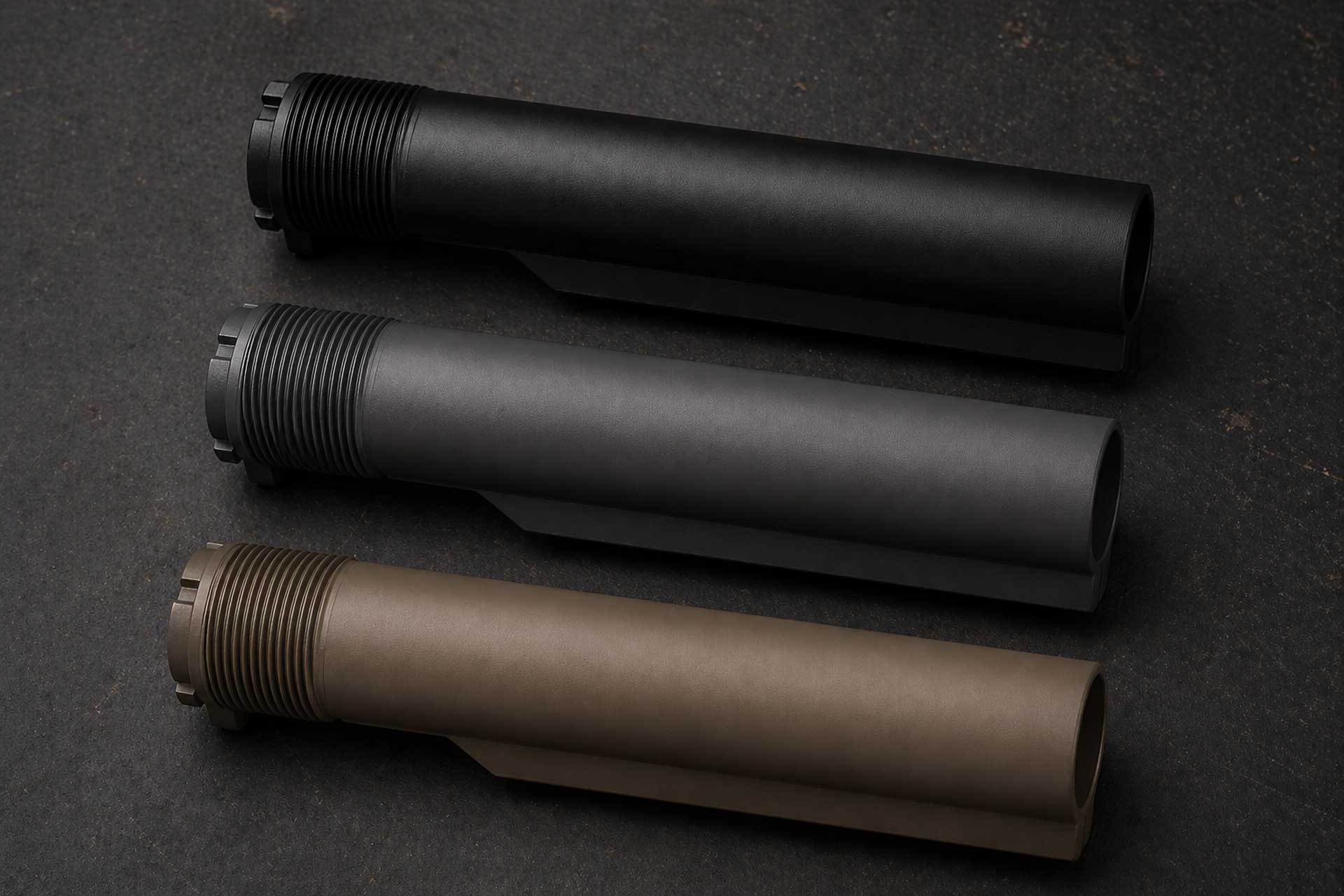
Three AR-style buffer tubes in black, gray, and tan finishes arranged diagonally on a dark workbench surface

Buffer Tube Types and Differences Explained

Buffer tubes are often treated as simple hardware, but they play a central role in how an AR-15 functions, fits, and performs. They define how the stock attaches, influence recoil behavior, and determine whether key components will actually work together as intended. At a glance, most buffer tubes look similar. They thread into the rear of…

Read more