



Understanding buffer tube compatibility is one of the simplest ways to avoid build errors that don’t show up until the rifle is assembled. Many AR-15 issues that appear to be related to cycling, recoil, or stock fitment actually begin with mismatched buffer tube dimensions or incompatible components.
At a glance, buffer tubes look interchangeable. They thread into the lower receiver the same way, accept stocks, and house the buffer and spring. But small differences—especially between mil-spec and commercial tubes—affect how parts fit together and how the rifle performs.
This guide provides a clear compatibility chart and supporting explanations so you can make correct decisions quickly. It is built for readers who want a practical reference, not just a conceptual explanation.
If you’re still building your foundational understanding of the platform, it helps to start with AR platform fundamentals, since buffer compatibility is only one part of how the system works together.
What Buffer Tube Compatibility Means
Buffer tube compatibility refers to how well the buffer tube interfaces with three critical areas of the rifle:
- the lower receiver
- the stock
- the internal recoil system (buffer and spring)
Each of these connections must align correctly for the rifle to function reliably. While the buffer tube itself is a simple component, it sits directly in the path of the recoil system and plays a role in how energy is absorbed and returned during firing.
This becomes clearer when you understand how AR rifles cycle, since the buffer system controls the rearward and forward motion of the bolt carrier group.
Compatibility problems typically show up in two ways:
- Fitment issues → stocks wobble, bind, or fail to install
- Function issues → improper cycling, inconsistent recoil, or wear
These problems are avoidable once you understand the underlying structure and differences between buffer tube types.
Buffer Tube Compatibility Chart
Below is a simplified compatibility reference for common AR-15 buffer tube configurations:
| Component | Mil-Spec Buffer Tube | Commercial Buffer Tube |
|---|---|---|
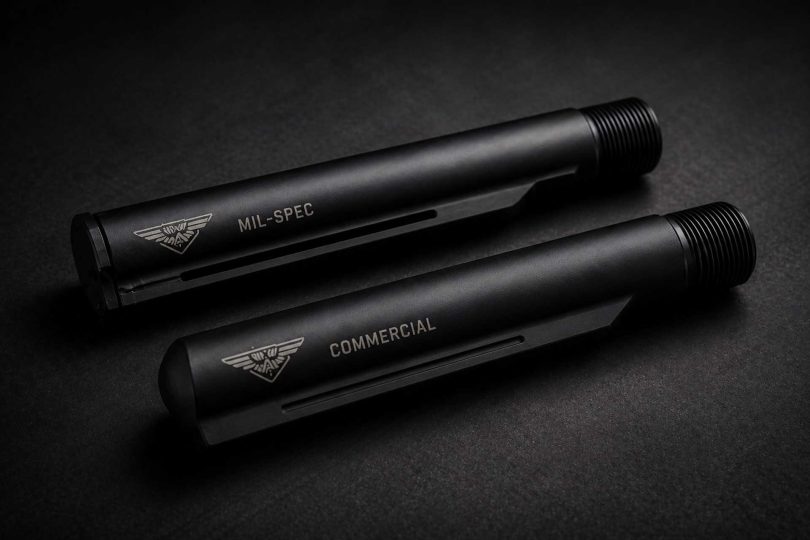
| Outer Diameter | ~1.148 inches | ~1.168 inches |
| Rear Profile | Flat | Slanted |
| Stock Compatibility | Mil-spec stocks only | Commercial stocks only |
| Lower Receiver Fit | Standard | Standard |
| Internal Components | Same (buffer/spring) | Same (buffer/spring) |
Key Takeaways
- Mil-spec and commercial tubes do not share stock compatibility
- Internal recoil components are generally interchangeable
- Receiver threading is standardized, so both install the same way
If you need a deeper breakdown of design differences, refer to buffer tube types and differences, which explains why these dimensional variations exist.
How to Identify Your Buffer Tube
Before making any compatibility decisions, you need to correctly identify which buffer tube you are working with.
Visual Identification
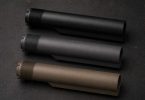
- Mil-spec tubes
- Slightly smaller diameter
- Flat rear end
- Commercial tubes
- Slightly larger diameter
- Angled rear end
These differences are subtle but consistent. If you are unsure, measuring diameter is the most reliable method.
Why This Matters
Using the wrong stock for your buffer tube will either:
- prevent installation entirely
- create loose or unstable fitment
This is why understanding stock compatibility in the AR-15 platform is critical before purchasing or installing components.
Where Buffer Tube Compatibility Fits in the System
The buffer tube is part of the recoil system, which works alongside the gas system and bolt carrier group to control cycling.
If you look at how the AR-15 gas system works, you’ll see that gas pressure drives the bolt carrier rearward. That energy is absorbed by the buffer and spring inside the tube.
This interaction means buffer tube compatibility is not just about physical fit—it also affects how smoothly the rifle cycles.
A properly matched system:
- cycles consistently
- reduces unnecessary wear
- maintains predictable recoil
A mismatched setup can introduce problems that appear elsewhere, which is why compatibility should be addressed early in the build process.
Common Compatibility Mistakes
Most buffer-related issues come from a small number of repeated mistakes.
Mixing Stock and Tube Types
The most common error is pairing a mil-spec stock with a commercial tube, or vice versa. The difference in diameter prevents proper fit.
Assuming All Parts Are Universal
The AR platform is modular, but not everything is interchangeable without limits. Understanding modular rifle design helps clarify where compatibility boundaries exist.
Ignoring Build Context
A buffer tube that fits correctly may still be inappropriate for the rest of the system if other components are mismatched. This is often seen in builds that ignore common AR build mistakes.
Use Case: Choosing the Right Buffer Tube
New Builds
If you are building from scratch, selecting a mil-spec buffer tube is usually the safest choice. It provides broader stock compatibility and is more widely supported.
Upgrading Existing Rifles
If you are replacing a stock or buffer tube, you must match the existing system unless you plan to replace both components together.
Buying Complete Kits
Some builders avoid compatibility issues entirely by using complete AR build kits, which are designed to ensure component alignment.
Tradeoffs Between Mil-Spec and Commercial Tubes
Mil-Spec Tubes
Pros
- wider compatibility
- more common standard
Cons
- slightly tighter tolerances can expose poor-quality components
Commercial Tubes
Pros
- slightly larger diameter can feel more stable with matching stocks
Cons
- limited compatibility
The difference is not about quality but about standardization and ecosystem support.
Recommendation Logic
For most users:
- Choose mil-spec buffer tubes unless you have a specific reason not to
- Match stock and tube type exactly
- Avoid mixing standards
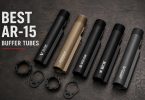
If you are selecting parts individually, reviewing best AR-15 buffer tubes can help identify reliable options that align with your build goals.
FAQ: AR Buffer Tube Compatibility Chart
What is the difference between mil-spec and commercial buffer tubes?
Mil-spec tubes have a smaller diameter and a flat rear profile, while commercial tubes are slightly larger with a slanted rear. This affects stock compatibility but not internal function.
Can you use a mil-spec stock on a commercial buffer tube?
No. The size difference prevents proper fit. Stocks must match the tube type exactly.
Do buffer tubes affect rifle performance?
Indirectly. The tube houses the recoil system, which influences cycling and recoil behavior.
Are buffer tubes interchangeable between rifles?
They are interchangeable at the receiver level, but compatibility depends on matching the rest of the system.
What happens if buffer tube compatibility is wrong?
You may experience poor fitment, unstable stocks, or inconsistent cycling behavior.
Do all AR-15s use the same buffer tube threading?
Yes. Standard AR-15 lower receivers use the same threading, allowing both mil-spec and commercial tubes to install.
Conclusion
Buffer tube compatibility is straightforward once you understand the two main standards and how they interact with the rest of the rifle. The differences between mil-spec and commercial tubes are small but critical, especially when it comes to stock fitment.
More importantly, the buffer tube is not an isolated component. It plays a role in the broader system that includes gas operation, cycling, and recoil control. Decisions made at this level affect how the rifle behaves as a whole.
If you approach compatibility as part of the full system—rather than a single part—you avoid unnecessary problems and build a rifle that functions predictably from the start.