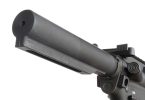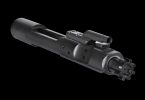




The AR platform is a modular rifle system built around a two-part receiver architecture and a gas-operated cycling mechanism. It serves as the foundation for both the AR-15 (small-frame) and AR-10 (large-frame) families.
This guide explains how the platform is structured, how it functions, where AR-15 and AR-10 differ, and what to understand before selecting components or configuring a build. The goal is structural clarity, not product promotion.
What Is the AR Platform?
The AR platform is a semi-automatic rifle system originally developed by ArmaLite. “AR” stands for ArmaLite Rifle, not “assault rifle.” The defining characteristic of the platform is its split receiver design:
- Upper receiver assembly
- Lower receiver assembly
These two assemblies connect via takedown and pivot pins. This separation enables modular configuration and parts interchangeability within size families.
At a structural level, the platform includes:
- A gas-operated cycling system
- A rotating bolt locking mechanism
- A buffer and recoil system housed in the receiver extension
- Detachable magazine feeding
Understanding the relationship between the upper and lower assemblies is essential. The upper contains the barrel and bolt carrier group. The lower houses the fire control components and buffer system.
A focused breakdown of upper assembly structure and roles is covered in this guide to the upper receiver.
The lower assembly’s component layout and function are clarified in lower receiver housing.
The AR platform is best understood as a configurable system rather than a single rifle model.
Core Components of the AR Platform
Upper Receiver Assembly
The upper receiver assembly contains the primary operating components:
- Barrel
- Gas system
- Bolt carrier group (BCG)
- Charging handle
- Handguard
The barrel determines caliber and length. The gas system regulates cycling timing. The bolt carrier group locks, unlocks, extracts, ejects, and chambers rounds as the action cycles.
A step-by-step explanation of bolt carrier group operation helps frame why carrier quality, gas sealing, and staking matter for long-term reliability.
Most AR-pattern rifles use a direct impingement approach, where expanding gases travel through a gas tube into the carrier key. Piston-driven systems modify that pathway and can change maintenance patterns and recoil characteristics, which is compared in direct impingement system.
Lower Receiver Assembly
The lower receiver houses the controls and the firing mechanism, including:
- Fire control group (trigger, hammer, disconnector)
- Safety selector
- Magazine release
- Bolt catch
- Receiver extension (buffer tube), spring, and buffer
The lower provides alignment for the fire control group and interfaces with the buffer system that returns the carrier forward after recoil. It also establishes compatibility within AR-15 or AR-10 size families.
Specification differences that affect fit and function are outlined in mil-spec and commercial specifications.
How the AR Platform Works
The AR platform operates using a gas-driven, rotating bolt system. The firing cycle follows a consistent sequence:
- The trigger press releases the hammer.
- The firing pin strikes the primer.
- Expanding gases propel the bullet forward.
- Gas is redirected through the gas port and gas system.
- Gas pressure drives the bolt carrier rearward.
- The bolt rotates and unlocks.
- The spent casing extracts and ejects.
- The buffer spring compresses and returns the carrier forward.
- A new round chambers and the bolt locks.
The operating sequence described in how AR rifles cycle is the baseline for diagnosing cycling issues and building configurations that prioritize performance consistency.
The system relies on balanced gas timing and spring/buffer resistance. When gas length, port size, carrier mass, and buffer weight are mismatched, the rifle can cycle too fast or too slowly. The right balance depends on configuration, ammunition, and intended use case.
AR-15 vs AR-10 Framework
The AR platform is commonly grouped into two size families:
- AR-15 (small frame)
- AR-10 (large frame)
The AR-15 is commonly chambered in intermediate cartridges such as 5.56 NATO and .223 Remington. The AR-10 is built around larger cartridges such as .308 Winchester and 6.5 Creedmoor. While the operating concept is similar, the dimensions and component interfaces differ.
Key structural differences include:
- Receiver dimensions
- Bolt carrier and bolt size
- Magazine dimensions and feed geometry
- Buffer system length and spring rates (varies by pattern)
Parts are not broadly interchangeable between size families unless a component is explicitly designed for that purpose. A structured overview of AR-10 and AR-15 differences clarifies compatibility boundaries and helps prevent mismatched assemblies.
Why the AR Platform Is Modular
Modularity is the practical advantage of the AR platform. Within a given size family, the platform supports component changes without rebuilding the entire rifle.
Common modular changes include:
- Swapping uppers to change barrel length or caliber (within compatibility limits)
- Changing handguards to alter mounting options and weight distribution
- Upgrading triggers to adjust feel and control
- Adjusting stocks and grips to fit the shooter and use case
The underlying logic of modular rifle design is that the platform separates core functions into assemblies and standardized interfaces. That flexibility is useful, but it also increases the value of evaluating compatibility before ordering parts.
Common Use Cases for the AR Platform
Use case should drive configuration. The same base platform can be optimized in different directions, but the tradeoffs change with each goal.
- Recreational shooting: A balanced configuration typically prioritizes cost-to-value ratio and manageable recoil over maximum durability at high round counts.
- Hunting: Barrel length, cartridge selection, and optic choice are driven by target species, distance, and handling needs.
- Competition: Trigger control, gas tuning, and weight distribution influence split times and performance consistency.
- Defensive configuration: Reliability and durability are often prioritized over minimizing weight or maximizing features.
When use case is defined first, component selection becomes an evaluation process instead of a parts list.
Advantages and Limitations
Advantages
- Modular configuration across common interfaces
- Wide parts availability and established patterns
- Adaptable barrel lengths and accessory mounting options
- Caliber flexibility within size families
Limitations
- Compatibility constraints across AR-15 vs AR-10 families
- Manufacturer tolerance differences can affect fit and function
- Gas system tuning can matter more as configurations become less standard
- Maintenance patterns vary by operating system and configuration
A neutral view of both sides makes it easier to choose components based on long-term reliability and realistic performance expectations.
What to Understand Before Building or Buying
Before selecting components, define the decision framework:
- Use case: What the rifle is configured to do most often
- Budget range: How you are balancing durability, finish quality, and feature set
- Experience level: How much tuning and troubleshooting you want to take on
- Compatibility: Confirming pattern, dimensions, and interfaces before ordering
- Maintenance expectations: Cleaning frequency and parts wear profile
Upper receiver selection is a common decision point because it controls barrel, gas system, and cycling characteristics. A structured evaluation approach is outlined in best upper receivers.
Lower receiver selection affects controls, fitment, and long-term durability expectations. A comparison framework is provided in top lower receiver options.
For new builders prioritizing simplicity, complete assemblies reduce decision complexity and compatibility errors. Configuration tradeoffs are reviewed in complete AR build kits.
BCG selection influences extraction reliability, wear patterns, and gas efficiency. Criteria-focused recommendations are covered in reliable bolt carrier groups.
Accessories should be chosen for function and interface compatibility, not for feature density. A structured approach is covered in essential AR accessories.
Optics selection is most consistent when it starts with range and target size rather than magnification trends. Selection criteria are outlined in choosing optics for an AR rifle.
FAQ
AR stands for ArmaLite Rifle, referencing the original developer of the design. It does not stand for “assault rifle.”
The AR-15 is a small-frame version within the broader AR platform. The platform concept also includes large-frame variants such as the AR-10 family.
In most cases, no. Receivers, bolt carrier groups, and magazines differ in size and interface. Some components may be compatible by design, but compatibility should be confirmed before mixing parts.
Gas system length, port sizing, carrier mass, and buffer weight influence cycling speed and extraction timing. A balanced configuration tends to produce more consistent cycling across common ammunition types.
Yes. The platform supports modular changes to uppers, handguards, triggers, stocks, and accessories. Customization is most straightforward when parts are chosen within the same size family and pattern.
AR-15 rifles are typically lighter and use smaller cartridges, while AR-10 rifles are larger and commonly chambered in higher-recoil cartridges. The differences affect handling, parts compatibility, and configuration goals.
Conclusion
The AR platform is defined by its split receiver architecture, gas-operated cycling system, and modular configuration structure. AR-15 and AR-10 rifles share this foundation but differ in size, cartridge range, and component dimensions.
Once you understand how the upper and lower assemblies interact, how the cycling system works, and where compatibility boundaries exist, selecting components becomes a structured evaluation process. From there, focused component guides and configuration-specific recommendations fit naturally into the same framework.