





Most AR buying mistakes start with the same problem: trying to choose parts before understanding the platform itself.
The AR platform is often described as a rifle, but that is only part of the picture. It is better understood as a modular system built around two major receiver assemblies, a gas-operated cycling mechanism, and a long list of compatible components that can change how the rifle handles, cycles, and performs.
That flexibility is the reason one AR can be configured for casual range use while another is built around hunting, competition, or defensive reliability. It is also why new builders can get overwhelmed so quickly. Once every part becomes changeable, every part also becomes a decision.
This guide explains how the AR platform is structured, how the major systems work together, where AR-15 and AR-10 rifles differ, and what to understand before buying parts or configuring a build. The goal is not to collect specifications. The goal is to understand which details actually affect your decisions.
What Is the AR Platform?
The AR platform is a semi-automatic rifle system originally developed by ArmaLite. “AR” stands for ArmaLite Rifle, not “assault rifle.”
The defining feature of the platform is its split receiver design:
- Upper receiver assembly
- Lower receiver assembly
Those two assemblies connect with takedown and pivot pins. That simple split is one of the reasons the platform became so modular. The upper handles the barrel, bolt carrier group, gas system, and major cycling components. The lower houses the fire control group, controls, magazine interface, and buffer system.
Here is where many new builders get confused: the upper and lower receiver are not just two halves of the same shell. They divide the rifle’s major functions. Once you understand that split, the rest of the platform becomes much easier to evaluate.
At a structural level, the AR platform includes:
- A gas-operated cycling system
- A rotating bolt locking mechanism
- A buffer and recoil system housed in the receiver extension
- Detachable magazine feeding
- Modular upper and lower receiver assemblies
The platform is best understood as a configurable system rather than a single rifle model. Two AR-pattern rifles can look similar from the outside but behave very differently depending on barrel length, gas system length, buffer weight, bolt carrier group quality, cartridge selection, and intended role.
A focused breakdown of upper assembly structure and function is covered in upper receiver assembly. The lower assembly’s layout and control functions are clarified in lower receiver housing.
Core Components of the AR Platform
Upper Receiver Assembly
The upper receiver assembly contains most of the parts that directly affect cycling, barrel performance, and handling.
Common upper receiver components include:
- Barrel
- Gas system
- Bolt carrier group
- Charging handle
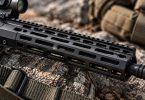
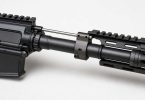
- Handguard
- Muzzle device
The barrel determines cartridge compatibility, length, velocity potential, and much of the rifle’s practical role. The gas system influences how the rifle cycles. The bolt carrier group locks, unlocks, extracts, ejects, and chambers rounds as the action runs.
Most builders notice the visible parts first. The handguard, muzzle device, and overall profile are easy to compare. Reliability usually depends more on the parts they rarely see: the bolt, carrier, gas key, gas rings, chamber quality, and how the gas and buffer systems work together.
A step-by-step explanation of bolt carrier group operation helps explain why carrier quality, gas sealing, staking, and extraction reliability matter over time.
Most AR-pattern rifles use a direct impingement operating system. In that setup, expanding gas travels through the gas port and gas tube, then enters the carrier key to drive the bolt carrier rearward. Piston-driven systems change that gas pathway and can affect maintenance patterns, felt recoil, weight, and parts compatibility. The practical differences are compared in direct impingement vs piston AR systems.
Lower Receiver Assembly
The lower receiver houses the controls, fire control components, magazine interface, and buffer system.
Common lower receiver components include:
- Fire control group
- Trigger
- Hammer
- Disconnector
- Safety selector
- Magazine release
- Bolt catch
- Receiver extension, spring, and buffer
- Grip and stock interface
The lower does not determine barrel performance, but it still matters. It controls trigger feel, ergonomics, buffer compatibility, magazine fit, and the way the rifle interfaces with the shooter.
This is one of those areas where buyers can either overthink or underthink the decision. A lower receiver does not need to be exotic to work well, but tolerance, machining quality, parts fit, and compatibility still matter. The goal is not to buy the flashiest lower. The goal is to choose one that supports the build without creating avoidable fitment problems.
Specification differences that affect fit and function are outlined in mil-spec and commercial AR parts.
How the AR Platform Works
Most reliability conversations eventually come back to the firing cycle. When builders talk about rifles being overgassed, undergassed, short-stroking, ejecting erratically, or beating up components, they are usually talking about something happening inside this sequence.
The AR platform operates through a gas-driven, rotating bolt system. The basic firing cycle works like this:
- The trigger press releases the hammer.
- The hammer drives the firing pin forward.
- The firing pin strikes the primer.
- Expanding gases propel the bullet down the barrel.
- Gas is redirected through the gas port and gas system.
- Gas pressure drives the bolt carrier rearward.
- The bolt rotates and unlocks.
- The spent casing extracts and ejects.
- The buffer spring compresses inside the receiver extension.
- The spring drives the carrier forward again.
- A new round chambers and the bolt locks.
That sequence is simple on paper. In practice, timing matters.
The system depends on the relationship between gas pressure, gas port size, gas system length, carrier mass, buffer weight, spring resistance, ammunition pressure, and barrel length. When those variables are balanced, the rifle cycles consistently. When they are mismatched, the rifle may cycle too quickly, too slowly, or inconsistently across ammunition types.
This is why “more gas” is not automatically better. A rifle can have enough gas to function and still be harsher than it needs to be. It can also be tuned so lightly that reliability becomes ammunition-sensitive. The practical goal is not maximum gas. The goal is enough reliable cycling without unnecessary stress on the system.
The operating sequence described in how AR rifles cycle is the baseline for diagnosing cycling issues and understanding why gas and buffer choices matter.
AR-15 vs AR-10 Framework
The AR platform is commonly discussed in two broad size families:
- AR-15: small-frame rifles
- AR-10: large-frame rifles
The AR-15 is commonly chambered in intermediate cartridges such as 5.56 NATO and .223 Remington. The AR-10 family is built around larger cartridges such as .308 Winchester and 6.5 Creedmoor.
The rifles share a similar operating concept, but that does not mean the parts freely interchange. This is one of the most common beginner mistakes. AR-15 and AR-10 rifles may look related, but many of the major components differ in size, geometry, and compatibility standards.
Key structural differences include:
- Receiver dimensions
- Bolt carrier and bolt size
- Magazine dimensions and feed geometry
- Buffer system requirements
- Spring rates and receiver extension compatibility
- Pattern differences between manufacturers
AR-15 compatibility is generally more standardized. AR-10 compatibility can be more complicated because large-frame patterns are not as universally consistent. That does not make AR-10 rifles a bad choice. It simply means compatibility matters more before ordering parts.
A structured overview of AR-10 and AR-15 differences helps clarify size-family boundaries and prevent mismatched assemblies.
Why the AR Platform Is Modular
Modularity is the practical advantage of the AR platform. Within a compatible size family and pattern, the rifle can be configured around a specific role without replacing the entire firearm.
Common modular changes include:
- Swapping uppers to change barrel length or cartridge compatibility
- Changing handguards to alter mounting options and weight distribution
- Upgrading triggers to change feel and control
- Adjusting stocks and grips to fit the shooter
- Selecting buffer components to support cycling behavior
- Changing optics and accessories based on range and use case
The advantage is flexibility. The risk is assuming flexibility means everything fits everything.
Many builders get into trouble by treating modularity like universal compatibility. The AR platform gives you options, but those options still live inside mechanical boundaries. Size family, receiver pattern, barrel extension, gas length, buffer setup, magazine geometry, and manufacturer tolerances can all affect whether a configuration works correctly.
The underlying logic of modular rifle design is that the platform separates major functions into assemblies and standardized interfaces. That flexibility is useful, but it makes compatibility checking more important, not less.
Common Use Cases for the AR Platform
Use case should drive configuration. That sounds obvious, but it is where many buying decisions go sideways.
The same base platform can be pushed in different directions. Each direction creates tradeoffs.
- Recreational shooting: A balanced setup usually prioritizes cost-to-value ratio, manageable recoil, and reliable function over specialized features.
- Hunting: Cartridge selection, barrel length, optic choice, and carry weight matter more than accessory density.
- Competition: Trigger control, gas tuning, weight distribution, recoil behavior, and sighting setup can influence speed and consistency.
- Defensive configuration: Reliability, durability, simplicity, and familiarity usually matter more than chasing the newest feature.
- Precision-oriented builds: Barrel quality, ammunition consistency, optic selection, trigger control, and stability become more important than cosmetic upgrades.
The biggest mistake is building around parts before defining the role. Once the role is clear, component selection becomes an evaluation process instead of a shopping list.
That is the real strength of the AR platform. It can be configured many ways, but the best configurations are built around a purpose.
Advantages and Limitations
Advantages
- Modular configuration across common interfaces
- Wide parts availability
- Strong aftermarket support
- Adaptable barrel lengths and handguard systems
- Caliber flexibility within size families
- Large knowledge base for troubleshooting and configuration
The major advantage is not simply that the AR platform has many parts available. The advantage is that those parts allow the rifle to be configured around different roles. That is valuable when the builder understands what the role requires.
Limitations
- Compatibility constraints between AR-15 and AR-10 families
- Manufacturer tolerance differences
- Gas system sensitivity in less standard configurations
- Potential for overbuilding or buying unnecessary upgrades
- Maintenance differences between operating systems and configurations
The AR platform’s flexibility can also become its weakness. More options create more opportunities to make the wrong decision. A neutral view of both sides makes it easier to choose components based on realistic performance expectations instead of marketing claims.
What to Understand Before Building or Buying
Before selecting components, define the decision framework. This matters more than most beginners realize.
- Use case: What the rifle will be used for most often
- Budget range: How cost, durability, finish quality, and features should be balanced
- Experience level: How much tuning and troubleshooting you are willing to take on
- Compatibility: Whether the parts share the correct size family, pattern, and interface
- Maintenance expectations: How the operating system and component choices affect cleaning and wear
- Upgrade value: Whether an upgrade solves a real problem or just adds complexity
This is where Upper Authority’s approach differs from a basic parts list. The question is not, “What can I upgrade?” The better question is, “What problem does this part solve, and do I actually have that problem?”
Upper receiver selection is a common decision point because the upper controls the barrel, gas system, handguard, and much of the rifle’s cycling behavior. If you’re trying to decide between complete uppers, best upper receivers explains which differences matter and which specifications tend to get more attention than they deserve.
Lower receiver selection affects controls, trigger compatibility, receiver fitment, and long-term durability expectations. A comparison framework is provided in top lower receiver options.
For new builders prioritizing simplicity, complete assemblies can reduce decision complexity and compatibility errors. Configuration tradeoffs are reviewed in complete AR build kits.
BCG selection influences extraction reliability, gas efficiency, wear patterns, and long-term function. Criteria-focused recommendations are covered in reliable bolt carrier groups.
Accessories should be chosen for function and interface compatibility, not feature density. A structured approach is covered in essential AR accessories.
Optics selection is most consistent when it starts with range, target size, and intended role rather than magnification trends. Selection criteria are outlined in choosing optics for an AR rifle.
FAQ
What does AR stand for?
AR stands for ArmaLite Rifle, referencing the original developer of the design. It does not stand for “assault rifle.”
Is the AR-15 the same as the AR platform?
The AR-15 is a small-frame rifle family within the broader AR platform. The platform concept also includes large-frame variants such as the AR-10 family.
Are AR-10 and AR-15 parts interchangeable?
In most cases, no. Receivers, bolt carrier groups, barrels, magazines, and buffer components often differ in size or interface. Some smaller components may be compatible by design, but compatibility should always be confirmed before mixing parts.
How does the AR gas system affect reliability?
Gas system length, gas port sizing, carrier mass, buffer weight, spring resistance, and ammunition pressure all influence cycling speed and extraction timing. A balanced configuration tends to produce more consistent cycling across common ammunition types.
Is the AR platform customizable?
Yes. The platform supports modular changes to uppers, handguards, triggers, stocks, grips, optics, and accessories. Customization is most straightforward when parts are chosen within the same size family and compatible pattern.
What is the practical difference between AR-15 and AR-10 configurations?
AR-15 rifles are typically lighter and commonly use smaller intermediate cartridges. AR-10 rifles are larger and commonly chambered for higher-recoil cartridges such as .308 Winchester or 6.5 Creedmoor. Those differences affect handling, parts compatibility, recoil behavior, and configuration goals.
Conclusion
The AR platform is defined by its split receiver architecture, gas-operated cycling system, rotating bolt mechanism, and modular configuration structure. AR-15 and AR-10 rifles share the same broad design logic, but they differ in size, cartridge range, component dimensions, and compatibility rules.
The most important takeaway is simple: the AR platform is not just a rifle. It is a system of tradeoffs.
Once you understand how the upper and lower assemblies interact, how the firing cycle works, where compatibility boundaries exist, and why use case should drive configuration, buying parts becomes less confusing. You stop chasing every upgrade and start asking the better question: does this component actually fit the role of the rifle?
That is where better AR decisions begin.






Leave a Comment