
Tag: Maintenance

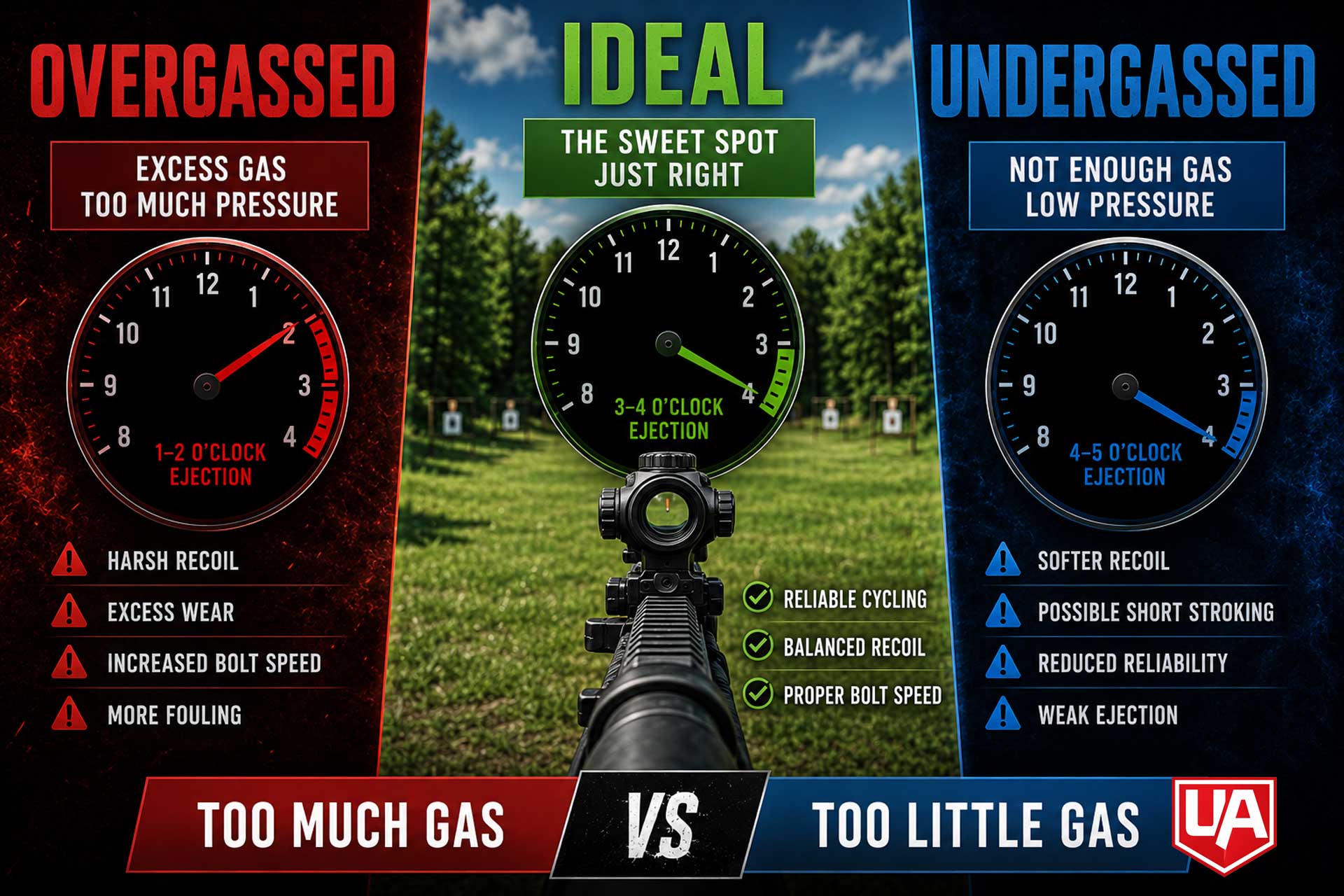
Infographic showing overgassed, ideal, and undergassed AR-15 ejection patterns with recoil and cycling characteristics.
Overgassed vs Undergassed AR-15: Symptoms, Causes, and Fixes
An AR-15 does not need excessive recoil or violent cycling to function reliably. In fact, the most dependable rifles usually operate within a fairly balanced gas window where bolt speed, extraction timing, and buffer resistance all work together predictably. When that balance shifts too far in either direction, the rifle begins showing symptoms that shooters…
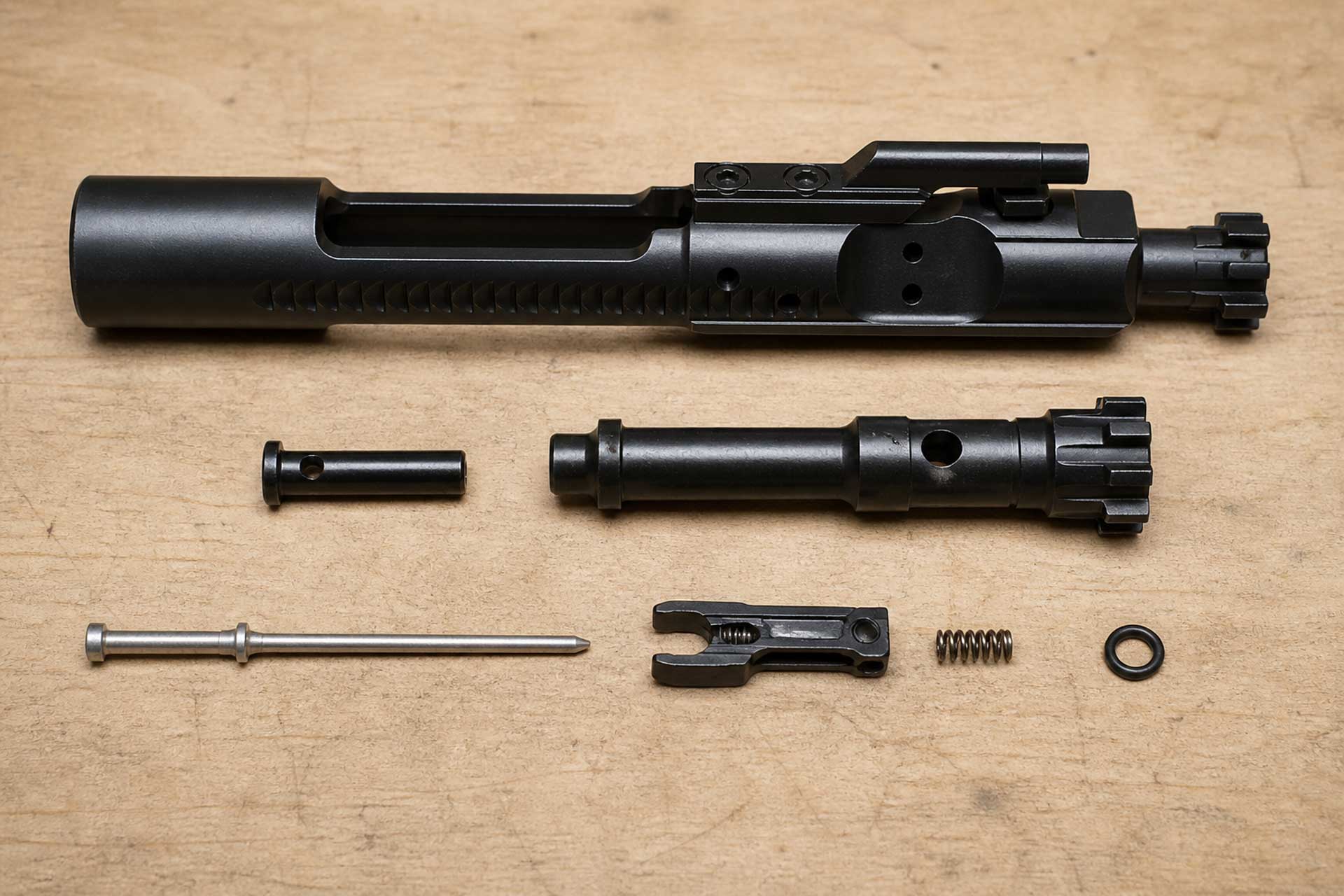
Disassembled bolt carrier group components arranged on a wooden surface, including the carrier, bolt, firing pin, cam pin, and small parts
Bolt Carrier Group Maintenance: Cleaning, Lubrication, and Wear Points
Bolt carrier group maintenance is one of the most practical skills you can develop as an AR-15 owner. It sits at the center of reliability, directly affecting how consistently your rifle cycles, how long components last, and how well the system performs under real-world use. The bolt carrier group (BCG) handles feeding, firing, extracting, and ejecting—essentially…
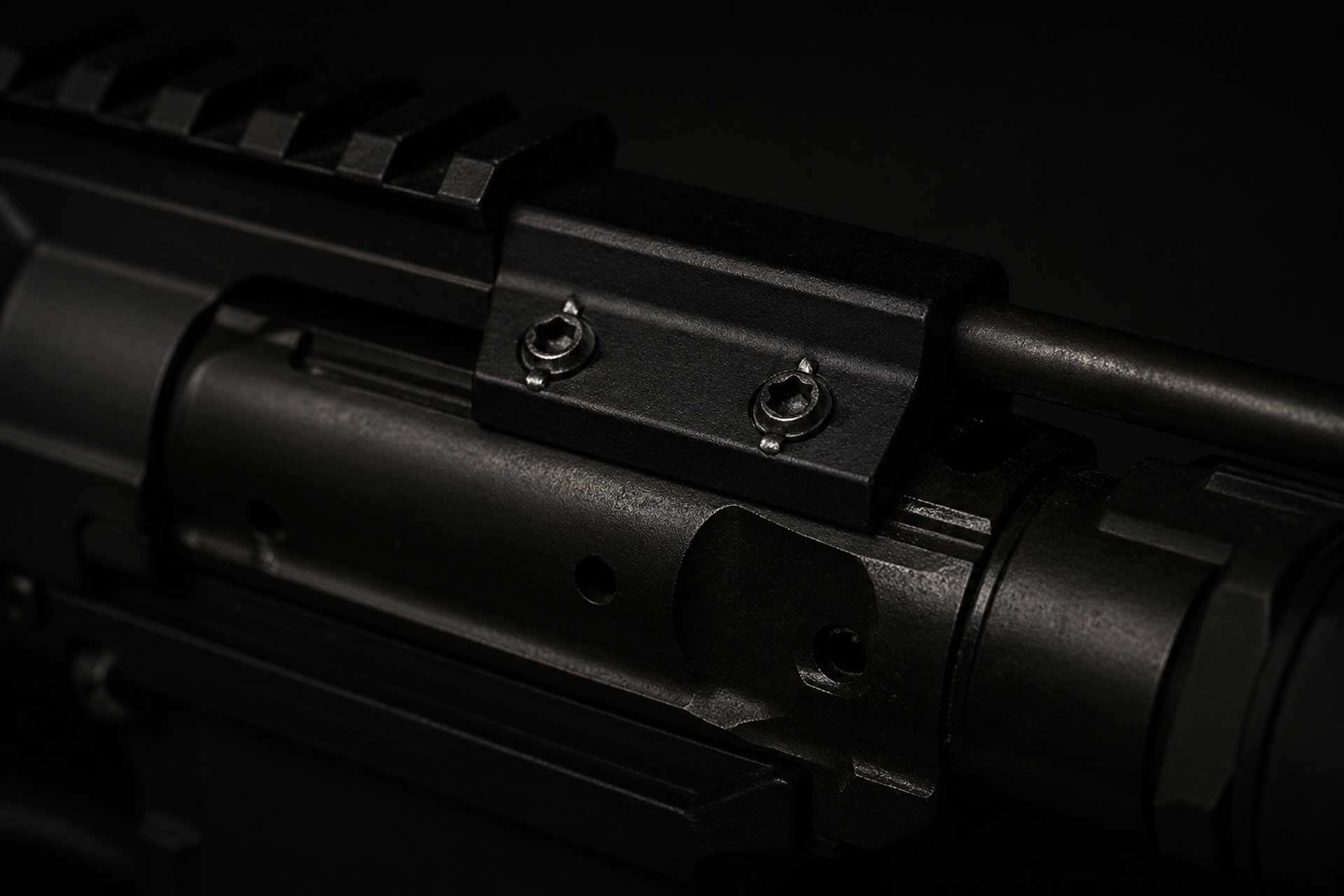
Close-up of an AR-15 bolt carrier group showing the gas key and mounting screws on top of the carrier
Gas Key Staking Explained: Why It Matters for AR-15 Reliability
Gas key staking is one of those details that looks minor until it fails. At a glance, it’s just a pair of screws on top of a bolt carrier. But those screws control whether your rifle maintains proper gas pressure during operation—and that directly affects reliability. To understand why staking matters, you have to place it…
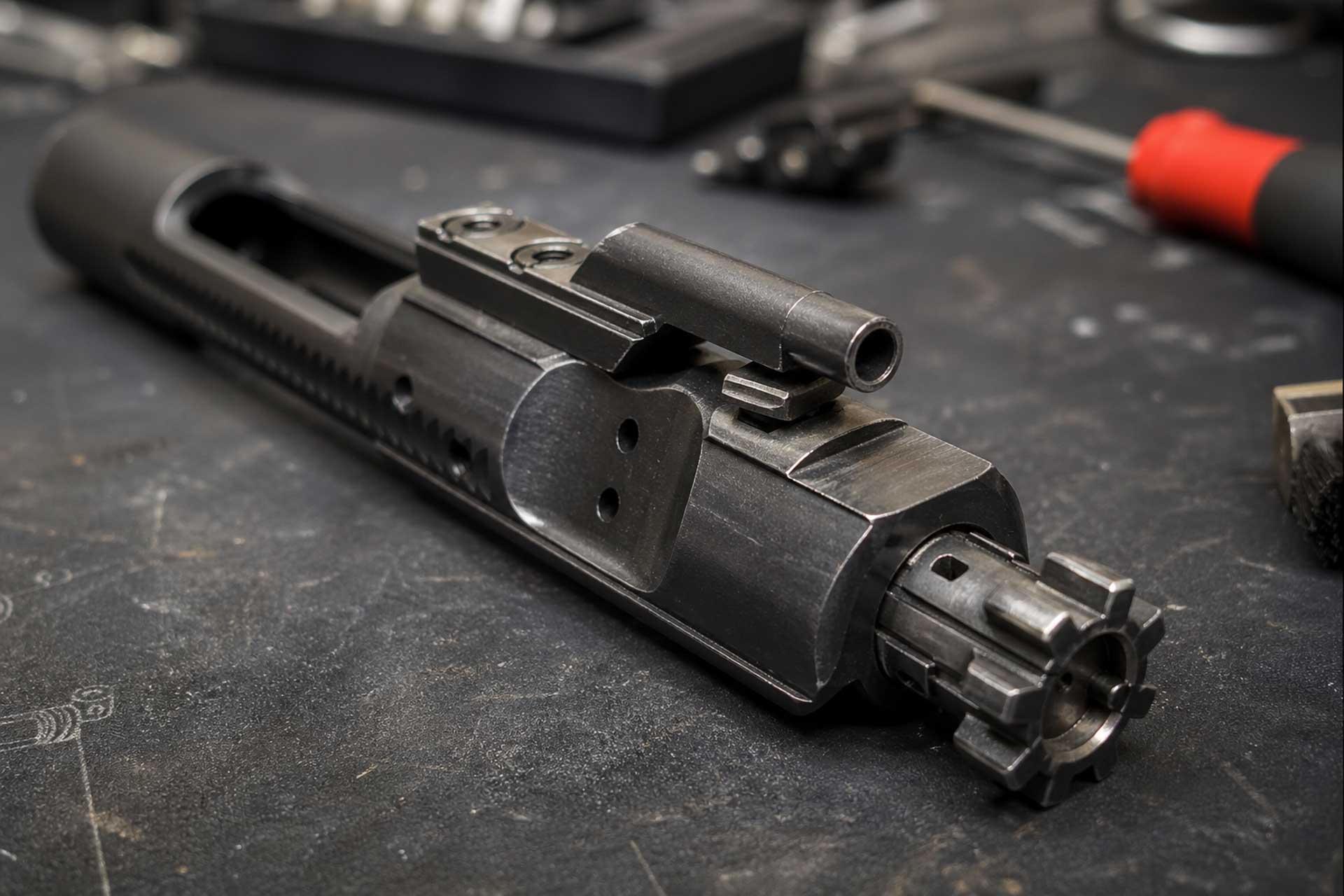
Close-up of a metal bolt carrier group resting on a dark workbench with tools blurred in the background
BCG Troubleshooting Guide: Diagnosing AR-15 Cycling Issues
A rifle that fails to cycle correctly is rarely “just a bad part.” More often, it’s a system imbalance—and the bolt carrier group sits at the center of it. When something goes wrong, the symptoms show up through the BCG: failure to eject, short stroking, inconsistent feeding, or sluggish return to battery. To understand why those…
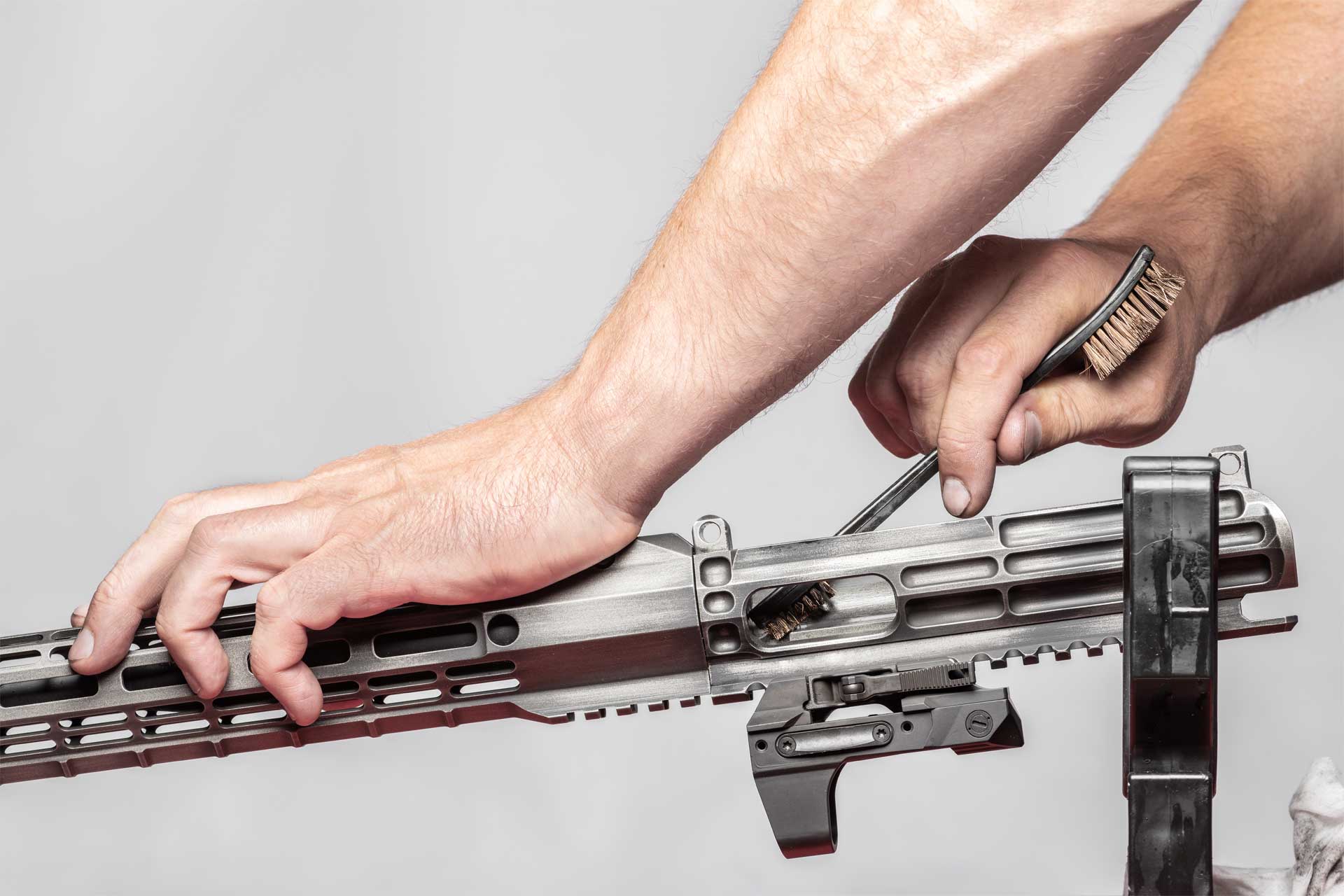
person cleaning the interior of an AR-style rifle upper receiver with a brush
AR Maintenance Basics: Keeping Your Rifle Reliable Over Time
Maintenance is not optional on the AR platform. It is part of how the system is designed to function. Carbon fouling, heat, and friction are inherent to the operating cycle, and without routine attention, those factors compound into reliability issues that are entirely preventable. To understand why maintenance matters, you have to view the rifle as…