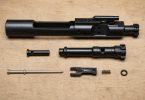



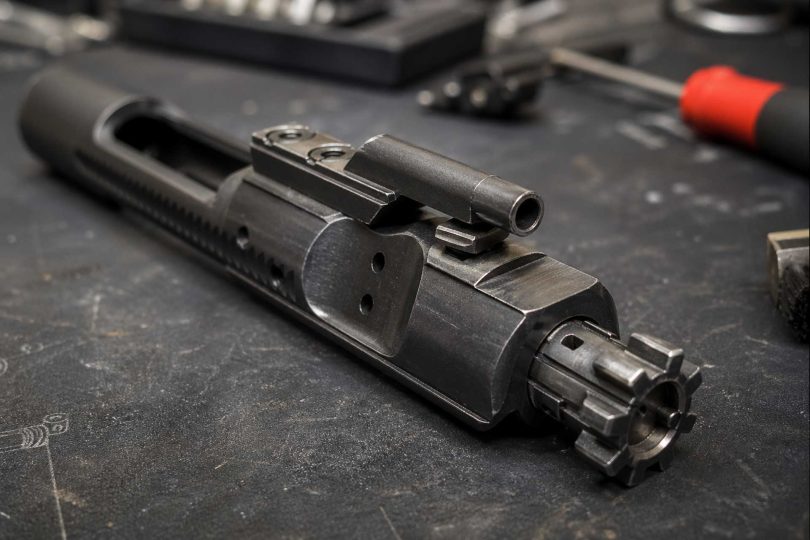

A rifle that fails to cycle correctly is rarely “just a bad part.” More often, it’s a system imbalance—and the bolt carrier group sits at the center of it. When something goes wrong, the symptoms show up through the BCG: failure to eject, short stroking, inconsistent feeding, or sluggish return to battery.
To understand why those issues happen, it helps to first ground yourself in AR platform fundamentals. The AR-15 operates as a balanced mechanical system where gas pressure, carrier mass, buffer weight, and timing all interact. The BCG is not an isolated component—it’s the part that translates all of those variables into motion.
This guide is built for diagnosing those interactions. Instead of guessing or swapping parts blindly, you’ll learn how to connect symptoms to root causes and apply targeted fixes. That means understanding how the carrier moves, how gas drives it, and how supporting components either help or disrupt that process.
If you’re already familiar with how the bolt carrier group works, this guide will take you one step further—into real-world problem solving.
What BCG Troubleshooting Actually Means
Troubleshooting a bolt carrier group is not about the carrier alone. It’s about diagnosing the system that drives it. The AR-15 relies on a sequence of timed events described in the AR-15 cycle of operations. If any step in that cycle is disrupted, the BCG reflects the failure.
For example:
- Weak rearward movement suggests insufficient gas or excessive resistance
- Violent cycling suggests overgassing or low buffer resistance
- Inconsistent feeding often points to timing mismatches
These issues rarely originate in isolation. The gas system, described in how the AR-15 gas system works, determines how much force reaches the carrier. The buffer system determines how that force is absorbed. The receiver and internal geometry guide how that movement translates into function.
Why this matters: if you treat the BCG as the problem without understanding the system, you end up replacing good components while leaving the actual issue untouched.
A Practical Framework for Diagnosing BCG Issues
Instead of approaching problems randomly, use a structured approach:
1. Identify the Symptom
Start with what the rifle is doing:
- Failure to eject
- Failure to feed
- Short stroking
- Failure to lock back
- Excessive recoil impulse
Each symptom points toward a specific part of the system.
2. Understand the System Relationship
The BCG interacts directly with:
- Gas system (energy input)
- Buffer system (energy absorption)
- Receiver alignment and friction
- Ammunition pressure
This relationship is part of the platform’s modular rifle design, where components can be swapped—but must still work together.
3. Isolate the Variable
Change one variable at a time:
- Gas flow (block, tube, key)
- Carrier mass or friction
- Buffer weight
- Ammunition
This prevents misdiagnosis and keeps fixes targeted.
Common BCG-Related Problems and What Causes Them
Failure to Eject
If spent casings remain in the chamber or eject weakly:
- Likely cause: insufficient gas pressure
- Secondary causes: worn extractor, gas leakage
Gas leakage often traces back to improper sealing, which is why understanding gas key staking explained matters.
Short Stroking
The carrier moves rearward but not far enough to complete the cycle:
- Under-gassed system
- Buffer too heavy
- Excess friction inside the receiver
Short stroking often shows up in builds that ignore compatibility, which is covered in bolt carrier group compatibility.
Failure to Feed
Rounds fail to chamber properly:
- Timing issue between bolt speed and magazine presentation
- Weak rearward travel
- Excessive carrier speed causing misalignment
This often connects back to system balance rather than a single faulty part.
Failure to Lock Back
Bolt does not stay open on empty magazine:
- Insufficient gas
- Incorrect buffer weight
- Magazine interaction issues
This symptom is especially useful because it clearly indicates incomplete rearward travel.
Overgassing Symptoms
Excessive recoil, harsh cycling, or premature wear:
- Gas system delivering too much pressure
- Carrier moving too fast
- Buffer system not compensating
This becomes more relevant when comparing direct impingement vs piston systems, where gas delivery characteristics differ.
How Supporting Components Affect BCG Performance
The BCG is only as reliable as the environment it operates in.
- The upper receiver determines alignment and travel path, which relates to what an upper receiver does
- The lower receiver controls buffer interaction, tied to what a lower receiver is
- System balance depends on how these parts interact, not just their individual quality
If the platform itself is misunderstood, even high-quality components won’t perform correctly. That’s why reviewing an AR-15 parts overview can clarify how everything connects.
Maintenance vs Mechanical Failure
Not every issue is structural. Many problems come from neglect.
Carbon buildup, improper lubrication, and debris increase friction and reduce reliability. Routine care like how to clean a bolt carrier group and ongoing bolt carrier group maintenance can prevent many of the symptoms described above.
Why this matters: troubleshooting should always start with maintenance before moving into component replacement.
When to Adjust vs Replace
Not every issue requires a new part.
Adjust when:
- Gas flow is slightly off
- Buffer weight is mismatched
- System is clean but inconsistent
Replace when:
- Carrier shows wear or deformation
- Gas key is loose or damaged
- Reliability issues persist after system tuning
If replacement becomes necessary, evaluating best bolt carrier groups or identifying the best BCG for reliability can help narrow options.
For a more structured selection process, a bolt carrier group buying guide can provide decision criteria.
FAQ: BCG Troubleshooting Guide
What is the most common cause of BCG cycling issues?
The most common cause is imbalance in the gas system. Too little gas leads to short stroking, while too much gas causes excessive carrier speed and wear.
Can a dirty BCG cause cycling problems?
Yes. Carbon buildup increases friction and reduces efficiency, which can prevent full cycling even in an otherwise properly configured system.
How do I know if my rifle is undergassed?
Signs include weak ejection, failure to lock back, and incomplete cycling. These indicate insufficient rearward movement of the carrier.
Does buffer weight affect BCG performance?
Yes. The buffer system controls how the carrier moves and returns forward. Incorrect weight can disrupt timing and reliability.
Should I replace the BCG if I have cycling issues?
Not immediately. Most issues come from system imbalance rather than part failure. Diagnose first, then replace only if necessary.
How important is compatibility when troubleshooting?
Critical. Components must work together as a system. Mismatched parts often create the very issues users try to fix.
Conclusion
A reliable AR-15 is not built on individual parts—it’s built on system balance. The bolt carrier group sits at the center of that system, translating gas pressure and mechanical resistance into consistent function.
Troubleshooting, then, is not about swapping components until something works. It’s about understanding how the rifle is supposed to behave, identifying where that behavior breaks down, and correcting the specific cause.
When you approach problems this way, you stop guessing and start diagnosing. That leads to faster fixes, better performance, and a rifle that runs the way it was designed to.
If you keep the system in balance, the BCG will do its job.