

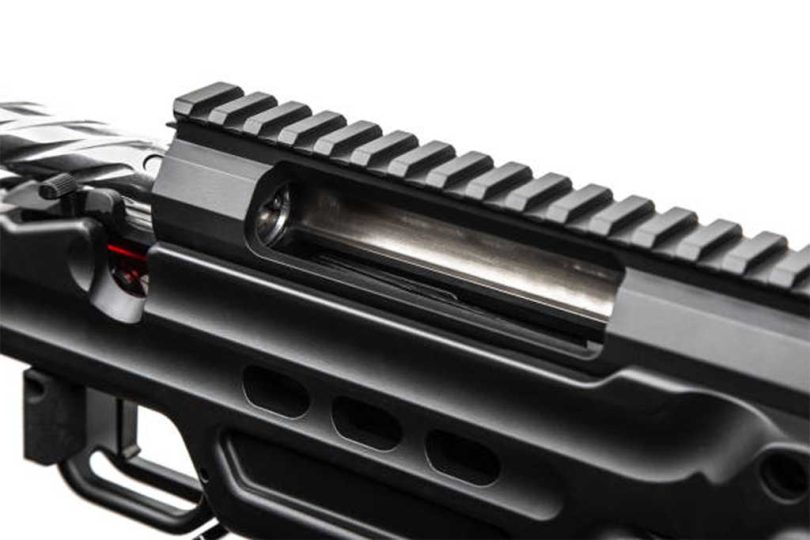

The upper receiver is the top half of the rifle’s receiver assembly. On AR-pattern rifles, it holds the barrel, bolt carrier group, charging handle, and the parts that manage gas flow and cycling. In practical terms, it contains most of the components that determine how the rifle chambers, fires, extracts, and returns to battery.
For beginners, the easiest way to understand the upper receiver is to think of it as the operating side of the rifle. The lower receiver houses the controls and fire control group, but the upper receiver contains the core parts that direct the firing sequence and define many of the rifle’s performance characteristics. If you need a broader view of how the system fits together, an AR platform overview will help put the full platform into context.
This guide explains what the upper receiver is, what it does, which components it contains, how it differs from the lower receiver, and what to evaluate before choosing one for a build or upgrade. The goal is structural clarity, not product promotion.
What Is an Upper Receiver?
An upper receiver is the main housing that connects the barrel assembly to the rest of the rifle and supports the moving parts involved in firing and cycling. On AR-pattern rifles, it attaches to the lower receiver using takedown and pivot pins, creating the two-part receiver architecture that defines the platform.
The upper receiver is not just a shell. It provides the mounting point and alignment for the barrel, the channel for the charging handle, the track for the bolt carrier group, and the interface for the gas system. Because of that, it affects reliability, parts compatibility, weight, and how the rifle handles heat and recoil.
When people ask what an upper receiver is, they are often really asking two separate questions: what physical part it refers to, and what functional role it plays. Physically, it is the upper assembly that sits above the magazine well and lower controls. Functionally, it houses the components that manage chambering, locking, unlocking, extraction, and ejection during the firing cycle.
That role becomes much easier to understand once you see where the upper receiver fits in the operating sequence. A clear explanation of that sequence is covered in how AR rifles cycle.
What Does the Upper Receiver Do?
The upper receiver does four main jobs.
- It supports and aligns the barrel and chamber.
- It houses the bolt carrier group as it moves during cycling.
- It channels the charging handle and supports manual operation of the action.
- It interfaces with the gas system that drives the cycling process.
Those jobs matter because the upper receiver is where firing energy gets translated into cycling movement. Once a round is fired, expanding gases propel the projectile down the barrel. Depending on the system, gas is redirected back into the action, which drives the carrier rearward, unlocks the bolt, extracts the spent casing, and starts the return cycle.
That means the upper receiver is central to chamber alignment, carrier movement, and gas system function. It is not the only part involved in reliability, but it is the structure that ties several reliability-critical parts together. If you want the mechanical sequence in more detail, see how a bolt carrier group works.
In beginner terms, the lower receiver lets the shooter control the rifle, while the upper receiver is where much of the rifle’s actual operating action happens.
Key Components Found in or Attached to the Upper Receiver
A complete upper assembly usually includes the receiver body itself plus several attached or housed components. These are the parts most directly associated with upper receiver performance and configuration.
Barrel
The barrel threads into or mounts to the upper receiver and determines chambering, length, twist rate, and a large part of the rifle’s performance profile. Barrel length influences velocity and handling. Chambering determines the cartridge family the rifle is built to use. Twist rate influences which bullet weights stabilize most consistently.
Because the upper receiver holds the barrel assembly in alignment with the bolt and chamber, any discussion of the upper receiver naturally includes the barrel even though the barrel is its own major component.
Bolt Carrier Group
The bolt carrier group rides inside the upper receiver and performs the core movement of the action. It strips a round from the magazine, chambers it, locks into battery, unlocks after firing, extracts the spent casing, and cycles rearward before returning forward.
Although the carrier group is a separate part, its movement depends on proper fit, alignment, lubrication, and interaction with the upper receiver. A deeper comparison of gas system behavior that affects carrier movement is outlined in direct impingement vs piston systems.
Charging Handle
The charging handle sits in the upper receiver and allows manual operation of the action. It lets the shooter chamber the first round, clear certain malfunctions, inspect the chamber, and lock or release the system during handling and maintenance.
Gas System
On most AR-pattern rifles, the gas system redirects expanding gases to drive the action. Gas system length, port size, and alignment all affect cycling speed and reliability. The upper receiver houses the path and support points that allow the gas system to function as intended.
Handguard and Mounting Interfaces
The handguard typically mounts around the barrel area and, depending on design, interfaces with the upper receiver or barrel nut assembly. While the handguard is not the receiver itself, it affects handling, accessory mounting, and thermal management. A page about modular rifle design helps frame why these interface decisions matter in AR builds.
Upper Receiver vs Lower Receiver
Beginners often confuse the upper and lower receiver because both are part of the same rifle, but they serve different roles.
The upper receiver is primarily responsible for housing the operating components tied to the firing sequence. The lower receiver houses the fire control group, safety, magazine release, bolt catch, grip, stock interface, and buffer system. In other words, the lower handles control inputs and supports recoil management, while the upper handles much of the cycling and barrel-side structure.
If you want the lower side explained in the same framework, see what a lower receiver is.
This distinction matters for parts selection. Some decisions belong mostly to the upper, such as barrel length, gas system length, and handguard setup. Others belong mostly to the lower, such as trigger choice, stock setup, and safety configuration. Understanding that division keeps you from evaluating the rifle as a single undifferentiated object.
Types of Upper Receivers
Not all upper receiver setups are the same. When people compare uppers, they are often comparing more than just the receiver body. They may be comparing complete assemblies, stripped receivers, caliber families, barrel lengths, or mounting standards.
Stripped vs Complete Upper
A stripped upper receiver is the bare receiver body without all the attached parts. A complete upper assembly includes the receiver plus most or all of the major components, such as the barrel, handguard, gas system, and sometimes the bolt carrier group and charging handle.
For beginners, complete uppers are usually simpler because they reduce parts-matching decisions. For experienced builders, stripped uppers offer more flexibility.
AR-15 vs AR-10 Family Differences
Upper receivers are not universally interchangeable across AR families. AR-15 and AR-10 patterns differ in size, dimensions, and component compatibility. That means an upper designed for one family does not simply cross over to the other without deliberate design compatibility.
A structured comparison is covered in AR-10 vs AR-15 differences.
Specification and Fitment Differences
Even within the same family, fitment and dimension standards can vary enough between manufacturers to matter. Rail heights, interface dimensions, and receiver extension assumptions can affect how well parts work together. A practical comparison of those specification issues appears in mil-spec vs commercial AR parts.
How the Upper Receiver Affects Performance
The upper receiver influences performance because it anchors several decisions that define how the rifle behaves. When people talk about a rifle feeling smooth, balanced, over-gassed, front-heavy, compact, or accurate enough for a particular use, they are often describing choices made in the upper assembly.
Barrel length changes handling and velocity. Gas system configuration changes timing and recoil characteristics. Handguard length changes grip options and weight distribution. Mounting strength and material selection can influence durability expectations. None of these variables exist in isolation.
For example, a shorter upper can be more compact and maneuverable, but it may also produce different gas timing characteristics and heat behavior than a longer setup. A heavier-profile upper may improve stability and heat resistance, but it can change balance and make the rifle less lively for offhand shooting.
This is why the upper receiver is such a central decision point in AR configuration. It is not just the place where parts sit. It is the assembly that bundles together many of the choices that define rifle behavior.
Complete Upper vs Building From Parts
One of the first decisions a beginner faces is whether to buy a complete upper or assemble one from individual components. The right answer depends on experience level, tolerance for troubleshooting, and how specific the final configuration needs to be.
A complete upper usually reduces complexity. It can lower the chance of compatibility errors, simplify assembly, and make it easier to evaluate performance as a system rather than as a stack of individual parts. That is one reason many first-time builders start with complete AR build kits.
Building from parts gives you more control over every major choice, but it also raises the burden of verifying fitment, gas balance, hardware quality, and assembly correctness. That tradeoff is not inherently good or bad. It depends on whether you want simplicity or customization.
What to Consider When Choosing an Upper Receiver
If you are evaluating uppers rather than just defining the part, start with intended use. A general-purpose rifle, a hunting rifle, and a competition-oriented rifle may all use different upper configurations even if they share the same platform family.
The first questions to ask are practical:
- What cartridge family is the rifle built around?
- What barrel length makes sense for the intended use?
- What gas system length fits that setup?
- Do you want a complete upper or a stripped starting point?
- Are you prioritizing weight, durability, compactness, or flexibility?
Then move to compatibility and quality questions:
- Will it match the lower and platform family correctly?
- Does the manufacturer have a good reputation for tolerances and assembly?
- Are the barrel, gas block, and carrier group appropriate for the intended use?
- Will the handguard and rail setup support the optic, grip, or accessory plan?
For beginners, the best evaluation framework is not “What is the most expensive option?” It is “What upper configuration fits the rifle’s intended use with the least unnecessary compromise?”
How to Compare Upper Receiver Options
When comparing upper receiver options, avoid reducing the decision to one feature. A longer rail, a lighter handguard, or a specific finish may matter, but those details should be judged within the complete use-case framework.
A better comparison approach looks at the full package:
- barrel length and profile
- gas system length and tuning assumptions
- weight distribution
- assembly quality
- compatibility with the lower and intended accessories
If you are at the point where you are weighing actual purchase options, a criteria-driven comparison of best upper receivers is the natural next step. If the overall configuration matters more than the upper alone, a review of essential AR accessories can also help frame how the rest of the setup will support the rifle’s intended role.
Related Components That Influence the Upper Receiver’s Performance
The upper receiver cannot be evaluated in total isolation because several connected components affect how well it performs.
The bolt carrier group influences cycling behavior, extraction consistency, and wear patterns. If you are comparing carrier options as part of a larger build decision, see recommended bolt carrier groups.
The lower receiver also matters because the upper and lower must fit the same platform family correctly and support the same operating assumptions. If your next step is comparing lower-side choices, a commercial comparison of best lower receivers can help define what matters on the control and durability side.
Optics, mounting choices, and accessory layout also affect how usable the upper assembly feels in practice. If your build plan includes a dedicated optic setup, a framework for choosing optics for an AR rifle can help you evaluate upper length, rail space, and intended distance together.
FAQ
An upper receiver is the top receiver assembly of an AR-pattern rifle. It houses the barrel, bolt carrier group, charging handle, and gas-system-related parts that support firing and cycling.
The upper receiver supports and aligns the barrel, houses the bolt carrier group, interfaces with the gas system, and provides the structure needed for chambering, locking, extraction, and ejection during the firing cycle.
No. The barrel is a separate component that mounts to the upper receiver. The upper receiver is the housing that supports the barrel assembly and other operating parts.
The upper receiver houses the main operating components tied to firing and cycling, while the lower receiver houses the fire control group, controls, and buffer system.
You can swap uppers within the correct platform family when the components are compatible. AR-15 and AR-10 parts are not broadly interchangeable, so family, dimensions, and intended configuration should always be confirmed first.
Beginners should start with intended use, platform compatibility, barrel length, gas system configuration, and whether a complete upper makes more sense than assembling parts individually.
Conclusion
The upper receiver is one of the most important structural parts of an AR-pattern rifle because it brings together the barrel, bolt carrier group, charging handle, and gas system into one operating assembly. Understanding what it is and what it does makes the rest of the platform much easier to interpret.
Once you understand how the upper receiver supports cycling, how it differs from the lower receiver, and how configuration choices affect handling and reliability, it becomes easier to evaluate real options without reducing the decision to brand names or isolated features. If you are ready to compare actual purchase candidates, reviewing best upper receivers is the logical next step.