



The AR-15 buffer system is one of the least visible but most important components in the rifle’s operation. It sits behind the action, out of sight inside the receiver extension, yet it plays a central role in controlling recoil, managing cycling speed, and ensuring reliability across different configurations.
If you’re building, modifying, or troubleshooting an AR-15, understanding how the buffer system works is not optional—it’s foundational. It directly affects how smoothly the rifle cycles, how it handles different ammunition types, and how well it maintains long-term durability.
This system doesn’t exist in isolation. It works in coordination with gas pressure, bolt carrier movement, and the rifle’s overall timing. That’s why it’s best understood as part of the broader AR-15 cycle of operations and the mechanical relationships that define the platform.
For readers coming from a higher-level perspective, this article fits beneath AR platform fundamentals, focusing specifically on how recoil energy is absorbed and managed after the firing sequence begins.
By the end of this guide, you’ll understand what the buffer system does, how its components interact, and why those details matter when making build or upgrade decisions.
What the AR-15 Buffer System Is
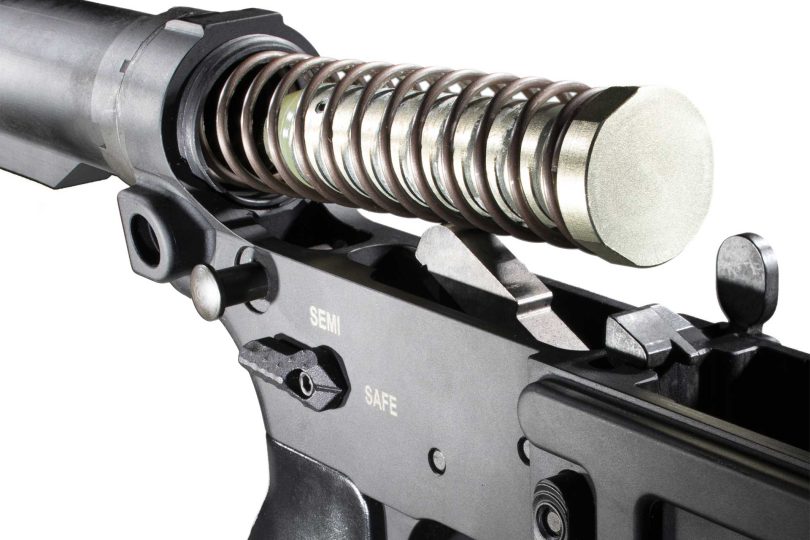
The buffer system is a recoil management system located inside the buffer tube (receiver extension). It consists of three primary components:
- Buffer tube
- Buffer spring
- Buffer weight (buffer)
Together, these parts control rearward bolt carrier movement after a round is fired. When gas pressure drives the bolt carrier group backward, it compresses the spring and pushes the buffer rearward inside the tube. That stored energy is then released, pushing the carrier forward to chamber the next round.
To understand how this interacts with the rest of the rifle, it helps to look at how the AR-15 gas system works. The gas system initiates movement—but the buffer system controls it.
This distinction matters. The gas system creates force. The buffer system regulates it.
Without the buffer system, the rifle would cycle violently and inconsistently. With it, the system becomes controlled, repeatable, and reliable.
From a structural standpoint, the buffer system is part of the lower receiver assembly. Its placement and interaction are tied closely to AR-15 lower receiver function, which houses and aligns the entire recoil system.
How the Buffer System Works in the Firing Cycle
When a round is fired, gas is redirected from the barrel back into the action. That pressure forces the bolt carrier group rearward. As it moves, it engages the buffer and compresses the buffer spring.
At this stage, several things happen at once:
- The spent casing is extracted and ejected
- The hammer is reset
- The buffer spring stores energy
Once the rearward motion stops, the spring pushes everything forward again. The bolt carrier strips a new round from the magazine and chambers it.
This entire sequence is part of how AR rifles cycle, and the buffer system plays a stabilizing role throughout.
Without proper resistance from the buffer and spring:
- The bolt can move too fast
- Components can wear prematurely
- Feeding issues can occur
This is why buffer weight and spring tension aren’t just preferences—they’re tuning elements that directly affect reliability.
For a deeper mechanical breakdown of how the bolt itself behaves during this process, see how the bolt carrier group works.
Buffer System Components and Their Roles
Each part of the buffer system serves a distinct purpose, and understanding those roles helps explain how the system can be tuned.
Buffer Tube (Receiver Extension)
The buffer tube houses the spring and buffer. It also provides the mounting point for the stock.
Differences in tube design—especially diameter and threading—affect compatibility, which is why understanding buffer tube types and differences is critical before selecting parts.
For precise sizing differences, refer to mil-spec vs commercial buffer tube dimensions.
Buffer Spring
The spring absorbs rearward energy and returns the system forward. Its strength determines how quickly and forcefully the bolt carrier returns.
A weak or worn spring can cause cycling issues. An overly strong spring can slow the system too much.
Buffer Weight
The buffer adds mass to the system. Heavier buffers slow down the cycling process, while lighter buffers allow faster movement.
This balance directly affects:
- Recoil impulse
- Wear patterns
- Reliability across ammo types
If you’re evaluating options, comparing best AR-15 buffer tubes can help clarify what configurations are commonly used in different builds.
How the Buffer System Fits Into the AR Platform
The AR-15 is a modular system, and the buffer system is one of the clearest examples of that modularity in action.
It connects multiple subsystems:
- Gas system (force generation)
- Bolt carrier group (movement)
- Lower receiver (housing and alignment)
This interconnected design reflects the broader concept of modular rifle design.
Understanding this relationship helps explain why changes to one part of the system often require adjustments elsewhere.
For example:
- A higher-pressure gas system may require a heavier buffer
- A shorter barrel may change dwell time and affect cycling
- Different ammunition types may alter recoil behavior
This is why compatibility matters across the entire system, not just within individual components. A structured overview like AR-15 parts overview helps place the buffer system within that larger context.
Use Cases: When the Buffer System Matters Most
Not every shooter needs to tune their buffer system—but many scenarios benefit from understanding it.
Standard Builds
For most factory configurations, the buffer system is already balanced. Understanding it still helps diagnose issues and avoid incorrect upgrades.
Custom Builds
When assembling a rifle from parts, the buffer system becomes a key decision point. Mismatched components can lead to cycling problems, which is why avoiding common AR build mistakes often starts with understanding recoil system balance.
Performance Tuning
Advanced users may adjust buffer weight or spring tension to:
- Reduce felt recoil
- Improve cycling consistency
- Optimize performance for specific ammunition
In these cases, the buffer system becomes part of a broader tuning strategy that includes gas system adjustments and bolt carrier selection.
Tradeoffs and Decision Factors
The buffer system is not about “better” or “worse”—it’s about balance.
Key tradeoffs include:
- Heavier buffer: smoother cycling, slower action, reduced wear
- Lighter buffer: faster cycling, increased responsiveness, potentially more wear
There is no universal best configuration. The right setup depends on:
- Barrel length
- Gas system type
- Intended use
- Ammunition
Understanding these tradeoffs helps avoid unnecessary upgrades and ensures changes actually improve performance.
FAQ: AR-15 Buffer System Basics
What does the buffer system do in an AR-15?
The buffer system controls the rearward and forward movement of the bolt carrier group. It absorbs recoil energy and ensures the rifle cycles smoothly and reliably.
Is the buffer system part of the lower receiver?
Yes. The buffer system is housed in the buffer tube, which is attached to the lower receiver and aligned with the bolt carrier group.
How does buffer weight affect performance?
Buffer weight changes how quickly the bolt carrier moves. Heavier buffers slow the system down, while lighter buffers allow faster cycling, affecting recoil and wear.
Do all AR-15s use the same buffer system?
No. While the basic design is consistent, variations in buffer weight, spring strength, and tube dimensions create differences in performance and compatibility.
When should you change your buffer system?
Changes are typically made when tuning a custom build, addressing cycling issues, or optimizing performance for specific ammunition or configurations.
How does the buffer system relate to recoil?
The buffer system manages recoil by absorbing and redistributing energy during the firing cycle, making the rifle more controllable and consistent.
Conclusion
The AR-15 buffer system is a foundational part of how the rifle operates. It doesn’t generate force, but it controls how that force is managed—making it essential for reliability, durability, and performance.
Understanding this system helps you make better decisions across the entire platform. Whether you’re building a rifle, diagnosing an issue, or evaluating upgrades, the buffer system is always part of the equation.
It also serves as a bridge between mechanical function and practical configuration. Once you understand how it works, the relationships between parts become clearer, and the system as a whole becomes easier to manage.
For those moving beyond basics, the next step is understanding how these components interact with compatibility and configuration choices across the platform.