



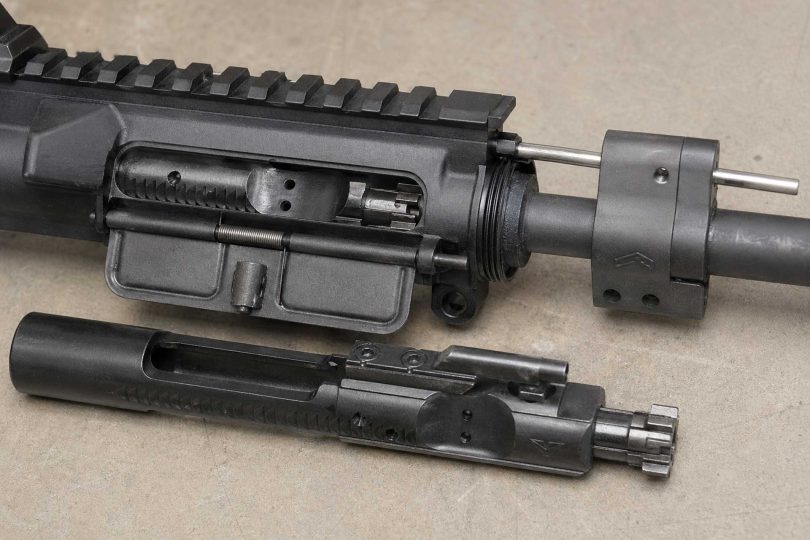

Dwell time is one of the least understood—but most influential—variables in how an AR-15 functions. It doesn’t refer to a visible part or a component you can easily swap. Instead, it describes a timing window inside the firing cycle that determines how long gas pressure remains in the system after the bullet passes the gas port. That short interval has a direct impact on how the rifle cycles, how smoothly it operates, and how reliably it performs across different configurations.
To understand where dwell time fits, you have to place it within the broader AR-15 cycle of operations. It exists between ignition and extraction, shaping how and when the bolt carrier group begins moving rearward. That timing affects everything from recoil impulse to component wear.
For builders, dwell time explains why certain gas system lengths behave differently. For buyers, it clarifies why some rifles feel overgassed or undergassed. And for troubleshooting, it often reveals the root cause behind inconsistent cycling or extraction issues.
This is not an abstract concept. Dwell time is a measurable, mechanical reality that connects gas pressure, system length, and bolt movement into a single functional relationship. Understanding it gives you a clearer view of how the AR-15 actually works—and why small design choices can produce noticeable differences in performance.
What Dwell Time Actually Means
Dwell time refers to the interval between the moment a bullet passes the gas port and the moment it exits the muzzle. During this time, gas continues to flow through the gas system and into the bolt carrier group. That flow is what drives the carrier rearward and initiates the cycling process.
This timing window is part of how the AR-15 gas system works, where expanding gases are redirected to operate the action. The longer the dwell time, the more gas is available to push the carrier. The shorter the dwell time, the less energy is transferred into the system.
Dwell time is not controlled by a single part. It is the result of barrel length, gas port location, and system configuration working together. This is why different gas system lengths—carbine, mid-length, and rifle—produce different cycling characteristics.
It also connects directly to how the bolt carrier group works, where gas pressure translates into rearward motion and bolt rotation.
How Dwell Time Fits Into the Rifle Cycle
Dwell time exists at a very specific point in the firing sequence. After the round is fired and the bullet travels down the barrel, it passes the gas port. At that moment, gas begins flowing into the system. The bullet continues moving toward the muzzle, and until it exits, pressure remains high inside the barrel.
That pressure is what sustains gas flow during dwell time. Once the bullet exits, pressure drops rapidly, and gas flow decreases. This timing determines how much force is delivered to the carrier.
Within the rifle cycling process, dwell time directly influences when the bolt begins to unlock. Too early, and pressure may still be high. Too late, and cycling may become sluggish.
This is also where dwell time intersects with bolt locking and unlocking process, because unlocking must occur at the correct moment relative to chamber pressure.
What Controls Dwell Time
Dwell time is determined by geometry and timing, not by adjustable settings in most standard configurations. The key factors include:
Gas System Length
The distance between the chamber and the gas port determines when gas begins flowing. Shorter systems (like carbine length) initiate gas flow earlier, increasing dwell time. Longer systems (like rifle length) delay gas flow, reducing dwell time.
Barrel Length
The distance from the gas port to the muzzle defines how long pressure is maintained after gas begins flowing. Longer barrels increase dwell time, while shorter barrels reduce it.
Gas Port Size
Although not strictly dwell time, gas port size affects how much gas enters the system during that window. Larger ports increase gas flow, amplifying the effects of dwell time.
These relationships are part of broader AR-15 parts compatibility basics, where component choices influence system behavior.
Why Dwell Time Matters
Dwell time directly affects how the rifle cycles, how it feels during firing, and how components wear over time.
Reliability
If dwell time is too short, the system may not receive enough gas to cycle fully. This can lead to failures to eject or incomplete cycling. If dwell time is too long, excessive gas can cause over-speeding of the carrier.
Recoil and Shooting Feel
Longer dwell times often result in sharper recoil impulses due to increased gas pressure. Shorter dwell times can feel smoother but may require tuning to maintain reliability.
Component Wear
Excessive dwell time can accelerate wear on the bolt, carrier, and buffer system. This is why it often connects to common AR build mistakes, where improper system balancing leads to long-term issues.
Dwell Time vs Gas System Length
Gas system length is often used as a proxy for dwell time, but the two are not identical. Gas system length determines when gas begins flowing, while dwell time determines how long that flow continues under pressure.
This distinction becomes important when comparing configurations through direct impingement vs piston systems, where the method of gas delivery changes how energy is applied to the carrier.
Understanding this difference helps explain why two rifles with the same barrel length can behave differently depending on gas system configuration.
Use Cases: How Dwell Time Affects Real Builds
Dwell time becomes most visible when comparing real-world setups.
Short-Barrel Rifles
Short barrels reduce dwell time, often requiring larger gas ports or adjustable components to maintain reliable cycling.
Mid-Length Systems
Mid-length gas systems balance dwell time and pressure, offering smoother operation in many configurations.
Rifle-Length Systems
Longer systems reduce dwell time and gas pressure, often resulting in smoother recoil and less wear.
These differences are part of modular rifle design explained, where configuration choices shape performance outcomes.
Tradeoffs and Decision Criteria
Dwell time is not something you “maximize” or “minimize” universally. It is something you balance based on intended use.
- Short dwell time → smoother operation but may require tuning
- Long dwell time → reliable cycling but increased wear and recoil
- Balanced dwell time → consistent performance across conditions
These tradeoffs often lead into component decisions, including best AR-15 buffer tubes, where buffer systems help manage energy and timing.
For complete builds, dwell time considerations also influence choices found in complete AR build kits, where components are matched to function together.
Frequently Asked Questions About AR-15 Dwell Time
What is dwell time in an AR-15?
Dwell time is the period between when the bullet passes the gas port and when it exits the muzzle, during which gas pressure continues to drive the system.
Why does dwell time matter for reliability?
It determines how much gas is available to cycle the action. Too little or too much can lead to malfunctions or excessive wear.
Does gas system length change dwell time?
Yes. Gas system length affects when gas begins flowing, which changes the duration and effect of dwell time.
Can dwell time be adjusted?
Not directly. It is influenced by barrel length, gas system configuration, and gas port size.
How does dwell time affect recoil?
Longer dwell time can increase gas pressure and create a sharper recoil impulse, while shorter dwell time often feels smoother.
Is dwell time the same in piston systems?
The concept is similar, but the method of transferring energy differs, which changes how dwell time affects cycling.
Conclusion
Dwell time is a foundational concept that connects gas system behavior, bolt movement, and overall rifle performance. It determines how long pressure is applied to the system and how that energy translates into motion.
Understanding dwell time allows you to see beyond individual components and understand how the system operates as a whole. It explains why certain configurations feel smoother, why others run harder, and how timing influences reliability.
More importantly, it gives you a framework for making better decisions—whether you’re building, buying, or troubleshooting. When you understand dwell time, you’re no longer guessing how the rifle behaves. You’re reading the system as it was designed to function.





Leave a Comment