


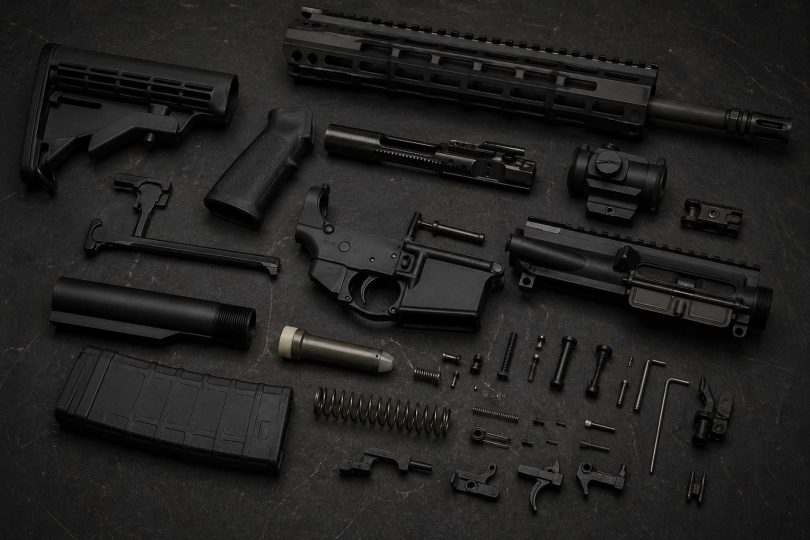

Building or modifying an AR-15 is often described as simple because of the platform’s modular design. While that’s technically true, it can also be misleading. Parts don’t just “fit” because they share a name—they work together only when the system is properly balanced.
An AR-15 parts compatibility guide exists to solve that exact problem. It explains which components can be combined safely, which combinations create performance issues, and why certain mismatches lead to reliability problems.
At a surface level, most AR-15 parts appear interchangeable. Uppers attach to lowers. Bolt carrier groups drop into receivers. Stocks thread onto buffer tubes. But once you move beyond basic assembly, compatibility becomes less about fit and more about function.
To understand that, you need to start with the platform itself. The AR system is defined by its structure, as explained in AR platform fundamentals, where modularity exists within a set of mechanical constraints—not outside of them.
This guide is for readers who want to build a reliable AR-15, avoid compatibility mistakes, and understand how parts interact under real operating conditions. If your goal is to build a system that works consistently, this is where compatibility starts to make sense.
What Compatibility Actually Means in the AR-15 Platform
Compatibility in an AR-15 is not just about whether parts physically connect. It’s about whether those parts function correctly together under firing conditions.
Every shot fired initiates a sequence of mechanical events. That sequence is defined by the AR-15 cycle of operations, where timing, pressure, and movement must stay in balance.
A compatible system ensures proper gas pressure enters the system, the bolt carrier group cycles at the correct speed, the buffer system absorbs and returns energy correctly, and the rifle chambers, fires, extracts, and resets consistently.
If any one component disrupts that balance, the system may still “fit,” but it won’t perform correctly.
The Foundation of Compatibility: Upper and Lower Relationship
Every compatibility decision starts with how the upper and lower receiver interact. These two assemblies define the structure of the rifle and dictate what components can be used.
The relationship between these assemblies is explained through the difference between upper and lower receivers, where each half has a distinct role.
Understanding what an upper receiver does and how what a lower receiver is helps clarify where compatibility constraints originate.
Most AR-15 uppers and lowers will physically connect, but differences in tolerances and specifications can affect overall fit and long-term reliability.
Gas System Compatibility and Its Impact
The gas system is one of the most critical areas of compatibility.
When a round is fired, gas is redirected back into the system to cycle the bolt carrier group. That process is explained in detail through how the AR-15 gas system works.
The key variables that affect compatibility include gas system length, barrel length, and gas port size. These factors determine how much energy is delivered into the system and how quickly the bolt carrier group moves.
These dynamics also influence how the system behaves compared to direct impingement vs piston systems, where operating methods change how gas energy is managed.
Bolt Carrier Group Compatibility
The bolt carrier group (BCG) is the mechanical core of the AR-15.
Understanding how the bolt carrier group works is essential before evaluating compatibility.
Compatibility factors include carrier type, gas key alignment, and bolt construction. The interaction between the BCG and gas system determines how the rifle cycles.
Deeper compatibility considerations are covered in bolt carrier group compatibility.
Buffer System and Rear-End Compatibility
The buffer system controls how energy is absorbed and returned during cycling.
Differences in buffer tube types and differences affect stock compatibility and internal system behavior.
Stock configuration depends on stock compatibility in the AR-15 platform, where fit and function intersect.
Parts Interchangeability vs True Compatibility
A common misunderstanding is that interchangeable parts are automatically compatible.
The AR platform supports modularity through modular rifle design, but that modularity operates within limits.
A full breakdown of components can be found in a complete AR-15 parts breakdown, but knowing the list is not the same as understanding interaction.
Common Compatibility Mistakes
Most compatibility issues come from incorrect assumptions rather than faulty components.
These are frequently covered in common AR build mistakes, where small decisions create larger system problems.
Maintenance also plays a role, including bolt carrier group maintenance and how to clean a bolt carrier group.
How Compatibility Affects Buying Decisions
When selecting parts, compatibility determines whether your investment improves performance or creates problems.
For example, choosing from best bolt carrier groups only matters if the component fits your system.
Similarly, selecting best upper receivers or best lower receivers requires system-level understanding.
A structured evaluation process can be found in bolt carrier group buying guide.
FAQ: AR-15 Parts Compatibility Guide
What AR-15 parts need to match for compatibility?
Gas system length, buffer weight, bolt carrier group, and receiver fitment must work together to maintain proper cycling.
Are all AR-15 uppers and lowers compatible?
Most will fit, but differences in tolerances and specifications can affect reliability and fit.
What causes AR-15 compatibility issues?
Mismatched gas systems, incorrect buffer setups, and improperly paired components are the most common causes.
How do I know if my AR-15 parts are compatible?
You evaluate compatibility by looking at how components interact during cycling, not just whether they physically fit.
Does the bolt carrier group need to match the gas system?
Yes. The BCG must operate within the gas system’s pressure range to maintain proper timing and function.
Is compatibility more important than part quality?
Yes. High-quality parts can still perform poorly if they are not matched correctly within the system.
Conclusion
AR-15 compatibility is not about whether parts fit—it’s about whether they function together as a balanced system.
Every component plays a role in timing, pressure, and movement. When those factors align, the rifle operates reliably. When they don’t, performance suffers regardless of part quality.
Understanding compatibility allows you to build more reliable rifles, avoid unnecessary upgrades, and diagnose problems more effectively.