



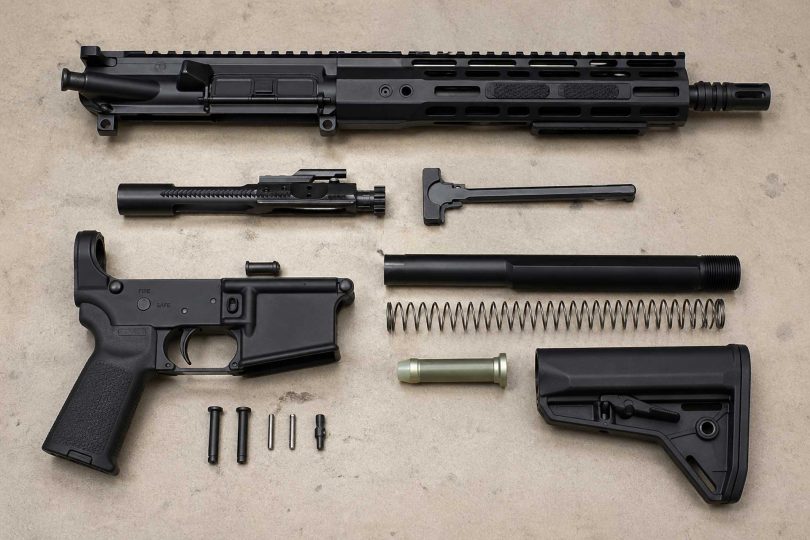

The AR platform is often described as modular, reliable, and adaptable—but those descriptions only make sense once you understand how the system actually functions. This is not a single-purpose rifle design. It is a system of interdependent components where each part influences how the others behave.
At a surface level, most people recognize the major components: the upper receiver, lower receiver, bolt carrier group, gas system, and buffer system. But understanding the platform means going further. You need to see how gas pressure creates movement, how timing controls reliability, how the bolt locks and unlocks, and how small compatibility differences can change the behavior of the entire rifle.
To understand that interaction, it helps to start with the AR-15 cycle of operations, which defines each stage of function from feeding to extraction. Every system inside the rifle contributes to that cycle, and none operate in isolation.
This guide explains the core AR platform fundamentals: what the platform is, how its systems interact, why modularity matters, and how compatibility affects build quality, reliability, and long-term performance.
What the AR Platform Actually Is
The AR platform is a semi-automatic rifle system built around gas operation, modular construction, and standardized component relationships. Unlike older fixed-pattern rifle designs, the AR platform separates major assemblies in a way that allows parts to be configured, replaced, or upgraded without redesigning the entire firearm.
At the system level, the platform is built around four primary functional groups:
- Upper receiver assembly
- Lower receiver assembly
- Bolt carrier group
- Gas and recoil management systems
A broader parts-level explanation belongs in an AR-15 parts overview, but the important point here is that these parts only matter because of how they work together. The upper manages barrel, chamber, gas, and bolt movement. The lower manages fire control, user interface, and recoil return. The bolt carrier group translates gas pressure into movement, while the buffer system controls that movement after the carrier travels rearward.
This structure is what gives the platform its flexibility. A builder can change barrel length, stock configuration, bolt carrier group, handguard, optics, or buffer components—but every change still has to respect the system’s mechanical relationships.
That is why AR-15 parts compatibility basics matter so much. Modularity does not mean every part works with every other part. It means the platform allows variation within known boundaries.
How the Core Operating System Works
The AR platform functions through a controlled cycle of pressure, movement, extraction, return, and chambering. When a round is fired, expanding gas moves the projectile forward through the barrel. A portion of that gas is redirected through the gas system, where it helps drive the bolt carrier group rearward.
That gas behavior is covered in more detail in how the AR-15 gas system works, but the basic principle is simple: gas pressure supplies energy to cycle the action. The rifle is not operated by recoil alone. It uses redirected pressure to unlock the bolt, move the carrier, extract the spent casing, and prepare the next round.
The bolt carrier group is the mechanical heart of that movement. Understanding how the bolt carrier group works is essential because it explains how gas pressure becomes rearward motion, how the bolt rotates, and how extraction begins.
Once the carrier moves rearward, the buffer system absorbs the movement and helps return the carrier forward. That forward movement strips a new round from the magazine and chambers it. This is why the rifle cycling process is best understood as a complete sequence rather than a set of disconnected actions.
Upper Receiver and Lower Receiver Roles
The relationship between the upper and lower receiver is one of the most important fundamentals of the AR platform. These two assemblies divide responsibilities in a way that makes the rifle both modular and mechanically efficient.
The upper receiver assembly contains the barrel, chamber, bolt carrier group, charging handle, and gas-related components. It handles pressure, projectile direction, and the major moving parts involved in cycling.
The lower receiver contains the fire control group, magazine well, grip interface, stock attachment area, and buffer system. It manages control, feeding support, and recoil return.
Understanding the difference between upper and lower receivers helps clarify why the platform can be adapted so easily. The two halves separate functionally, but they still depend on each other for alignment, cycling, and reliability.
For deeper context, what an upper receiver does explains the pressure-side structure, while what a lower receiver is explains the control-side structure.
Gas System, BCG, and Buffer System Interaction
The AR platform works because gas, carrier movement, and recoil control stay in balance. If one part of that system is mismatched, the entire rifle can feel different or function poorly.
The gas system determines how much pressure reaches the carrier and when it reaches it. The bolt carrier group determines how that pressure becomes movement. The buffer system determines how that movement is slowed, stored, and returned.
This is where timing becomes important. If gas reaches the carrier too aggressively, the rifle may feel overgassed and cycle harshly. If gas pressure is insufficient, the rifle may fail to cycle completely. If the buffer system is mismatched, the rifle may unlock or return at the wrong speed.
Different operating systems handle this relationship differently, which is why direct impingement vs piston systems is a useful comparison. Both systems use gas to operate the rifle, but they apply force differently.
The timing side becomes even clearer when you study the bolt locking and unlocking process and AR-15 dwell time explained. Those topics show why pressure, bolt movement, and timing are inseparable.
Why Modularity Matters
The AR platform’s modularity is one of its defining strengths, but it is also one of the most misunderstood. Modularity does not mean parts can be chosen randomly. It means the platform is designed around replaceable assemblies that must still fit within mechanical and dimensional limits.
The concept is covered more deeply in modular rifle design explained, but the short version is this: modularity gives the user options, while compatibility determines whether those options work.
This matters when changing barrel length, gas system length, stock configuration, buffer components, bolt carrier groups, or receivers. A change in one area can affect recoil impulse, cycling speed, reliability, and long-term wear.
For example, changing the stock may require understanding how AR-15 stocks attach. Changing lower components may require understanding how a lower receiver works. Building from separate components requires a stronger grasp of how the parts fit together as a system.
Compatibility and Tolerance Stacking
Compatibility is one of the main reasons AR platform fundamentals matter. A rifle can be assembled from quality parts and still run poorly if those parts do not work together correctly.
Tolerance stacking occurs when small dimensional differences across multiple parts combine into a larger functional issue. A slightly tight upper, a slightly loose carrier fit, an aggressive gas setup, or an improperly matched buffer may not cause problems alone. Together, they can produce cycling issues, wear, or inconsistent performance.
This is why a basic AR-15 parts list is useful but not enough by itself. A list tells you what parts exist. Fundamentals explain why those parts must work together.
Compatibility also affects buying decisions. Choosing from proven components, such as best bolt carrier groups, can reduce risk because critical parts like the bolt carrier group directly influence reliability, wear, and lockup consistency.
Common Use Cases for Understanding the Platform
AR platform fundamentals matter most when users move beyond basic ownership and begin making decisions about configuration, maintenance, or upgrades.
New Owners
New owners benefit from understanding the system before replacing parts. Many problems come from changing components without understanding what those components influence.
Builders
Builders need to understand compatibility, gas timing, receiver fitment, buffer behavior, and BCG quality. Complete systems like complete AR build kits can simplify that process by reducing mismatched parts, but understanding the system still matters.
Troubleshooting
When a rifle fails to cycle, extract, feed, or lock properly, the issue may not be obvious. Gas, buffer, bolt, magazine, ammunition, and receiver fit can all contribute. Many of these issues overlap with common AR build mistakes, especially when users assume one part is the problem without considering the system.
Tradeoffs Built Into the AR Platform
The AR platform is flexible, but every configuration involves tradeoffs. A lightweight build may be easier to carry but less forgiving in recoil behavior. A short barrel may be compact but more sensitive to gas timing. A heavier buffer may smooth recoil but change cycling speed.
The key is not to chase a single “best” configuration. The goal is to build or choose a rifle where the systems support the intended use.
Some of the major tradeoffs include:
- Reliability vs weight
- Compactness vs dwell time
- Soft recoil vs cycling margin
- Customization vs compatibility risk
- Cost savings vs component consistency
Understanding how firearms function at a basic level also helps place these tradeoffs in context. The AR platform is not exempt from basic mechanical principles. It simply organizes those principles in a modular way.
How to Think About AR Platform Decisions
The best way to approach the AR platform is to think in systems. Before choosing a part, ask what that part affects.
A barrel change may affect gas behavior. A BCG change may affect lockup and extraction. A buffer change may affect recoil and carrier speed. A stock change may affect buffer tube compatibility. A receiver change may affect fitment and assembly quality.
This mindset prevents the most common mistake: treating parts as isolated upgrades. In a modular system, parts are not isolated. They are connected through timing, pressure, alignment, and tolerance.
For most users, the best path is to understand the core systems first, then move into specific upgrades or buying decisions only after the relationships are clear.
Frequently Asked Questions About AR Platform Fundamentals
What are AR platform fundamentals?
AR platform fundamentals are the core concepts that explain how the rifle works as a system, including gas operation, receiver roles, bolt carrier movement, recoil control, and parts compatibility.
Why is the AR platform considered modular?
The AR platform is modular because major assemblies and components can be replaced or configured within standardized limits, allowing different builds without redesigning the entire rifle.
What controls reliability in an AR-15?
Reliability is controlled by gas pressure, bolt carrier movement, buffer behavior, component fit, ammunition, maintenance, and overall compatibility between parts.
Is the upper or lower receiver more important?
Both are important, but they serve different roles. The upper manages pressure and cycling components, while the lower manages controls, feeding support, and recoil return.
Why does parts compatibility matter on the AR platform?
Compatibility matters because small differences in dimensions, gas behavior, or component fit can affect cycling, reliability, wear, and long-term performance.
Should beginners modify an AR-15 immediately?
Beginners should first understand how the platform works before modifying parts. Changing components without understanding system effects can create reliability issues.
Conclusion
The AR platform is not defined by any single component. It is defined by how its systems interact. Gas pressure drives movement, the bolt carrier group translates that movement, the receivers organize structure and control, and the buffer system manages recoil and return.
Understanding these relationships is what turns a collection of parts into a functioning system. It also explains why compatibility, timing, tolerance, and maintenance matter more than any individual upgrade.
Once you understand how the platform works at this level, every decision becomes more predictable. Building, modifying, troubleshooting, and buying all become easier because you are no longer looking at parts in isolation. You are reading the system.
That is the real purpose of mastering AR platform fundamentals: not just knowing the parts, but understanding how the platform works as a complete mechanical structure.







Leave a Comment