



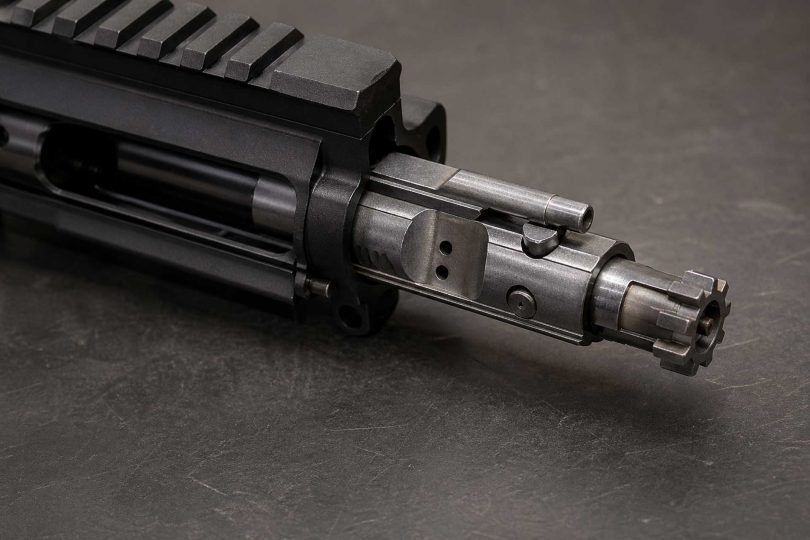

Understanding the AR-15 cycle of operations is the difference between simply owning a rifle and actually understanding how it functions under real conditions. This cycle is not just a sequence of mechanical events—it is a tightly timed system where gas pressure, component geometry, spring tension, and carrier movement all interact to produce reliable firing, extraction, feeding, and reset.
At a glance, the AR-15 appears straightforward: you pull the trigger, the rifle fires, and it reloads. Internally, though, a precise chain of events unfolds in milliseconds. Each phase depends on the previous one happening correctly. If timing shifts even slightly because of gas pressure, dwell time, spring resistance, bolt carrier mass, or component mismatch, performance and reliability can degrade.
This is why the cycle matters. It explains why rifles malfunction, why certain upgrades work, and how individual parts contribute to overall function. It also provides context for decisions involving gas systems, bolt carrier groups, buffer setups, and build compatibility.
To fully grasp how this system works, it helps to view it within the broader AR platform fundamentals, where modularity and gas-driven operation define how all components interact.
This guide walks through the complete AR-15 cycle of operations step by step, showing not only what happens, but why each stage matters and how it fits into the rifle’s overall design.
What the AR-15 Cycle of Operations Actually Means
The cycle of operations refers to the full sequence of mechanical events that occur from the moment the trigger is pulled to the point where the rifle is ready to fire again. It is a continuous loop, not a single isolated action.
In the AR-15 platform, this process is driven by gas pressure routed through the system, interacting with the bolt carrier group and buffer assembly. Each stage is dependent on timing, which is why concepts like gas system tuning, dwell time, carrier speed, and spring resistance directly affect performance.
To understand how each component contributes, it helps to see the rifle as a complete system, similar to what is outlined in an AR-15 parts overview. No single part operates in isolation.
The cycle includes several core phases: firing, gas expansion, unlocking, extraction, ejection, rearward movement, feeding, chambering, and locking. Each phase transitions directly into the next. If one stage fails, slows down, or happens too early, the entire system is affected.
Step-by-Step Breakdown of the Cycle
Firing
The cycle begins when the trigger is pulled, releasing the hammer. The hammer strikes the firing pin, which impacts the primer of the chambered round. This ignites the propellant, generating high-pressure gas that pushes the bullet down the barrel.
This is the only stage driven directly by the fire control action. Everything that follows is powered by gas pressure and mechanical motion. That distinction matters because many reliability problems are not trigger problems at all—they are timing, pressure, or cycling problems.
Gas Expansion and System Activation
As the bullet travels down the barrel, it passes the gas port. At that moment, a portion of the expanding gas is diverted into the gas system and routed back toward the bolt carrier group.
This redirected pressure is what drives the cycling process. Understanding how the AR-15 gas system works is critical here, because gas timing determines when and how force is applied to the bolt carrier.
Too much gas can increase bolt speed, felt recoil, and component wear. Too little gas can prevent the carrier from traveling far enough rearward to extract, eject, or feed properly.
Unlocking
Gas pressure enters the carrier and forces it rearward. As the carrier moves, the cam pin rotates the bolt, unlocking it from the barrel extension.
This rotational movement separates the AR-15 from simpler blowback systems. The bolt lugs must disengage at the correct moment—after pressure has dropped to a safe and functional level. This stage is part of the broader bolt locking and unlocking process, which governs timing, pressure control, and safe operation.
Extraction
Once unlocked, the bolt continues moving rearward, pulling the spent casing out of the chamber using the extractor claw.
Reliable extraction depends on chamber condition, extractor tension, gas timing, and carrier velocity. If extraction begins too early, pressure can still be high. If carrier movement is weak, the casing may not be pulled clear. This is one of the most common points where malfunctions appear, especially in improperly tuned rifles.
Ejection
As the casing clears the chamber, it contacts the ejector, which pushes it out of the ejection port.
The direction and force of ejection are influenced by bolt speed, gas pressure, spring condition, and extractor/ejector function. Consistent ejection often suggests that the rifle is cycling within a healthy range, while erratic ejection can indicate gas or timing imbalance.
Rearward Movement
The bolt carrier group continues moving rearward into the buffer tube, compressing the buffer spring. This phase absorbs energy and prepares the system to return forward.
The buffer system plays a critical role here, influencing recoil impulse, carrier speed, and return timing. Understanding this interaction becomes clearer when viewed alongside how the bolt carrier group works, since the carrier’s mass and movement directly affect performance.
Feeding
As the buffer spring expands, it pushes the bolt carrier group forward. On its forward path, the bolt strips a new round from the magazine.
Magazine quality, feed lip geometry, spring strength, and bolt speed all matter at this stage. Poor feeding can cause misalignment, nose-dives, or stoppages before the round enters the chamber.
Chambering
The new round is guided into the chamber as the bolt continues forward. Proper alignment, chamber dimensions, magazine position, and carrier momentum all contribute to smooth chambering.
This stage depends heavily on overall system compatibility, which is why understanding AR-15 parts compatibility basics helps prevent feeding and chambering issues.
Locking
As the bolt reaches its full forward position, it rotates and locks into the barrel extension. This seals the chamber and prepares the rifle for the next shot.
Once the bolt is locked, the system has returned to battery. The rifle is now ready to repeat the cycle.
How the Cycle Relates to the Entire Rifle System
The cycle of operations is not an isolated function. It connects directly to how every major system in the rifle behaves.
The relationship between upper and lower components determines alignment and function, which is why understanding the difference between upper and lower receivers matters. The upper receiver manages pressure-side components, while the lower receiver houses the fire control group, magazine interface, and recoil return system.
The structural roles of each receiver affect how forces move through the rifle, making it useful to understand what an upper receiver does and what a lower receiver is.
The AR platform is designed as a modular system, which is explained in modular rifle design explained. This modularity allows users to change gas systems, buffers, receivers, stocks, and bolt carrier groups—but those changes still affect the same cycle.
What Affects the Cycle and Why It Matters
Several variables influence how smoothly the cycle operates.
Gas System Length and Pressure
Different gas system lengths change when pressure is applied. Carbine, mid-length, and rifle-length systems all shift the relationship between gas pressure, bullet travel, and carrier movement.
This also explains why direct impingement vs piston systems matters. Both systems use gas to cycle the action, but they deliver force differently.
Dwell Time
Dwell time determines how long gas pressure continues acting on the system after the bullet passes the gas port. This directly impacts reliability, recoil behavior, and unlocking timing, as explained in AR-15 dwell time explained.
Component Quality
Bolt carrier group design, coatings, tolerances, gas key integrity, extractor tension, and carrier mass all affect friction, movement, and durability. This becomes important when evaluating best bolt carrier groups.
Build Quality
Incorrect assembly can disrupt timing and alignment. Many failures trace back to common AR build mistakes, especially when users change components without understanding how the cycle works as a system.
Who This Matters For and Who It Does Not
This article is especially useful for builders, maintainers, troubleshooters, and anyone trying to understand reliability. If you plan to change parts, tune a rifle, diagnose malfunctions, or compare configurations, the cycle of operations gives you the framework for making better decisions.
It matters if you are choosing between complete rifles and complete AR build kits, because build quality and component matching influence how consistently the cycle runs.
It also matters when using a complete AR-15 parts breakdown, because a parts list tells you what exists, while the cycle explains why each part matters.
This matters less if you never plan to modify, maintain, troubleshoot, or evaluate the rifle beyond basic use. Even then, understanding the cycle can help explain what is happening when the rifle functions normally—or when it does not.
How the Cycle Supports Better Build and Maintenance Decisions
The practical value of understanding the cycle is that it prevents isolated thinking. A cycling issue may look like a magazine problem but originate in gas pressure. A feeding issue may look like a bolt problem but come from carrier speed. A failure to extract may involve chamber condition, extractor tension, pressure timing, or buffer resistance.
Understanding how a lower receiver works helps explain the lower’s role in feeding support, fire control, and recoil return. Understanding how AR-15 stocks attach also matters because the stock and receiver extension connect to the buffer system, which affects carrier return.
At the most basic level, the cycle of operations also fits within how firearms function at a basic level. The AR-15 is mechanically distinct, but it still follows the same broad principles of ignition, pressure, containment, extraction, and reset.
Frequently Asked Questions About the AR-15 Cycle of Operations
What are the steps in the AR-15 cycle of operations?
The AR-15 cycle of operations includes firing, gas expansion, unlocking, extraction, ejection, rearward movement, feeding, chambering, and locking. Each step flows into the next and depends on correct timing.
What controls the timing of the AR-15 cycle?
Timing is controlled by gas system length, dwell time, gas pressure, buffer weight, spring resistance, and bolt carrier mass. These factors determine how quickly and smoothly the rifle cycles.
Why is the bolt carrier group so important in the cycle?
The bolt carrier group unlocks the bolt, extracts and ejects the spent casing, compresses the buffer system, and chambers the next round. Its movement drives most of the cycle.
What causes cycling issues in an AR-15?
Common causes include improper gas pressure, poor component compatibility, weak springs, extractor issues, magazine problems, or incorrect assembly. Many cycling issues come from timing mismatches.
How does direct impingement affect the cycle?
In direct impingement systems, gas is routed into the carrier, where it helps drive rearward movement. This affects timing, heat distribution, carrier speed, and how the rifle cycles compared with piston systems.
Does changing parts affect the cycle of operations?
Yes. Changing parts such as the buffer, spring, gas system, barrel, or bolt carrier group can affect timing, recoil, feeding, extraction, and reliability. Every modification should be considered as part of the full system.
Conclusion
The AR-15 cycle of operations is not just a sequence—it is the foundation of how the rifle functions as a system. Every component, from the gas port to the buffer spring, contributes to a tightly controlled chain of events.
Understanding this cycle allows you to diagnose problems, make smarter upgrades, and evaluate performance with confidence. It also clarifies why certain configurations work better than others and how small changes can have system-wide effects.
More importantly, it shifts your perspective from viewing the rifle as a collection of parts to understanding it as an integrated mechanism. That shift is what enables better decisions—whether you are building, maintaining, or upgrading an AR-15.
Once you understand the cycle, every other part of the platform becomes easier to evaluate, modify, and trust.




Leave a Comment