




The AR-15 gas system is what makes the rifle self-loading. Without it, the rifle would function like a manual-action firearm, requiring the shooter to cycle the action after every shot. Instead, the gas system captures energy from the fired round and redirects it to cycle the rifle automatically.
Understanding how this system works is not just a technical exercise—it directly affects reliability, recoil behavior, and long-term performance. Issues like short stroking, excessive wear, or inconsistent cycling often trace back to how gas is managed inside the rifle.
At a broader level, the gas system sits at the center of the platform. It connects the barrel, the bolt carrier group, and the buffer system into one continuous cycle. If you’ve already reviewed AR platform fundamentals, this is where that structure becomes mechanical reality.
This article is designed for readers who want to understand how the system actually functions—not just what the parts are called. It will walk through how gas moves through the rifle, how it drives the action, and how different configurations change performance.
If you’re trying to diagnose issues, choose parts, or simply understand how your rifle operates, this is the layer that connects everything together.
What the AR-15 Gas System Does
At its simplest, the gas system converts expanding gas from a fired cartridge into mechanical movement.
When a round is fired, high-pressure gas travels down the barrel behind the bullet. A small portion of that gas is diverted through a port in the barrel, redirected through the gas system, and used to push the bolt carrier group rearward.
That rearward movement initiates the entire cycling process: unlocking the bolt, extracting and ejecting the spent casing, compressing the buffer system, and returning forward to chamber the next round.
This entire sequence is part of the AR-15 cycle of operations, and the gas system is what powers it.
Without properly managed gas flow, the system breaks down: too little gas can cause incomplete cycling, while too much gas can increase wear and recoil. That balance is what defines how the rifle behaves.
Where the Gas System Fits in the Rifle
The gas system isn’t a standalone component—it’s a pathway that connects several critical parts of the rifle.
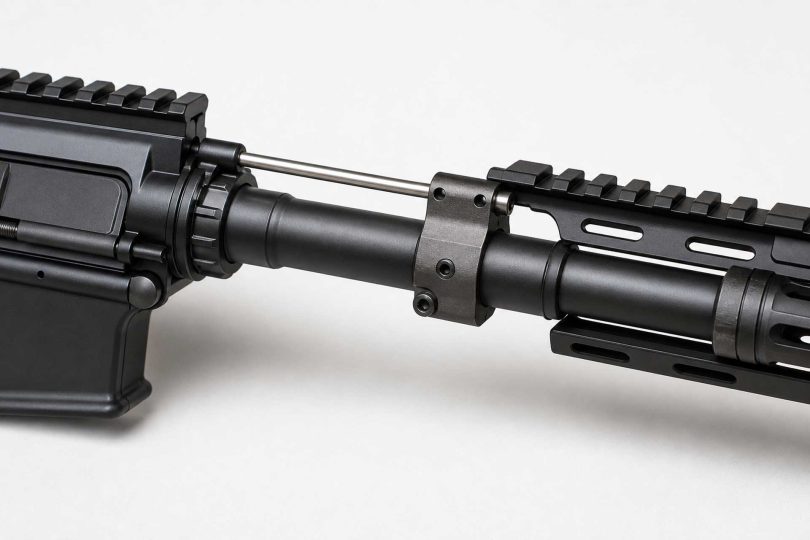
It begins at the barrel, where gas is tapped through a small port. From there, it moves through the gas block and into the gas tube. That tube directs the gas back into the upper receiver, where it enters the bolt carrier group.
To understand how that movement translates into action, it helps to look at how the bolt carrier group works, since that’s where gas pressure is converted into motion.
At the same time, the gas system doesn’t work in isolation—it depends on the rearward resistance created by the buffer assembly. That interaction is covered in AR-15 buffer system basics, which explains how energy is absorbed and returned.
Together, these systems form a loop: gas drives the carrier rearward, the buffer system slows and reverses it, and the rifle resets for the next shot. This is why gas system tuning affects not just function, but feel.
Direct Impingement vs Piston Systems
Most AR-15 rifles use what’s known as a direct impingement system. In this design, gas is routed directly into the bolt carrier group, where it expands and pushes the carrier rearward.
An alternative approach uses a piston system, where gas drives a separate piston that then moves the carrier.
The difference between these systems isn’t just mechanical—it changes heat distribution, fouling patterns, recoil impulse, and maintenance requirements.
If you’re comparing these approaches, it’s worth looking at direct impingement vs piston systems, which breaks down how each design operates and where each makes sense.
For most users, direct impingement remains the standard because of its simplicity, weight savings, and consistent performance when properly configured.
Why the Gas System Matters More Than Most People Think
It’s easy to think of the gas system as just one part among many, but in practice, it influences nearly every aspect of how the rifle behaves.
Gas flow determines how smoothly the rifle cycles, how much recoil you feel, how quickly parts wear over time, and how sensitive the rifle is to ammunition differences.
For example, excessive gas can cause the bolt to unlock too quickly, increasing stress on internal components. Insufficient gas can prevent the rifle from cycling completely, leading to malfunctions.
This is where concepts like AR-15 dwell time explained become important, because they describe how long gas pressure is available to operate the system.
When you start to see the gas system not as a part—but as a timing and pressure system—the rest of the platform begins to make more sense.
Who This Article Is For and Who It’s Not
This article is for builders trying to understand how components interact, shooters diagnosing reliability issues, buyers comparing configurations, and anyone who wants to understand how their rifle actually works.
It’s not for readers looking for quick product recommendations, those who only need a surface-level definition, or purely visual learners without interest in mechanical detail.
If your goal is choosing parts rather than understanding systems, you’ll eventually move toward guides like best bolt carrier groups—but those decisions make more sense after you understand how the system works.
Gas System Components and Flow Path
To understand how the system actually functions, you need to follow the gas itself.
The process begins when a round is fired. As the bullet travels down the barrel, it passes a small opening called the gas port. This is where a portion of the expanding gas is diverted upward into the gas block.
From there, the gas travels through the gas tube and is directed back into the upper receiver. The gas enters the bolt carrier group through the gas key, where it expands inside the carrier and drives it rearward.
That rearward force is what initiates the unlocking sequence, which ties directly into the bolt locking and unlocking process.
Each component in this path has a specific role: the gas port controls how much gas enters the system, the gas block directs and stabilizes flow, the gas tube carries gas rearward, and the gas key channels gas into the carrier.
If any part of this path is misaligned, restricted, or improperly installed, the entire system can fail to function correctly.
How Gas Pressure Cycles the Rifle
Once gas enters the bolt carrier group, it expands inside the carrier and forces it rearward. This movement drives the bolt carrier while simultaneously rotating and unlocking the bolt.
This interaction is central to how AR rifles cycle, where gas pressure is translated into mechanical motion.
As the carrier moves rearward, the bolt unlocks, the spent casing is extracted and ejected, and the buffer system compresses. Then the buffer spring pushes everything forward again, a new round is stripped from the magazine, the bolt chambers the round, and the bolt locks into place.
This entire sequence must happen in a controlled timing window. Too fast or too slow, and reliability suffers.
Gas System Length and Why It Matters
Not all AR-15 gas systems are the same length. The distance between the gas port and the receiver determines how long gas pressure is applied to the system.
Common configurations include carbine-length, mid-length, and rifle-length gas systems.
The longer the system, the smoother and more gradual the gas impulse tends to be. Shorter systems deliver a sharper, more aggressive impulse.
This directly affects recoil feel, wear on components, and reliability margins.
These differences tie closely to AR-15 parts compatibility basics, because not all barrel and gas system combinations behave the same way.
Dwell Time and Gas Timing
Dwell time refers to the period between when the bullet passes the gas port and when it exits the barrel.
During this time, gas continues flowing into the system. Longer dwell time means more gas is available to cycle the action.
This is why shorter barrels often require adjustments—they reduce dwell time and can affect reliability.
Understanding AR-15 dwell time explained helps clarify why two rifles with similar parts can behave very differently.
Interaction With the Buffer System
The gas system doesn’t operate in isolation—it works against the resistance of the buffer system.
As gas drives the carrier rearward, the buffer and spring absorb that energy. This resistance slows the carrier and stores energy for the return stroke.
The balance between gas pressure and buffer resistance determines cycling speed, recoil impulse, and reliability under different conditions.
If the system is overgassed, the buffer has to work harder to control movement. If undergassed, the buffer may prevent full cycling.
This relationship is why AR-15 buffer system basics is essential to understanding the gas system as a whole.
Common Gas System Issues
Gas system problems usually show up as reliability issues.
Common symptoms include failure to eject, failure to feed, short stroking, and excessive recoil.
These issues are often tied to gas leaks, improper gas port size, misaligned gas blocks, or worn components.
Diagnosing these problems requires understanding the full system, which is covered in bolt carrier group troubleshooting guide.
Maintenance and Wear Considerations
Gas systems introduce heat and carbon into the rifle, especially in direct impingement designs.
Over time, this leads to carbon buildup, increased friction, and potential reliability issues.
Regular maintenance helps mitigate these effects.
Cleaning procedures are outlined in how to clean a bolt carrier group, which focuses on the area most affected by gas flow.
Tradeoffs: Efficiency vs Durability
Every gas system setup involves tradeoffs.
More gas can increase reliability under adverse conditions, but it also increases wear and recoil. Less gas can reduce wear and recoil, but it narrows the rifle’s reliability margin.
Understanding these tradeoffs helps explain why some rifles feel smoother while others prioritize reliability.
Use Cases: Who Needs to Understand This
Understanding the gas system is especially useful for builders selecting barrel and gas configurations, shooters diagnosing cycling issues, and users optimizing recoil and performance.
It matters less for casual shooters using factory rifles or users not modifying or maintaining their rifles.
Recommendation Framework
If your goal is reliability, favor slightly overgassed setups and prioritize consistency.
If your goal is performance, balance gas with buffer weight and tune for smoother cycling.
If your goal is simplicity, stick with standard configurations and avoid unnecessary adjustments.
When selecting components, guides like best bolt carrier groups and best BCG for reliability become relevant, because the gas system directly affects how those parts perform.
AR-15 Gas System FAQ
What does the AR-15 gas system do?
It redirects gas from the fired round to cycle the bolt carrier group, enabling semi-automatic operation.
Is direct impingement better than piston?
Neither is universally better. Direct impingement is simpler and lighter, while piston systems can reduce fouling in the receiver.
What causes an AR-15 to be overgassed?
Excessive gas port size or short gas systems can send too much pressure into the system, increasing recoil and wear.
What is dwell time in an AR-15?
Dwell time is how long gas pressure is applied after the bullet passes the gas port before exiting the barrel.
Can gas system issues cause malfunctions?
Yes. Most cycling problems can be traced to improper gas flow, leaks, or timing issues.
How often should the gas system be cleaned?
The gas system itself requires minimal cleaning, but the bolt carrier group should be cleaned regularly due to carbon buildup.
Conclusion
The AR-15 gas system is not just a supporting component—it is the engine that drives the entire rifle.
It connects pressure, timing, and mechanical movement into a single system that determines how the rifle behaves under real-world conditions.
Understanding how gas moves through the system, how it interacts with other components, and how it affects performance gives you a clearer view of the platform as a whole.
This knowledge is what separates simply using a rifle from understanding how it works—and that understanding leads to better decisions, better performance, and fewer problems over time.




Leave a Comment