




“Mil-spec vs commercial” is one of the most repeated distinctions in the AR platform—and one of the most misunderstood.
For many buyers and builders, the assumption is simple: mil-spec is better, commercial is inferior. But that assumption breaks down quickly when you look at how AR parts are actually manufactured, sold, and used. In reality, the difference is much narrower, more specific, and often less important than people think.
This article focuses on what actually matters: compatibility, fitment, and decision-making. Not labels.
If you’re trying to avoid buying parts that don’t fit together—or you’re unsure which standard applies to your build—this is where the distinction becomes useful. If you’re expecting a broad quality comparison across all AR parts, it’s not that.
Understanding where mil-spec vs commercial matters (and where it doesn’t) is part of broader ar-15 parts compatibility basics that prevent costly mistakes and mismatched components.
What “Mil-Spec” and “Commercial” Actually Mean
At a high level, “mil-spec” refers to military technical specifications—dimensions, materials, and tolerances defined for standardized parts.
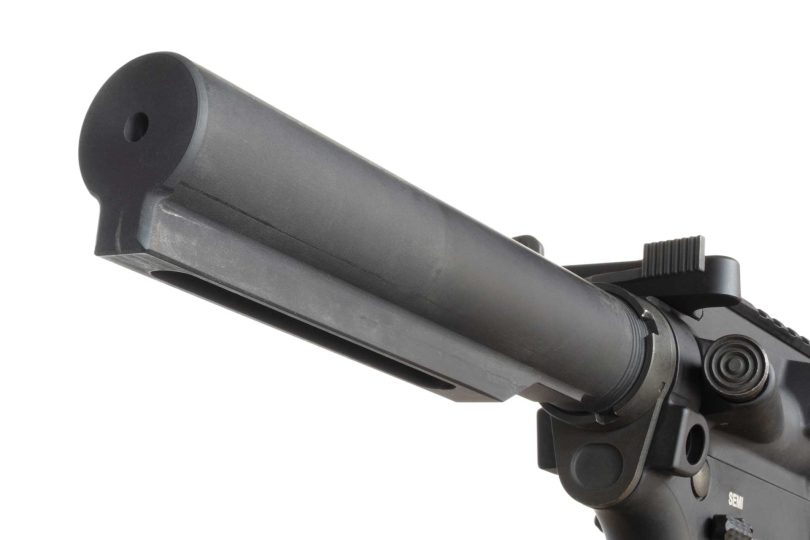
“Commercial,” in the AR context, usually refers to parts that fall outside those exact specifications, most commonly in one specific component: the buffer tube (also called the receiver extension).
This distinction matters far less across the broader platform than most people assume. It is not a universal category that applies evenly across all parts. Instead, it’s a localized difference that shows up in specific interfaces.
To understand where it fits, it helps to see how components relate within the rifle itself, starting with the lower receiver components explained, where the buffer system physically integrates into the platform.
Why this matters:
If you treat “mil-spec vs commercial” as a global quality ranking, you’ll make poor buying decisions. If you treat it as a compatibility distinction, it becomes useful.
Where the Difference Actually Exists
The mil-spec vs commercial distinction primarily applies to the buffer tube—not the entire rifle.
More specifically:
- Diameter differences
- Rear profile shape (flat vs angled)
- Stock fitment compatibility
This is why most confusion shows up when someone tries to install a stock that doesn’t fit their buffer tube.
A deeper breakdown of these physical differences is covered in mil-spec vs commercial buffer tube dimensions, but the key point is simple:
These are dimensional differences, not performance upgrades.
To place this correctly within the system, it helps to understand how the buffer assembly functions as part of the broader ar buffer system basics, which control recoil and cycling—not branding labels.
Why This Distinction Matters (and When It Doesn’t)
This distinction matters in one scenario:
When parts need to fit together.
That’s it.
If you’re installing or replacing:
- a stock
- a buffer tube
- a lower build kit
Then compatibility becomes critical. Otherwise, the distinction has little practical impact.
Understanding buffer tube compatibility differences prevents one of the most common mistakes in AR builds: buying a stock that won’t mount correctly.
However, outside of that interface, the mil-spec vs commercial distinction does not meaningfully affect:
- accuracy
- reliability (in isolation)
- general performance
Those factors are influenced by entirely different components and tolerances, typically explained within broader ar platform fundamentals.
Compatibility: The Only Question That Matters
When evaluating mil-spec vs commercial parts, the only question that matters is:
Will these parts fit together?
Everything else is secondary.
This is where most issues arise:
- mil-spec stock on commercial tube → loose or incompatible
- commercial stock on mil-spec tube → won’t fit
These problems are avoidable if you understand the interface between stock and tube, which is covered in detail in the ar-15 stock compatibility guide.
For practical installation context, understanding how ar-15 stocks attach helps clarify why small dimensional differences matter.
Why this matters:
This is not about preference. It’s about preventing wasted purchases and rework.
Mil-Spec vs Commercial: Tradeoffs and Reality
There are some practical differences, but they’re often overstated.
Mil-Spec
- Slightly smaller diameter
- Flat rear profile
- Wider aftermarket compatibility
Commercial
- Slightly larger diameter
- Angled rear profile
- Less standardized across manufacturers
The real takeaway:
Mil-spec is more common, which makes it easier to find compatible accessories.
But that doesn’t automatically make it “better.” It makes it more standardized.
To understand how these differences relate to other lower components, it’s helpful to look at the ar lower parts explained, where system compatibility is a recurring theme.
Who This Is For (and Who It Isn’t)
This article is for:
- New builders trying to avoid compatibility mistakes
- Buyers replacing stocks or buffer tubes
- Anyone unsure why parts don’t fit
This article is not for:
- Users comparing premium vs budget components
- Advanced builders optimizing recoil systems
- Buyers looking for performance upgrades
If you’re evaluating actual product options, that decision happens at the next layer—such as comparing best ar-15 buffer tubes based on material, finish, and manufacturing quality.
How It Fits Into a Build or Buying Decision
Mil-spec vs commercial is not a starting point. It’s a filter.
You use it after deciding:
- what part you need
- what system you’re working with
Then you verify compatibility.
For example:
- choosing a stock → confirm tube type
- replacing a tube → match stock or replace both
This fits into the broader process of avoiding common ar build mistakes, where incompatible parts are one of the most frequent issues.
Practical Recommendation Logic
If you’re starting from scratch:
→ Choose mil-spec
Not because it’s superior, but because:
- it’s more widely supported
- it reduces compatibility friction
- it simplifies future upgrades
If you already have a commercial tube:
→ Keep it and match components accordingly
There’s no inherent need to replace it unless:
- you’re upgrading for other reasons
- compatibility becomes a limitation
If you’re unsure what you have:
→ Identify it before buying anything else
This process becomes straightforward when using a buffer tube types and differences, which visually clarifies what you’re working with.
FAQ: Mil-Spec vs Commercial AR Parts
Is mil-spec always better than commercial?
No. Mil-spec is a dimensional standard, not a quality guarantee. A well-made commercial part can outperform a poorly made mil-spec part depending on manufacturing quality.
Can I use a mil-spec stock on a commercial buffer tube?
In most cases, no. The diameter difference prevents proper fitment. Some stocks may technically mount but will be loose or unstable.
How do I know if my buffer tube is mil-spec or commercial?
The easiest way is visual and measurement-based. The rear profile (flat vs angled) and diameter are the key indicators. A dedicated guide like mil-spec vs commercial buffer tube dimensions breaks this down clearly.
Does this affect rifle performance?
Not directly. The difference is about fitment and compatibility, not ballistic performance or accuracy.
Should I replace a commercial buffer tube with mil-spec?
Only if you need broader compatibility or are upgrading other components. If your current setup works, there’s no urgent need to change it.
Do all AR parts follow mil-spec standards?
No. Many parts are marketed as mil-spec but vary in tolerances and manufacturing quality. Understanding the broader ar-15 parts overview helps separate marketing language from actual specifications.
Conclusion
The mil-spec vs commercial distinction is not a broad quality hierarchy. It’s a specific compatibility issue tied primarily to the buffer tube and stock interface.
Once you understand that, the confusion disappears.
This distinction matters when parts need to fit together—and almost nowhere else.
If you approach it as a compatibility check rather than a value judgment, you’ll avoid the most common mistakes and make cleaner, more confident decisions across your build.
That’s the role this concept plays within the platform: not a headline feature, but a practical filter that keeps everything working together.


Leave a Comment