



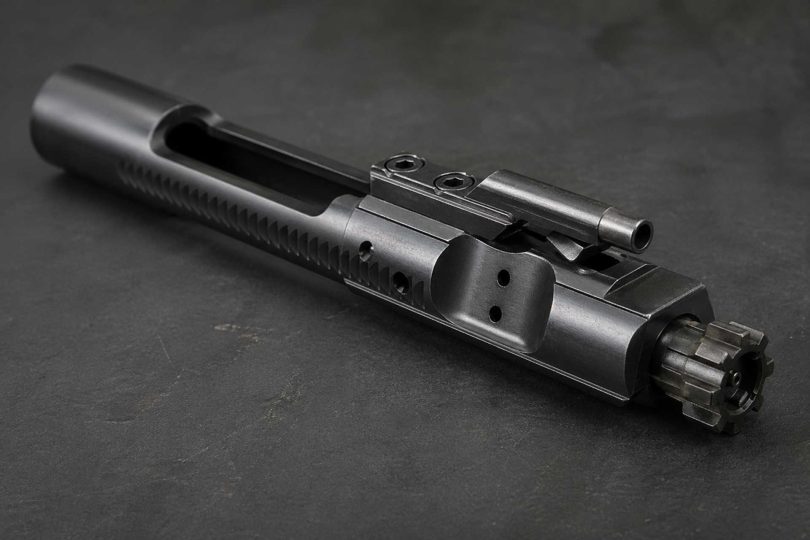

The bolt locking and unlocking process is one of the most critical mechanical functions inside the AR-15 platform. It determines when the rifle can safely fire, when it begins to cycle, and how reliably it operates under different conditions. While many shooters understand the basics of firing and recoil, far fewer understand what actually happens at the moment the bolt locks into battery—and more importantly, how and when it unlocks.
This process sits at the intersection of gas pressure, carrier movement, and precise timing. It is not controlled by a single component, but by a coordinated interaction between the bolt carrier group, barrel extension, and gas system. To fully understand it, you have to see how it fits into the broader AR-15 cycle of operations, where each phase depends on correct sequencing.
For builders, this matters because improper timing can lead to reliability issues, premature wear, or unsafe conditions. For buyers, it matters because component quality directly affects how consistently the bolt locks and unlocks. And for anyone troubleshooting a rifle, this process often explains failures that are otherwise hard to diagnose.
Understanding the bolt locking and unlocking process is not just about knowing what happens—it’s about understanding why it happens when it does, and what controls it.
What the Bolt Locking and Unlocking Process Actually Is
At its simplest, the bolt locking and unlocking process describes how the bolt engages and disengages from the barrel extension during firing. When the bolt is locked, its lugs are rotated into matching recesses in the barrel extension, creating a sealed and secure chamber. When it unlocks, those lugs rotate out of engagement, allowing the bolt carrier group to move rearward.
This rotation is controlled by the cam pin, which rides in a track inside the carrier. As the carrier moves, it forces the bolt to rotate at precise points in the cycle. That movement is part of how the bolt carrier group works, where linear motion is converted into rotational motion.
Locking occurs when the bolt moves forward into battery and rotates into alignment with the barrel extension. Unlocking occurs after firing, when gas pressure drives the carrier rearward and initiates bolt rotation.
This entire sequence is coordinated with how the AR-15 gas system works, which controls when energy is applied to begin the unlocking phase.
How the Process Fits Into the Rifle System
The locking and unlocking process cannot be understood in isolation. It is one step within the larger rifle cycling process, where each movement depends on the one before it.
Here’s where it fits:
- The bolt moves forward and locks into the barrel extension
- The rifle fires while the bolt is fully locked
- Gas pressure is redirected into the carrier
- The carrier begins moving rearward
- The bolt rotates and unlocks
- The cycle continues with extraction and ejection
This sequencing ensures that the bolt remains locked while chamber pressure is at its highest. Only after pressure drops to a safe level does the system begin unlocking.
That timing is influenced by system design choices explained in direct impingement vs piston systems, where gas delivery methods change how force is applied to the carrier.
What Controls Bolt Locking and Unlocking
Several factors determine how smoothly and reliably the bolt locks and unlocks:
Gas System Timing
Gas pressure initiates carrier movement. If gas arrives too early or too aggressively, unlocking can begin prematurely. This relationship becomes clearer when paired with AR15 dwell time explained, which defines how long pressure remains in the system after the bullet passes the gas port.
Carrier Velocity
The speed of the carrier affects how quickly the cam pin forces the bolt to rotate. Faster carrier movement increases stress on locking surfaces and can accelerate wear.
Bolt and Barrel Extension Fit
Proper engagement between bolt lugs and the barrel extension ensures consistent lockup. This is part of broader AR-15 parts compatibility basics, where dimensional consistency matters.
Headspace
Headspace determines how the cartridge sits in the chamber. Improper headspace can affect lockup and safety, which is why it connects directly to AR15 headspace explained.
Why This Process Matters in Real Use
The locking and unlocking process directly affects reliability, safety, and longevity.
Reliability
If the bolt unlocks too early, extraction may occur while pressure is still high, leading to failures or damaged components. If it unlocks too late, cycling can become sluggish or inconsistent.
Safety
The rifle is designed to fire only when the bolt is fully locked. Proper lockup ensures the chamber is sealed and pressure is contained.
Wear and Durability
Repeated stress on locking lugs during improper timing accelerates wear. This is often seen in rifles with poor gas tuning or mismatched components.
These issues often appear in common AR build mistakes, where timing and compatibility are overlooked.
Where Problems Typically Show Up
When the locking and unlocking process is not functioning correctly, issues tend to show up in predictable ways:
- Failure to fully lock into battery
- Difficult extraction
- Premature wear on bolt lugs
- Inconsistent cycling
These are often diagnosed through a bolt carrier group troubleshooting guide, where symptoms are traced back to timing, gas pressure, or component interaction.
Understanding this process also helps explain how a lower receiver works in coordinating trigger and hammer timing relative to bolt position.
How This Fits Into the Overall Platform
The AR-15 is designed as a system, not a collection of independent parts. The locking and unlocking process reflects that design philosophy.
It connects:
- gas delivery
- carrier movement
- chamber pressure
- structural engagement
This is part of a larger modular rifle design explained, where each component interacts within defined tolerances.
It also reinforces the importance of understanding AR platform fundamentals, where system relationships matter more than individual parts.
Practical Takeaways for Builders and Buyers
If you’re building or selecting components, the locking and unlocking process should influence your decisions:
- Choose components that maintain proper timing
- Avoid over-gassed setups without compensation
- Ensure compatibility between bolt and barrel extension
- Prioritize consistent manufacturing quality
For buyers, this often leads toward evaluating best bolt carrier groups, where durability and precision directly affect lockup consistency.
Those building complete systems may also consider complete AR build kits, where components are matched to function together correctly.
Frequently Asked Questions About the Bolt Locking and Unlocking Process
What causes the bolt to unlock in an AR-15?
The bolt unlocks when gas pressure pushes the carrier rearward, forcing the cam pin to rotate the bolt out of engagement with the barrel extension.
Why is bolt locking important before firing?
The bolt must be fully locked to safely contain chamber pressure. Without proper lockup, the rifle cannot safely fire.
What happens if the bolt unlocks too early?
Early unlocking can cause extraction under high pressure, leading to failures, excessive wear, or damage to components.
How does the cam pin control bolt rotation?
The cam pin rides in a track inside the carrier. As the carrier moves, the cam pin forces the bolt to rotate at specific points in the cycle.
Does gas system length affect unlocking?
Yes. Gas system length affects timing, which determines when the bolt begins to unlock relative to chamber pressure.
Is this process different in piston systems?
The basic locking mechanism is the same, but how force is applied to initiate unlocking differs between systems.
Conclusion
The bolt locking and unlocking process is a foundational part of how the AR-15 operates. It ensures that firing happens safely, that cycling begins at the correct moment, and that the system functions reliably across different conditions.
Understanding this process gives you a clearer picture of how timing, pressure, and movement interact inside the rifle. It also helps you make better decisions—whether you’re diagnosing a problem, selecting components, or building a system from scratch.
More importantly, it connects individual parts into a working system. Once you understand how locking and unlocking work, the rest of the rifle’s operation becomes easier to follow, from gas flow to extraction and beyond.
And that’s where mechanical clarity turns into practical advantage.





Leave a Comment