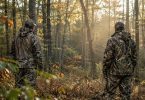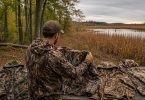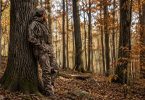



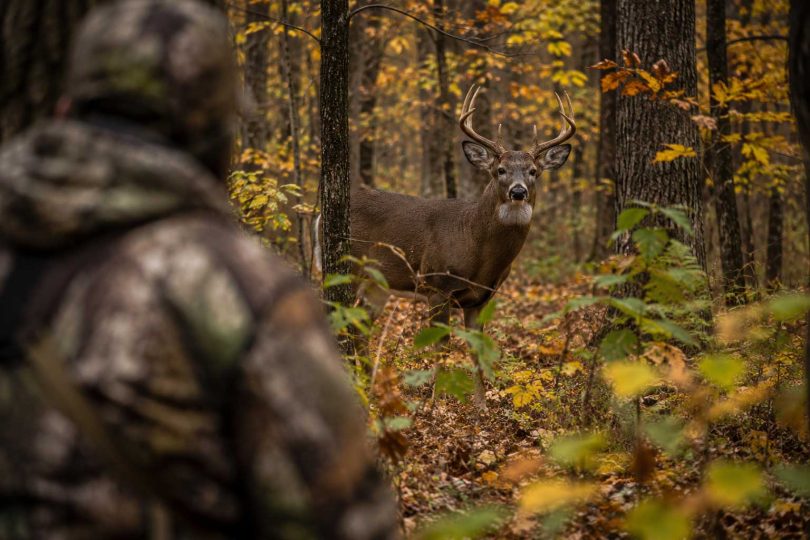

Choosing the best camo for deer hunting is often treated as a debate between brands, but successful concealment depends far more on terrain, vegetation, and hunting conditions than a logo printed on a jacket. A camouflage pattern that performs exceptionally well in a hardwood forest may stand out in agricultural fields, while a pattern designed for early-season greenery may become less effective once leaves fall and vegetation changes.
Many hunters also misunderstand how deer detect danger. While camouflage can help break up the human outline, movement, scent, and positioning often have a greater influence on whether a deer notices a hunter. Understanding how camouflage works allows hunters to choose clothing that complements their environment rather than relying on marketing claims.
This guide explains what makes camouflage effective, how deer perceive their surroundings, and which patterns tend to perform best in different deer hunting environments and seasons.
Does Camouflage Actually Matter for Deer Hunting?
The short answer is yes, but not always for the reasons many hunters assume. Effective camouflage reduces visual contrast between the hunter and the surrounding environment, making it more difficult for deer to identify a human silhouette.
Camouflage works best when it is combined with good hunting practices. Remaining still, using available cover, managing scent, and selecting effective stand locations often contribute more to success than a particular camouflage brand.
How Deer See the World
Deer do not see the world the same way humans do. Their eyes are highly adapted for detecting motion and identifying threats in low-light conditions. While they generally perceive fewer colors than humans, they excel at recognizing movement and contrast.
This means a hunter wearing perfectly matched camouflage can still be detected if they move at the wrong moment. Conversely, a motionless hunter wearing reasonably appropriate camouflage may remain unnoticed even at relatively close distances.
Hunters interested in the science behind concealment can learn more about how camouflage works.
Movement vs Pattern Recognition
Movement remains the greatest visual threat to concealment. Deer are naturally alert to sudden motion because predators reveal themselves through movement long before fine details become visible.
Camouflage helps break up outlines, but it cannot compensate for excessive movement. Drawing a bow, adjusting binoculars, or shifting position at the wrong moment can attract attention regardless of the pattern being worn.
For this reason, effective camouflage should be viewed as one component of concealment rather than a complete solution.
When Camouflage Makes the Biggest Difference
Camouflage becomes increasingly important in situations where deer are close, visibility is good, and natural cover is limited. Hunters often benefit most from quality camouflage when:
- Hunting from elevated tree stands overlooking travel corridors.
- Still hunting through timber.
- Hunting pressured deer that have learned to recognize human shapes.
- Operating in open hardwood forests during late season.
- Hunting from ground positions with limited vegetation.
What Makes a Good Deer Hunting Camo Pattern?
The best camo for deer hunting shares several characteristics regardless of brand. Effective patterns blend naturally into the environment while disrupting recognizable human features.
Breaking Up the Human Outline
Humans are easily recognized because our shoulders, head, and torso create familiar shapes. Effective camouflage uses contrasting elements, branches, shadows, and natural textures to disrupt these visual cues.
This outline disruption is often more important than exact color matching. A pattern that effectively breaks up the human silhouette frequently performs better than one that perfectly matches vegetation but creates a solid recognizable shape.
Matching Local Vegetation
Terrain matching is one of the most overlooked aspects of camouflage selection. Hunters should evaluate the dominant colors, vegetation density, and lighting conditions present in their hunting area.
Dense eastern hardwood forests require different camouflage characteristics than pine forests, agricultural field edges, marsh environments, or open western terrain.
Hunters comparing environments may also benefit from reviewing best camo patterns by terrain.
Macro and Micro Pattern Design
Most modern camouflage patterns combine large-scale and small-scale visual elements.
Macro elements are the larger shapes visible at distance. These help disrupt the overall silhouette. Micro elements consist of smaller textures that blend with nearby vegetation and natural surfaces.
The strongest deer hunting camouflage patterns balance both approaches rather than relying exclusively on highly detailed imagery.
Best Camo for Eastern Hardwood Forests
Eastern hardwood forests represent one of the most common whitetail hunting environments in North America. These areas contain diverse vegetation, changing seasonal colors, and complex backgrounds that reward camouflage designed for wooded terrain.
Hunters specifically targeting these environments may also want to explore best camo for eastern woodlands.
Realtree Edge
Realtree Edge was developed to blend naturally across multiple hunting environments while maintaining effective outline disruption. Rather than emphasizing photorealistic imagery alone, the pattern incorporates layered elements that help hunters merge into varied woodland backgrounds.
Its versatility makes it a strong choice for hunters who pursue deer across multiple properties throughout the season.
Mossy Oak Bottomland
Mossy Oak Bottomland remains one of the most respected deer hunting camouflage patterns ever produced. Its muted bark-inspired appearance performs particularly well in hardwood forests containing mature trees, exposed trunks, and open understories.
Late-season hunters often favor Bottomland because its subdued coloration continues to blend effectively after foliage disappears.
Traditional Woodland Camouflage
Many hunters overlook traditional woodland patterns because they lack the marketing visibility of modern hunting brands. However, woodland camouflage continues to perform surprisingly well in many eastern forests.
When matched to dense vegetation and mixed timber environments, woodland patterns provide strong contrast disruption and effective concealment. Hunters interested in this approach can learn more about woodland camouflage for hunting and woodland camouflage pattern.
Best Camo for Early Season Deer Hunting
Early season deer hunting typically takes place when vegetation remains dense and green. Forest floors are often covered with living plants, agricultural fields are active, and canopy cover is near its annual peak.
These conditions reward camouflage patterns that incorporate greens, lighter browns, and layered vegetation imagery that blends naturally into living plant environments.
Green Vegetation Conditions
During the early season, deer often feed heavily in agricultural areas, transition corridors, and food-rich forest edges. Hunters frequently encounter thick cover and abundant vegetation that can be used for concealment.
Patterns designed around green foliage generally perform better than those optimized for bare timber or winter conditions.
Recommended Pattern Characteristics
Effective early-season camouflage typically includes:
- Green vegetation tones.
- Leaf-heavy visual elements.
- Strong outline disruption.
- Balanced macro and micro patterns.
- Versatility across changing light conditions.
Patterns such as Realtree Edge and many modern woodland-inspired hunting designs perform well during this portion of the season.
Best Camo for Mid-Season Deer Hunting
Mid-season conditions often create the greatest camouflage challenge because the environment is changing rapidly. Green vegetation begins fading, leaves change color, and forest backgrounds become increasingly mixed.
A camouflage pattern that matched conditions perfectly in September may appear noticeably different by late October or November.
Transitional Woodland Conditions
The combination of green, yellow, orange, brown, and gray vegetation creates visually complex backgrounds. Patterns that rely on a single dominant color can become less effective during these transition periods.
This is where versatile camouflage designs often outperform highly specialized patterns.
Recommended Pattern Characteristics
Mid-season deer hunting camouflage should include:
- Mixed earth-tone coloration.
- Moderate contrast.
- Strong silhouette disruption.
- Natural branch and bark elements.
- Adaptability to changing vegetation.
Many hunters find that broad-purpose camouflage systems perform better during transitional periods than highly specialized seasonal designs.
Best Camo for Late Season Deer Hunting
Late season conditions often expose weaknesses in camouflage systems designed primarily for green vegetation. Once leaves have fallen, forests become more open and visual concealment becomes increasingly dependent on matching bark, shadows, and dormant vegetation.
Bare Timber and Open Woods
Late-season hardwood forests are dominated by gray trunks, brown leaves, exposed branches, and muted natural colors. Camouflage patterns featuring excessive green coloration may become noticeably out of place.
Patterns emphasizing bark textures and subdued earth tones often perform better under these conditions.
Snow and Frost Considerations
Snow introduces another layer of complexity. Even small amounts of snow can dramatically alter how camouflage appears in the field.
Hunters operating in regions with regular snow cover may benefit from dedicated winter camouflage systems or outer layers designed for snowy environments.
Hunters who regularly encounter winter conditions may also find value in reviewing snow camouflage patterns.
Recommended Pattern Characteristics
Effective late-season deer hunting camouflage generally includes:
- Muted browns and grays.
- Bark-inspired visual elements.
- Reduced green coloration.
- Strong shadow simulation.
- Effective silhouette breakup at distance.
Mossy Oak Bottomland remains one of the most popular choices for hunters spending significant time in late-season hardwood environments.
Realtree vs Mossy Oak for Deer Hunting
The Realtree versus Mossy Oak discussion has existed for decades. Both companies produce highly capable hunting camouflage systems, and neither consistently outperforms the other across every environment.
Hunters seeking a dedicated comparison can also review Realtree vs Mossy Oak.
Where Realtree Excels
Many Realtree patterns emphasize versatility across changing environments. Designs such as Realtree Edge often blend effectively across a wide range of terrain types and seasonal conditions.
This flexibility appeals to hunters who travel between multiple properties or pursue deer throughout the season.
Where Mossy Oak Excels
Mossy Oak patterns frequently emphasize natural woodland textures and bark-inspired visual elements. Certain designs excel in mature timber environments where trunks, shadows, and muted colors dominate the landscape.
Bottomland remains particularly respected among experienced whitetail hunters for this reason.
Choosing Between Them
For most hunters, terrain matching should determine the choice rather than brand loyalty. A pattern that closely matches local conditions generally performs better than a premium pattern designed for a different environment.
Hunters comparing woodland-focused camouflage may also benefit from reviewing woodland vs multicam.
Is Woodland Camouflage Good for Deer Hunting?
Despite the popularity of modern hunting-specific camouflage brands, traditional woodland camouflage continues to generate interest among deer hunters.
Its effectiveness depends largely on terrain, vegetation density, and seasonal conditions.
Advantages of Woodland Patterns
Woodland camouflage was originally designed to blend into heavily vegetated environments. The pattern combines greens, browns, blacks, and contrasting shapes that help disrupt human outlines.
In dense timber and mixed forest environments, these characteristics can still provide effective concealment.
Limitations of Woodland Patterns
Woodland camouflage is not universally effective. Dense green coloration may become less suitable during late-season hunts when vegetation has disappeared and forests take on gray and brown tones.
Modern hunting patterns often provide greater seasonal flexibility.
When Woodland Remains a Strong Choice
Hunters operating in heavily wooded regions can still achieve excellent results with woodland camouflage. Success ultimately depends on matching the environment and minimizing movement.
Those interested in deeper comparisons may also find value in MultiCam vs woodland camouflage and Realtree vs woodland camouflage.
Best Camo by Hunting Method
The best camo for deer hunting depends not only on terrain and season but also on how you hunt. Different hunting methods expose hunters to deer in different ways, which can influence camouflage selection.
Tree Stand Hunting
Tree stand hunters often benefit from camouflage patterns that blend naturally with trunks, branches, and shadows. Since deer frequently approach from below, breaking up the upper body outline becomes particularly important.
Patterns featuring bark textures, vertical elements, and muted woodland colors often perform well in elevated hunting situations.
Movement remains especially critical from a tree stand because deer can easily detect motion against the sky or open backgrounds.
Ground Blind Hunting
Ground blinds reduce the importance of camouflage because the blind itself provides most of the visual concealment. However, hunters should still wear appropriate camouflage since movement may be visible through windows and openings.
When hunting from a blind, comfort, weather protection, and scent management often become more important than selecting the perfect camouflage pattern.
Still Hunting
Still hunting places the greatest demands on camouflage because hunters move through the environment while attempting to remain undetected.
Patterns that effectively disrupt outlines across varying distances tend to perform best. Since hunters may transition between different vegetation types during a single hunt, versatile camouflage systems often provide the greatest advantage.
Hunters interested in broader concealment strategies may also benefit from reviewing seasonal camouflage strategies.
Common Deer Hunting Camouflage Mistakes
Many hunters focus heavily on camouflage selection while overlooking factors that often have a greater impact on success.
Buying Based on Brand Alone
A well-known camouflage brand does not automatically guarantee better concealment. Hunters frequently achieve better results by selecting a pattern that matches local terrain rather than choosing the most heavily marketed option.
The environment should determine the pattern—not the other way around.
Ignoring Seasonal Changes
Many hunters purchase a single camouflage system and use it throughout the entire year. While this approach can work, changing vegetation often alters how effectively a pattern blends into the landscape.
Early-season greenery, autumn transitions, and late-season timber conditions all present different concealment challenges.
Overlooking Movement and Silhouette
No camouflage pattern can compensate for excessive movement. Hunters who remain still and use natural cover effectively often outperform hunters wearing premium camouflage who move carelessly.
Breaking up the human outline and minimizing motion remain two of the most important aspects of visual concealment.
Final Verdict: What Is the Best Camo for Deer Hunting?
The best camo for deer hunting is the pattern that most closely matches your terrain, season, and hunting style. There is no universal camouflage system that dominates every environment.
For eastern hardwood forests, Mossy Oak Bottomland and similar bark-focused patterns remain strong choices. Hunters seeking year-round versatility often favor Realtree Edge and comparable modern designs. Traditional woodland camouflage can still perform extremely well in dense forest environments when matched appropriately to local vegetation.
Ultimately, successful deer hunting depends on far more than camouflage. Movement control, scent management, stand placement, and understanding deer behavior will always play larger roles in success than the specific logo on a jacket.
If you are still evaluating options, reviewing best camo for hunting and types of camouflage patterns can help narrow the best choice for your environment.
Frequently Asked Questions
The best camo for deer hunting is the pattern that most closely matches your local terrain and seasonal conditions. Woodland, Realtree, and Mossy Oak patterns can all be effective when properly matched to the environment.
Yes, camouflage helps break up the human outline and reduce visual contrast. However, movement control, scent management, and positioning generally have a greater impact on hunting success.
Woodland camouflage can be highly effective in dense forests and heavily vegetated environments. It tends to perform best where green vegetation remains dominant.
Both are effective. Realtree often emphasizes versatility across changing environments, while Mossy Oak patterns such as Bottomland are especially popular in mature hardwood forests.
Patterns featuring bark textures, muted earth tones, and strong outline disruption generally perform best in hardwood forests. Mossy Oak Bottomland is a common example.
Deer can detect contrast and movement more effectively than fine pattern details. Camouflage helps reduce recognition of the human silhouette, but movement remains the primary factor.
Late-season camouflage typically works best when it incorporates browns, grays, bark textures, and muted natural colors that match bare timber environments.
Camouflage is less critical when hunting from a blind because the blind provides most of the concealment. However, appropriate camouflage can still help reduce visibility through windows and openings.