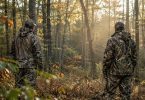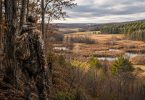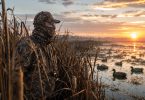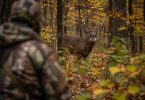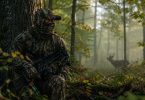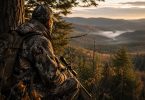



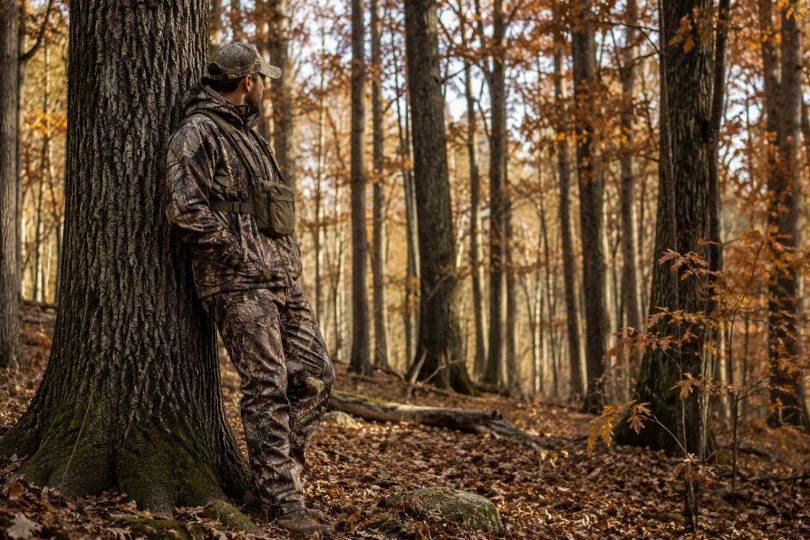

Eastern woodlands create one of the most forgiving but misunderstood camouflage environments in North America. Hardwood forests naturally break up outlines, cast irregular shadows, and create layers of visual cover. At the same time, the landscape changes sharply from early-season green foliage to late-season gray bark, brown leaves, and open timber.
The best camo for eastern woodlands is not always the newest pattern or the most popular brand. It is the pattern that best matches your terrain, season, hunting style, and background. A hunter sitting in a river bottom may need a different look than a hunter tucked into an oak ridge, pine edge, or Appalachian hardwood slope.
This guide compares the camouflage patterns that work well in eastern hardwoods and explains how to choose one based on real hunting conditions. For a broader foundation, start with the main hunting camouflage guide before narrowing down to eastern woodland patterns.
What Makes Eastern Woodlands Different?
Eastern forests are visually complex. Unlike open fields, western sage country, marshes, or snow-covered terrain, eastern woodlands are filled with tree trunks, branches, understory growth, leaf litter, blowdowns, and shifting shadows. This gives hunters plenty of natural concealment, but it also means camouflage needs to work with a complicated background.
Dense Hardwood Forests
Much of the eastern United States is dominated by hardwood timber. Oak, maple, hickory, beech, poplar, and similar trees create vertical lines and textured backgrounds. A good woodland pattern should blend into that structure rather than appear as one flat block of color.
This is why many eastern patterns use bark tones, muted browns, gray shadows, and broken branch shapes. They are designed to disappear into the timber rather than imitate open-country grass, dry brush, or desert rock.
Hunters who want a wider comparison of forest-specific concealment should review our guide to woodland hunting camouflage, which focuses on timber, leaf litter, and forest cover.
Broken Light and Shadow
Light changes constantly in eastern woods. A stand location that looks dark at sunrise may become bright by midmorning. A leafy canopy can create broken patches of sunlight, while late-season timber can expose a hunter to more direct visibility.
This matters because overly dark camouflage can stand out in daylight, especially against gray tree trunks or tan leaf litter. Strong woodland patterns usually balance light and dark areas so the hunter’s outline is disrupted without becoming a black silhouette.
Seasonal Color Changes
Eastern forests change dramatically across hunting season. Early-season woods may be green and dense. Mid-season woods often shift into yellow, orange, brown, and red tones. Late-season woods are usually more gray, tan, and brown after the leaves fall.
No pattern perfectly matches every phase. The goal is to choose camouflage that fits the conditions you hunt most often. Deer hunters should also consider how seasonal changes affect camouflage for deer hunting, especially during the transition from early archery season to late firearm season.
What Makes a Good Woodland Camouflage Pattern?
A good eastern woodland camouflage pattern does three things well. It breaks up the human shape, uses colors that fit hardwood terrain, and creates enough contrast to blend with forest depth. The best pattern is not always the most realistic up close. It is the one that works from the distance and angle where game animals are likely to see you.
Macro Pattern Breakup
Macro elements are the larger shapes in a camouflage pattern. They help disrupt the outline of the body from a distance. This is especially important for treestand hunters, ground hunters sitting near open lanes, and anyone positioned against a simple background.
Small detailed patterns can look excellent in product photos, but they may turn into a single dark shape at distance. Strong woodland camo needs larger breakup elements to prevent the body from reading as one recognizable human outline.
Micro Texture
Micro texture is the smaller detail in the pattern. It helps the clothing blend with nearby bark, leaves, branches, and ground cover. In eastern woods, micro texture can be useful when deer or turkeys are close, but it should not replace larger disruption.
The best patterns usually combine both approaches. They have enough detail to look natural in cover but enough large-scale breakup to work across a hunting lane, ridge, creek bottom, or timber edge.
Natural Woodland Colors
Eastern woodland camouflage usually works best with muted browns, grays, tans, bark tones, and subdued greens. Bright greens can work in early season, but they may look out of place after leaf drop. Heavy black can create too much contrast in many daylight woods.
When comparing patterns, look at the terrain where you actually hunt. If your woods are mostly gray bark and brown leaves, a green-heavy pattern may not be ideal. If you hunt mixed pine and hardwood, some green may be useful.
For hunters choosing across multiple environments, a structured approach to camouflage selection by environment can help prevent buying the wrong pattern for the wrong terrain.
Best Camo Patterns for Eastern Woodlands
Several camouflage patterns perform well in eastern hardwoods. None are perfect everywhere, but each has strengths depending on season, background, and hunting style.
Realtree Edge
Realtree Edge is one of the more versatile options for eastern woodland hunters. It uses a mix of natural vegetation, bark-like structure, open areas, and layered depth. That combination makes it useful in mixed hardwoods, field edges, early-season greenery, and transitional cover.
Its strength is flexibility. Hunters who move between oak ridges, creek bottoms, field edges, and mixed timber may appreciate a pattern that does not lean too heavily into one specific environment.
The limitation is that Realtree Edge may not be as specialized as darker bark-heavy patterns in late-season timber. Still, for many eastern hunters, it is a practical all-season choice.
Hunters comparing brand-specific options can look deeper into Realtree camouflage patterns before deciding which version fits their terrain best.
Mossy Oak Bottomland
Mossy Oak Bottomland is one of the most respected patterns for hardwood timber, river bottoms, and late-season woods. Its bark-focused design works especially well around mature trees, shadowed trunks, and brown forest floors.
Bottomland is not trying to look like every leaf and twig in the forest. Its strength is that it matches the broad texture of timber. That makes it useful when a hunter is seated against a tree, tucked into a creek bottom, or positioned inside mature hardwood cover.
It tends to shine later in the season when green vegetation fades and the woods become more bark, leaves, shadow, and exposed branches.
For hunters who favor classic timber concealment, Mossy Oak camouflage patterns are worth comparing closely.
Mossy Oak Original Bottomland
The original Bottomland pattern continues to maintain a loyal following among experienced whitetail hunters. While newer patterns have introduced additional detail and color variation, the original design remains highly effective in mature hardwood environments.
Its strong bark-focused appearance blends naturally into timber and creates excellent visual breakup against large tree trunks. Many hunters still consider it one of the best late-season woodland patterns ever developed.
Its simplicity is part of its appeal. Rather than attempting to replicate every element of the forest, it focuses on matching the dominant structure found throughout eastern hardwood timber.
Realtree Timber
Realtree Timber was designed specifically for heavily wooded environments. Compared to Edge, Timber places greater emphasis on darker bark textures, vertical elements, and shadow integration.
The pattern works particularly well in mature hardwood forests where trunks, branches, and dark timber dominate the visual background. Hunters who spend most of their season deep inside the woods often find Timber performs exceptionally well once leaves begin to fall.
While it may appear darker than some general-purpose patterns, its strength comes from matching the visual structure of dense timber environments.
First Lite Fusion
First Lite Fusion takes a more abstract approach to camouflage design. Instead of relying heavily on photographic imagery, it combines organic shapes with layered macro and micro patterns designed to disrupt the human outline.
This versatility allows Fusion to perform well across hardwood forests, mixed cover, and transitional terrain. Hunters who frequently move between different habitat types often appreciate the flexibility it provides.
Fusion may not perfectly mimic any one environment, but its ability to break up shape effectively makes it a strong performer across a wide range of eastern hunting situations.
Sitka Elevated II
Sitka Elevated II was developed specifically around whitetail hunting scenarios. The pattern focuses heavily on macro breakup and was designed to be viewed from below, where deer are most likely to observe a hunter in a treestand.
Its larger pattern elements can help reduce outline recognition at distance, particularly when viewed against tree trunks and elevated backgrounds.
Treestand hunters who spend most of their season pursuing deer in eastern hardwoods often place Elevated II near the top of their list due to its specialized design.
Kryptek Obskura Transitional
Kryptek Obskura Transitional bridges the gap between dedicated woodland camouflage and general-purpose concealment. The pattern combines earth tones, layered textures, and transitional colors that work across multiple terrain types.
Hunters who regularly move between timber, field edges, cutovers, and mixed vegetation often appreciate the versatility of transitional camouflage patterns.
While it may not match hardwood forests as precisely as Bottomland or Timber, it offers flexibility for hunters who cover diverse ground throughout the season.
MultiCam
MultiCam originated as a military camouflage system but has become increasingly popular among hunters due to its adaptability across many environments.
Its balanced color palette allows it to function reasonably well in eastern woodlands, mixed cover, agricultural edges, and transitional terrain. Hunters who want a single pattern for multiple applications often choose MultiCam because it performs adequately almost everywhere.
The tradeoff is specialization. While MultiCam works in eastern forests, dedicated woodland hunting patterns may provide a closer visual match in mature hardwood environments.
Hunters comparing these systems alongside traditional woodland camouflage patterns often discover that environment matching matters more than brand popularity.
Best Camo by Eastern Woodland Environment
Not every eastern woodland looks the same. Terrain, vegetation density, elevation, and seasonal conditions can all influence which camouflage characteristics work best.
Appalachian Hardwood Forests
Appalachian forests are dominated by mature hardwoods, steep ridges, deep hollows, and extensive timber cover. These environments typically favor camouflage patterns with bark tones, moderate contrast, and strong vertical breakup.
Mossy Oak Bottomland, Realtree Timber, and First Lite Fusion often perform particularly well in mountain hardwood environments because they complement the dominant textures found throughout the region.
Hunters evaluating terrain-specific options should begin by learning the process of choosing camouflage for hunting rather than focusing solely on brand names.
Oak Ridge Hunting
Oak ridges often contain large amounts of leaf litter, exposed trunks, scattered understory growth, and relatively open visibility compared to dense bottoms. Brown and gray tones typically dominate these environments during peak hunting season.
Patterns emphasizing bark textures and natural woodland contrast generally blend effectively against these backgrounds.
Because many eastern deer hunters spend considerable time on oak ridges, this terrain often becomes the benchmark for evaluating best camo for deer hunting throughout much of the region.
River Bottom Timber
River bottoms frequently contain darker timber, heavier understory growth, increased shadowing, and mature tree stands. These conditions often favor bark-oriented patterns with stronger contrast.
Mossy Oak Bottomland has earned much of its reputation in these environments because its visual structure closely resembles mature timber and shadowed hardwood cover.
Hunters who spend most of their season near creeks, rivers, and floodplain timber often prioritize patterns that integrate naturally with dark trunks and layered shadows.
Mixed Pine and Hardwood Forests
Many eastern hunting properties contain both pine stands and hardwood timber. These environments often introduce more green coloration than mature hardwood forests, particularly early in the season.
Patterns such as Realtree Edge, Fusion, and MultiCam can work well because they balance green and brown tones without overcommitting to either environment.
These mixed habitats often require more versatility than specialized camouflage for hardwood forests alone can provide.
Early Season Hunting
Early season forests often contain abundant green vegetation, dense canopy cover, and substantial understory growth. Patterns with moderate green influence frequently appear more natural during this period.
However, hunters should remember that movement discipline remains more important than achieving a perfect color match. Even excellent camouflage cannot compensate for poor concealment habits.
Late Season Hunting
Late-season woods usually transition toward gray bark, brown leaves, exposed limbs, and reduced vegetation. During this phase, bark-focused camouflage patterns often become increasingly effective.
This is one reason why patterns such as Bottomland continue to maintain strong popularity among experienced eastern whitetail hunters.
Does Camo Matter More Than Movement?
Camouflage can help reduce visual detection, but it should never be viewed as a substitute for fieldcraft. In most hunting situations, movement, positioning, and concealment have a greater impact on success than the specific pattern being worn.
How Deer Detect Movement
Whitetail deer are exceptionally sensitive to movement. A hunter wearing premium camouflage can still be detected immediately if they move at the wrong moment.
This reality explains why hunters wearing very different patterns often experience similar success rates when they practice strong movement discipline.
Understanding deer vision helps explain why many successful deer hunting camouflage strategies focus on behavior as much as clothing selection.
Breaking Up the Human Outline
The primary purpose of camouflage is not invisibility. Instead, camouflage helps disrupt the recognizable shape of the human body. When combined with natural cover, shadows, and proper positioning, camouflage makes it more difficult for game animals to identify a hunter as a threat.
Effective camouflage works by blending into the broader environment while reducing the visual cues that trigger animal awareness. This is why larger macro patterns often outperform highly detailed designs at distance.
Why Positioning Still Matters More
Stand placement, terrain usage, and environmental concealment frequently have a greater impact on hunting success than the specific camouflage pattern being worn.
A hunter positioned correctly with average camouflage will usually outperform a poorly positioned hunter wearing the newest premium pattern. Wind direction, entry routes, shooting lanes, and natural cover often determine whether an animal notices a hunter long before camouflage becomes the deciding factor.
This is particularly true when evaluating overall best camo for deer hunting versus factors such as location selection and hunting discipline.
Combining Camouflage with Fieldcraft
Successful hunters view camouflage as one piece of a larger concealment system. Clothing, movement discipline, terrain usage, wind management, and stand placement all work together to reduce detection.
Hunters interested in a deeper examination of concealment principles should review whether hunting camouflage effectiveness outweighs other factors such as movement, positioning, and environmental awareness.
Common Woodland Camo Mistakes
Many hunters spend significant time comparing camouflage patterns while overlooking more important factors. Avoiding common mistakes often improves results regardless of which pattern is worn.
Choosing Patterns That Are Too Dark
A common misconception is that darker camouflage automatically blends better in forests. In reality, eastern woodlands often contain substantial sunlight, gray bark, tan leaf litter, and lighter vegetation.
Patterns that are excessively dark can create unnatural shapes that stand out against the surrounding environment.
Ignoring Seasonal Conditions
Forests can look dramatically different from September through December. A pattern that matches lush early-season vegetation may appear less natural after leaves begin to fall and the woods transition into late-season conditions.
Hunters should prioritize the conditions they encounter most frequently rather than searching for a pattern that claims to do everything.
Buying Based on Brand Alone
Brand recognition does not automatically determine effectiveness. Most manufacturers offer multiple camouflage patterns designed for different environments.
Choosing the right pattern for your terrain is generally more important than selecting a particular logo.
Focusing on Camo Instead of Concealment
Many hunters spend hours researching camouflage while paying far less attention to movement discipline, stand location, entry routes, and wind direction.
These factors frequently have a greater impact on hunting success than switching from one quality camouflage pattern to another.
How to Choose the Right Woodland Pattern
Selecting camouflage becomes much easier when the focus shifts from marketing claims to environmental matching.
Match the Terrain First
Begin by evaluating the environment where you hunt most often. Mature hardwood forests, pine stands, river bottoms, cutovers, and mixed timber all create different visual conditions.
Choose a pattern whose dominant colors, textures, and contrast levels resemble the terrain you actually encounter.
Hunters who struggle with pattern selection often benefit from learning the process of camouflage selection by environment before purchasing new hunting clothing.
Match the Season Second
Seasonal timing should be your next consideration. Early-season archery hunters often encounter greener vegetation, while late-season firearm hunters typically face more gray bark, brown leaves, and exposed timber.
Matching camouflage to the conditions you hunt most often will usually produce better results than chasing all-season versatility.
Consider Your Hunting Style
Treestand hunters, ground hunters, saddle hunters, and spot-and-stalk hunters may all prioritize different camouflage characteristics.
Treestand hunters often benefit from larger macro patterns that break up the body at distance, while ground hunters may place greater emphasis on blending with nearby vegetation and natural cover.
Prioritize Fit and Comfort
Even the most effective camouflage pattern becomes less useful if clothing restricts movement or fails to perform in changing weather conditions.
Comfort, mobility, layering capability, durability, and weather protection should remain important considerations when selecting hunting apparel.
Hunters comparing complete systems can review today’s hunting camouflage clothing options to evaluate both pattern performance and garment quality.
Final Thoughts
The best camo for eastern woodlands is the pattern that most closely matches the terrain, vegetation, lighting conditions, and seasonal environment where you hunt. While Realtree Edge, Mossy Oak Bottomland, Realtree Timber, First Lite Fusion, Sitka Elevated II, Kryptek Obskura Transitional, and MultiCam all offer strengths, none are universally superior in every woodland situation.
Successful hunters understand that camouflage works best when combined with sound fieldcraft. Movement discipline, stand placement, wind management, and environmental awareness often influence outcomes more than the specific pattern being worn.
Hunters looking to upgrade their equipment can compare today’s best hunting camouflage gear, but the most important factor remains choosing a pattern that matches the conditions where it will actually be used.
For most eastern hunters, selecting a quality woodland pattern and focusing on proven hunting fundamentals will produce better results than endlessly chasing the latest camouflage trend.
Frequently Asked Questions
Several patterns perform well in eastern forests, including Realtree Edge, Mossy Oak Bottomland, Realtree Timber, First Lite Fusion, Sitka Elevated II, and MultiCam. The best choice depends on local terrain, vegetation, and seasonal conditions.
Both brands offer effective woodland patterns. Realtree Edge provides versatility across varying conditions, while Mossy Oak Bottomland is especially popular in mature hardwood timber and late-season environments.
Camouflage helps break up the human outline, but movement control, wind management, positioning, and hunting discipline generally have a greater impact on success.
Muted browns, grays, bark tones, tan leaf-litter colors, and subdued greens typically blend best with eastern hardwood forests throughout most of the hunting season.
Many versatile patterns work reasonably well across multiple seasons, but no camouflage perfectly matches every woodland condition from early-season green vegetation to late-season leaf-off forests.
MultiCam performs reasonably well in many woodland environments and offers excellent versatility, though specialized woodland hunting patterns may provide a closer match in mature hardwood forests.