



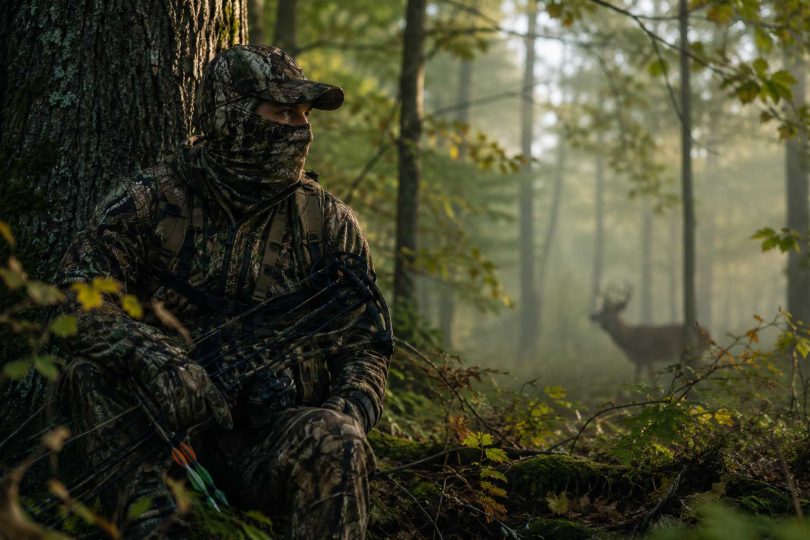

Woodland camo for hunting still works because most successful concealment comes down to environment, outline breakup, movement control, and how well a hunter uses natural cover. Modern hunting camouflage has become highly specialized, but the basic purpose has not changed: reduce recognition long enough to avoid being picked apart by game animals.
Woodland camouflage is not magic, and it is not the best choice for every hunting situation. It can look too dark in open country, too green in late-season timber, and too high-contrast in snow. But in wooded terrain, especially where green vegetation, shadow, bark, brush, and leaf cover overlap, woodland camo remains one of the most practical camouflage options a hunter can wear.
This guide explains when woodland camo works best, when it falls short, how it compares to modern hunting patterns, and how to get the most performance from it in the field. For a broader breakdown of pattern families, start with types of camouflage patterns.
What Is Woodland Camo?
Woodland camo is a camouflage pattern family designed for forested and vegetated environments. The classic look uses irregular shapes in green, brown, black, and tan to disrupt the human outline against trees, brush, shadows, leaves, and uneven ground cover.
When most people say “woodland camo,” they are usually thinking of the traditional military-style woodland camouflage pattern, especially the M81-style pattern that became widely recognized through U.S. military use. Over time, the look moved into outdoor clothing, hunting gear, workwear, surplus apparel, and casual camo fashion.
For hunting, the appeal is simple. Woodland camo is affordable, easy to find, durable, and visually suited to many forest environments. It may not mimic bark, leaves, or branches as realistically as some modern hunting prints, but it does something more important: it breaks up the recognizable shape of a person.
Key Characteristics of Woodland Camouflage
Most woodland camouflage patterns share a few core traits:
- Dark green, brown, black, and tan color areas
- Large, irregular shapes rather than tiny detail
- High contrast between light and dark pattern sections
- A general-purpose forest design instead of a species-specific hunting print
- Strong visual breakup in shaded timber and mixed vegetation
That general-purpose design is why woodland camo remains useful. It does not need to perfectly match one tree, one leaf, or one type of brush. It only needs to prevent an animal from quickly identifying the human shape as a threat.
How Woodland Camo Differs From Modern Hunting Camo
Modern hunting camouflage often uses realistic bark, limbs, leaves, grass, reeds, or digital disruption. Patterns from major hunting brands are usually built around specific environments, such as hardwood timber, marsh grass, western sage, snow, or early-season green foliage.
Woodland camo is different. It is more abstract and more general. It does not try to look like a photograph of the woods. Instead, it uses color blocks and shadow shapes to interrupt the body’s outline. That makes it less specialized, but often more versatile.
A hunter choosing between woodland camo and a modern hunting print should think less about which pattern looks better on a hanger and more about where the hunt will happen. Dense timber, shaded trails, brushy creek bottoms, and mixed green-brown forests are all places where a woodland camouflage pattern can still perform well woodland camouflage pattern.
Is Woodland Camo Good for Hunting?
Yes, woodland camo can be good for hunting when the environment fits the pattern. It works best in forested areas with green vegetation, dark shadows, tree trunks, brush, and broken ground cover. It is especially useful for hunters who want affordable, durable camouflage that can handle multiple wooded settings.
The mistake is thinking that camouflage alone decides success. It does not. A hunter wearing the perfect pattern can still get spotted by moving at the wrong time, standing in the open, exposing bright hands or face, or placing their silhouette against the sky. A hunter wearing basic woodland camo can still stay hidden by moving slowly, using shadows, controlling scent and sound, and staying inside natural cover.
Why Camouflage Works
Camouflage helps by reducing recognition. Game animals do not need to understand clothing patterns. They only need to notice something that looks unnatural, moves strangely, shines, flashes, or forms a suspicious outline.
Good camouflage supports three things:
- Color blending: helping the hunter fit the dominant tones of the environment
- Pattern disruption: breaking up the shape of the torso, arms, legs, head, and shoulders
- Outline control: making it harder for animals to identify a human form
Woodland camo performs best in the second and third categories. It may not always be the perfect color match, but its irregular shapes can make the human body harder to read in broken forest light.
What Animals Actually Notice
Different animals rely on vision differently. Deer are highly sensitive to movement and can detect shapes that seem out of place. Turkeys have extremely sharp eyesight and are much harder to fool visually. Predators often combine sight, sound, and scent when evaluating danger.
This is why no single camouflage pattern works equally well for every species. A deer hunter may get away with more visual imperfection than a turkey hunter. A predator hunter may need to think about both pattern and setup angle. A small-game hunter moving through brush may care more about durability and quiet clothing than a perfect camo print.
For deeper species-specific planning, this article should connect naturally with future guides on best camouflage for deer hunting and best camouflage for turkey hunting.
When Woodland Camo Works Best
Woodland camo works best when the hunter is surrounded by the same visual language the pattern was designed for: trees, shadows, leaves, branches, dirt, brush, and broken forest backgrounds. It is strongest when there is enough cover to interrupt the body outline and enough natural contrast to make the pattern feel believable.
Dense Forests and Woodlands
The best environment for woodland camo is dense timber. Eastern hardwood forests, mixed pine stands, oak ridges, creek bottoms, and brushy woodlots often have the green, brown, black, and tan contrast that helps woodland patterns disappear.
In these settings, the pattern does not need to copy the exact background. It only needs to keep the hunter from standing out as one clean human shape. Tree trunks, leaf shadows, deadfall, saplings, and uneven ground all help the camouflage do its job.
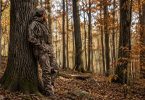
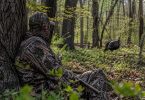
Woodland camo is especially useful when a hunter is positioned against a busy background. Sitting against a wide tree, kneeling inside brush, or standing in the shade usually works better than standing in front of a flat, bright opening. The more broken the background, the more forgiving the camo becomes.
Early Season Hunting
Woodland camo often performs well during early season because many wooded areas still have green vegetation. Leaves are still on trees, understory plants are active, and the landscape has more dark green and brown contrast.
This is where woodland camo can look natural. The green areas match living vegetation, the brown areas echo bark and ground cover, and the darker shapes blend into shade. Early archery seasons, early fall scouting, squirrel hunting, and early-season deer setups can all be good fits.
As the season progresses and leaves drop, some woodland patterns may start to look too green or too dark. That does not make them useless, but it does mean the hunter has to rely more on shade, cover, and careful positioning.
Ground Hunting Situations
Woodland camo is particularly useful for ground hunting because the hunter is closer to brush, tree trunks, shadows, and natural vegetation. Ground setups usually give the pattern more background texture to work with.
It can be effective for:
- Still hunting through timber
- Spot-and-stalk movement in wooded terrain
- Sitting against trees or deadfall
- Brush-line setups near trails or funnels
- Ground blind setups that use natural vegetation
The key is not just wearing camo. The key is becoming part of the background. A hunter in woodland camo who sits in shadow against a tree will usually be harder to detect than a hunter in premium camo standing in the open.
Hunters on a Budget
Woodland camo is one of the best camouflage choices for hunters on a budget. Military surplus clothing, basic camo jackets, field pants, rain shells, and inexpensive base layers are often available at lower prices than premium hunting systems.
That matters because new hunters often spend too much money trying to solve concealment with clothing alone. In many cases, a durable woodland camo jacket, quiet pants, a face covering, gloves, and smart fieldcraft will do more than an expensive pattern worn carelessly.
Budget hunters should focus on practical performance first:
- Quiet fabric
- Weather-appropriate layering
- Comfort while sitting still
- Covered hands and face
- Muted colors that match the area
- Enough durability for brush and rough terrain
Woodland camo checks many of those boxes without requiring a high-end camo system. That is one reason it continues to show up in hunting camps, farm woods, public land setups, and everyday outdoor gear.
When Woodland Camo Is Less Effective
Woodland camo is versatile, but it is not a universal solution. Every camouflage pattern has environments where it performs well and situations where it becomes less effective. Hunters who understand those limitations can make better gear decisions and avoid relying on camouflage where the terrain clearly favors a different pattern.
Open Terrain
Woodland camo struggles most in open environments where there are few trees, limited shadows, and sparse vegetation. Agricultural fields, prairie country, grasslands, desert environments, and open western terrain often lack the dark vertical elements that woodland patterns are designed to mimic.
In these settings, woodland camo can appear too dark and too high-contrast. The black and deep green sections that blend into forest shadows may stand out against lighter backgrounds dominated by tan grass, sage, dirt, or harvested fields.
This does not mean a hunter cannot be successful in woodland camo. It simply means the pattern is no longer helping as much as it would in timber. Terrain selection, concealment, movement control, and setup location become even more important.
Late-Season Hunting
Many woodland environments change dramatically after leaves fall. Forests that were once dominated by green vegetation become landscapes of gray bark, brown leaves, dead grass, and bare branches.
During these conditions, some woodland camouflage patterns may appear darker than the surrounding environment. Hunters can often compensate by hunting from shadows, using natural cover, and avoiding exposed backgrounds, but a pattern designed specifically for late-season conditions may blend more naturally.
This is one reason many experienced hunters own multiple camouflage options. The goal is not perfection but matching the dominant colors and textures of the environment as closely as practical.
Snow-Covered Conditions
Snow is one of the most difficult environments for woodland camo. White backgrounds create extreme contrast against dark woodland patterns, making concealment more challenging.
Even partial snow coverage can create visibility problems because the hunter becomes one of the darkest objects in the landscape. In true winter conditions, snow-specific camouflage or simple white outer layers generally provide better concealment.
Highly Specialized Hunting Applications
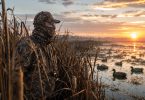
Some hunting situations benefit from specialized camouflage designed for a particular habitat. Waterfowl hunters often use marsh-specific patterns. Western hunters may prefer lighter patterns built around sage, rock, and open terrain. Turkey hunters sometimes favor highly detailed vegetation prints that closely resemble spring foliage.
These specialized systems can provide advantages, but the advantage is often smaller than many hunters expect. The biggest gains usually come from matching the environment, controlling movement, and using terrain effectively rather than chasing the newest camouflage release.
Woodland Camo vs Popular Hunting Patterns
Hunters frequently compare woodland camouflage against modern hunting patterns. The truth is that most quality camouflage works when used in the right environment. The question is not which pattern is universally superior. The question is which pattern best matches where and how you hunt.
Woodland Camo vs Realtree
Realtree patterns use highly realistic images of bark, branches, leaves, and vegetation. Their strength comes from mimicking actual natural environments in great detail.
Woodland camo takes a different approach. Instead of reproducing nature, it focuses on disruption. Large shapes and contrasting colors break up the hunter’s outline.
In dense timber, both approaches can work well. Hunters comparing the two should focus on environment, season, and personal preference rather than assuming one automatically outperforms the other. A deeper comparison belongs in a dedicated guide on Realtree vs woodland camouflage.
Woodland Camo vs Mossy Oak
Mossy Oak patterns often emphasize natural vegetation, bark textures, and realistic environmental detail. Many versions are optimized for specific habitats and seasons.
Woodland camo remains more general-purpose. Hunters who move between multiple wooded properties may appreciate its versatility, while hunters focused on a single habitat may prefer a pattern tailored to that environment.
Woodland Camo vs MultiCam
MultiCam was designed to perform across a broad range of environments rather than excel in a single one. Its transitional colors make it adaptable in everything from light woodland to semi-open terrain.
Woodland camo typically performs better in darker forests with heavier vegetation, while MultiCam often has an advantage in mixed terrain where green, tan, and brown environments overlap.
Hunters interested in both systems should also explore MultiCam vs woodland camouflage.
Which Pattern Is Best?
There is no universal winner because camouflage effectiveness depends on environment. A perfect forest pattern may perform poorly in an open field. A great prairie pattern may look out of place in dense hardwood timber.
The best camouflage is usually the one that matches the terrain, season, and hunting style while allowing the hunter to remain comfortable, quiet, and focused.
Best Game Species for Woodland Camo
Deer Hunting
Woodland camo is highly effective for deer hunting in forested regions. Deer rely heavily on movement detection and generally do not process color the same way humans do. Hunters who stay still, use cover effectively, and avoid exposing their silhouette can be successful with woodland camouflage throughout much of deer season.
Hunters targeting whitetails in timber should also review best camouflage for deer hunting for habitat-specific recommendations.
Turkey Hunting
Turkey hunting places greater demands on visual concealment because turkeys possess exceptional eyesight. Woodland camo can still work well in forested spring environments, but hunters should pay extra attention to covering exposed skin, controlling movement, and remaining motionless when birds are close.
Turkey hunters can learn more from best camouflage for turkey hunting.
Predator Hunting
Coyotes, foxes, and other predators rely on multiple senses. Woodland camo can be effective in brushy forests, timber edges, and creek-bottom environments, but scent management and setup selection often matter just as much as visual concealment.
Small Game Hunting
Squirrel hunters, rabbit hunters, and other small-game hunters often spend significant time moving through timber. Woodland camouflage performs naturally in these environments and provides a practical combination of durability, affordability, and concealment.
How to Get the Most From Woodland Camo
Focus on Movement Control
The biggest mistake hunters make is believing camouflage compensates for movement. Most game animals notice motion before they notice pattern details.
Slow movement, deliberate positioning, and patience will almost always outperform expensive camouflage combined with careless movement.
Match the Environment
Even a good camouflage pattern performs best when matched to the surroundings. Look for backgrounds that contain similar colors, shadows, and textures. Avoid standing against bright openings or skylines.
Hunters operating primarily in heavily wooded regions should also consider studying camouflage for eastern forests.
Conceal the Face and Hands
Human skin often attracts attention because it reflects light differently than natural vegetation. Gloves, face masks, face paint, and strategic positioning can dramatically improve concealment regardless of the camouflage pattern being worn.
Use Natural Cover
Camouflage should complement natural cover, not replace it. Trees, brush, shadows, terrain depressions, and vegetation provide concealment that no clothing pattern can match.
The best hunters combine camouflage with intelligent use of the environment rather than relying on clothing alone.
Common Myths About Woodland Camo for Hunting
“Military Camo Doesn’t Work for Hunting”
This myth persists because many hunters assume military camouflage and hunting camouflage serve completely different purposes. In reality, both are designed to reduce visual detection. Woodland camouflage has helped conceal people in forested environments for decades and remains effective when used appropriately.
“You Need Expensive Hunting Camo”
Quality hunting clothing can provide benefits such as comfort, weather protection, scent-control features, and improved durability. However, spending more money does not automatically make camouflage more effective.
Many hunters achieve excellent results with affordable woodland camouflage because they focus on fieldcraft rather than marketing claims.
“Pattern Is More Important Than Movement”
This is one of the most damaging misconceptions in hunting. Movement consistently reveals hunters faster than camouflage choice. Pattern selection matters, but movement discipline matters more.
“Modern Camo Is Always Better”
Modern camouflage technology has produced excellent patterns, but newer does not always mean better. Woodland camouflage continues to perform extremely well in many forest environments because the terrain still contains the colors, shadows, and visual disruption the pattern was designed around.
Should You Use Woodland Camo for Hunting?
Woodland camo remains one of the most practical camouflage choices for hunters operating in forests, woodlots, creek bottoms, and heavily vegetated terrain. It is affordable, widely available, durable, and effective when matched to the right environment.
If most of your hunting takes place in wooded areas, woodland camouflage can serve you extremely well. If you primarily hunt open country, snow-covered terrain, or highly specialized habitats, another pattern may provide a better match.
Ultimately, success comes from understanding how camouflage works rather than chasing the newest pattern. Woodland camo still performs because forests still contain shadows, bark, leaves, brush, and broken backgrounds. When those elements exist, the pattern can continue doing exactly what it was designed to do.
Hunters who want a deeper understanding of pattern effectiveness should also explore does camouflage actually work for hunting.
Frequently Asked Questions
Yes. Woodland camo is highly effective for deer hunting in wooded environments. Deer are extremely sensitive to movement, so hunters who remain still and use natural cover effectively can achieve excellent concealment with woodland camouflage.
Neither pattern is universally better. Woodland camouflage excels at breaking up the human outline in forested environments, while Realtree uses realistic vegetation imagery. Effectiveness depends on the terrain, season, and hunting style.
Yes. Woodland camo can work well for turkey hunting in wooded environments. However, because turkeys have exceptional eyesight, hunters should also conceal their face and hands and minimize movement.
In most areas, military woodland camouflage is legal for hunting. Hunters should always verify local hunting regulations, particularly requirements involving blaze orange or other safety clothing.
Woodland camo generally performs best during spring, summer, and early fall when green vegetation remains active. It can still be effective later in the season, but may not match dormant vegetation as closely.
No. Successful hunting existed long before modern camouflage. Camouflage helps reduce visual detection, but movement control, positioning, scent management, patience, and fieldcraft remain more important factors.


Leave a Comment