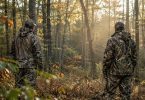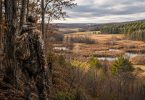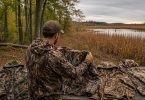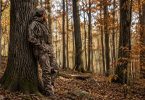



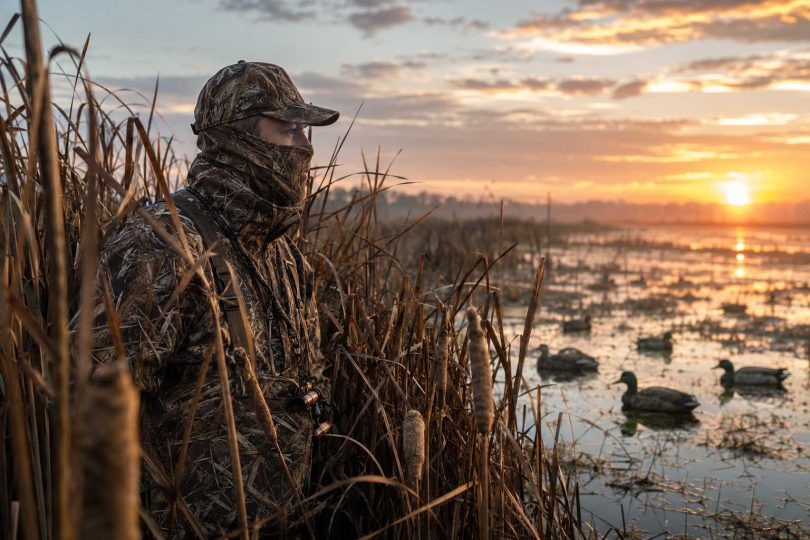

Duck hunting presents a unique camouflage challenge. Unlike many forms of big-game hunting, waterfowl hunters often operate in open marshes, flooded timber, agricultural fields, and shoreline environments where concealment depends heavily on matching surrounding vegetation.
The best camo for duck hunting is typically the pattern that most closely matches the habitat being hunted. Marsh-focused patterns often excel in cattails and reeds, while timber-oriented patterns can perform better among bark, shadows, and branches. Understanding how camouflage functions in different waterfowl environments can help hunters select clothing and gear that blends naturally into the landscape.
This guide examines popular duck hunting camouflage patterns, the environments where they tend to perform best, and the factors that matter most when selecting waterfowl hunting camo.
Does Camouflage Matter for Duck Hunting?
Camouflage is only one component of concealment, but it remains an important factor in waterfowl hunting. Successful concealment usually results from a combination of appropriate camouflage, proper blind setup, movement discipline, and environmental awareness.
Hunters interested in the science behind concealment can explore how camouflage functions in different environments through this guide on how camouflage works.
How Ducks Use Vision to Detect Threats
Ducks rely heavily on vision for survival. Waterfowl constantly scan their surroundings for movement, unusual shapes, and visual contrasts that may indicate danger. While ducks may not interpret camouflage patterns the same way humans do, they can detect inconsistencies that stand out from natural surroundings.
This means that camouflage works best when it reduces contrast and helps break up the hunter’s outline against surrounding vegetation.
Movement Versus Pattern Recognition
Many experienced waterfowl hunters consider movement control more important than camouflage pattern selection. A hunter wearing an ideal marsh pattern can still be detected if they move excessively when birds are approaching.
Conversely, a hunter using a less specialized camouflage pattern may remain unnoticed when concealed effectively and minimizing movement.
Why Concealment Still Matters in Modern Waterfowl Hunting
Modern waterfowl hunting often takes place in pressured environments where birds have encountered hunters repeatedly throughout a season. Under these conditions, effective concealment becomes increasingly important.
Researching whether concealment truly affects hunting outcomes can be helpful when evaluating equipment choices. See does camouflage actually work for hunting for a deeper discussion.
What Makes Effective Duck Hunting Camouflage?
Not all camouflage patterns are designed for waterfowl environments. The most effective duck hunting camouflage generally shares several characteristics that allow it to blend into wetland vegetation.
Matching the Dominant Vegetation
The most important factor in camouflage selection is matching the environment. Marshes dominated by cattails require different visual characteristics than flooded timber, agricultural fields, or river shorelines.
Hunters evaluating terrain-specific camouflage may also benefit from reviewing best camo patterns by terrain.
Color and Contrast in Wetland Environments
Waterfowl habitats often contain large amounts of brown, tan, olive, gray, and muted green vegetation. Effective duck hunting camouflage typically incorporates these colors while avoiding excessive contrast that may appear unnatural.
Many dedicated waterfowl patterns are designed specifically around marsh vegetation, reeds, grasses, and shoreline environments. For a deeper look at this terrain type, see marsh camouflage explained.
Camouflage Beyond Clothing
Clothing alone rarely provides complete concealment. Several additional factors often influence visibility.
Face Concealment
The human face contains natural skin tones that often contrast sharply against marsh vegetation. Face masks, paint, or neck gaiters can help reduce this contrast.
Gloves and Hands
Hands are frequently exposed during calling, operating equipment, or adjusting gear. Gloves help reduce movement-related visibility while maintaining concealment.
Duck Blind Concealment
Even excellent camouflage can be compromised by a poorly concealed blind. Hunters should ensure blinds blend naturally into surrounding vegetation and match seasonal conditions.
Best Camo Patterns for Duck Hunting
Several camouflage families have become popular among waterfowl hunters due to their performance in marsh and wetland environments.
Realtree Max-7
Realtree Max-7 is one of the most recognizable waterfowl-specific camouflage patterns available today.
Strengths
- Designed specifically for wetlands and waterfowl hunting.
- Excellent representation of reeds, grasses, and cattails.
- Widely available across multiple hunting apparel brands.
Ideal Hunting Conditions
Max-7 generally performs well in marshes, shoreline vegetation, and many agricultural waterfowl environments.
Potential Drawbacks
Some hunters find it less effective in heavily wooded flooded timber compared to patterns designed specifically for timber environments.
Mossy Oak Shadow Grass Habitat
Mossy Oak Shadow Grass Habitat remains a longstanding favorite among waterfowl hunters.
Strengths
- Built around marsh grasses and wetland vegetation.
- Strong performance in traditional waterfowl environments.
- Large-scale vegetation elements help break up outlines.
Ideal Hunting Conditions
Shadow Grass Habitat tends to perform well in marshes, river edges, and shallow-water hunting locations.
Potential Drawbacks
Like most specialized patterns, performance can decline outside its intended environment.
Sitka Waterfowl Marsh
Sitka’s Waterfowl Marsh pattern was developed specifically for wetland environments and is commonly used by hunters who spend significant time in marshes and shallow-water habitats.
Strengths
- Detailed marsh vegetation representation.
- Designed around common waterfowl environments.
- Available in premium waterfowl apparel systems.
Ideal Hunting Conditions
This pattern performs best in cattail marshes, wetlands, shoreline cover, and mixed vegetation environments.
Potential Drawbacks
Premium hunting apparel often comes with a higher cost compared to mainstream camouflage options.
Kuiu Wetlands
Kuiu Wetlands takes a different approach by combining macro and micro pattern elements designed to break up the human outline at varying distances.
Strengths
- Effective shape disruption.
- Designed specifically for waterfowl environments.
- Works across multiple wetland vegetation types.
Ideal Hunting Conditions
Marshes, shoreline habitats, flooded vegetation, and transitional wetland environments.
Potential Drawbacks
Availability may be more limited than some of the larger camouflage brands.
First Lite Typha
First Lite’s Typha pattern focuses heavily on cattails, reeds, and marsh vegetation commonly found in waterfowl habitats.
Strengths
- Excellent vegetation matching.
- Strong performance in cattail-dominated environments.
- Designed specifically for waterfowl hunting.
Ideal Hunting Conditions
Cattail marshes, reed beds, shoreline vegetation, and shallow wetlands.
Potential Drawbacks
Like most specialized patterns, effectiveness decreases when used outside intended terrain types.
Best Camo for Different Duck Hunting Environments
Different waterfowl habitats often require different camouflage characteristics. Hunters who frequently move between environments may benefit from owning multiple camouflage systems.
Marshes and Wetlands
Marshes are among the most common duck hunting environments. Vegetation typically includes reeds, cattails, grasses, and shoreline plants.
Patterns designed specifically for marsh hunting generally perform best because they incorporate colors and textures commonly found in these environments.
Flooded Timber
Flooded timber introduces darker shadows, tree trunks, bark textures, and vertical visual elements that differ significantly from open marshes.
In these environments, camouflage patterns with timber-oriented features may outperform marsh-specific designs.
Hunters interested in woodland-focused concealment strategies may also find value in woodland camouflage for hunting.
Agricultural Fields
Many waterfowl hunts occur in harvested agricultural fields. Corn stubble, wheat residue, rice fields, and similar environments often require camouflage that reflects these textures and colors.
Field hunting frequently depends as much on blind concealment and layout positioning as camouflage selection.
River and Shoreline Hunting
River systems often contain mixed vegetation that changes throughout the season. Shoreline hunters benefit from camouflage that blends effectively into grasses, brush, reeds, and natural debris.
Public Land Waterfowl Areas
Public hunting areas frequently experience heavy hunting pressure. Birds in these environments may be more alert to visual cues and unusual movement.
Proper concealment, blind setup, and movement discipline become increasingly important in heavily pressured locations.
Realtree vs Mossy Oak for Duck Hunting
The Realtree versus Mossy Oak discussion remains one of the most common debates among waterfowl hunters.
Hunters seeking a dedicated comparison can review Realtree vs Mossy Oak.
Pattern Philosophy
Both camouflage families offer multiple patterns designed for specific hunting environments. Rather than focusing solely on the brand, hunters often achieve better results by selecting the pattern that best matches local vegetation.
Marsh Performance
Both Realtree Max-7 and Mossy Oak Shadow Grass Habitat were developed specifically for waterfowl hunting and generally perform well in wetland environments.
Timber Performance
Flooded timber environments may favor patterns that incorporate stronger bark, shadow, and woodland visual elements.
Which Is Better for Most Hunters?
Neither brand is universally superior. Terrain matching remains more important than brand selection alone.
Is MultiCam Good for Duck Hunting?
MultiCam is widely used across military, law enforcement, and civilian outdoor applications because of its versatility across multiple terrain types.
Hunters considering general-purpose camouflage can explore multicam for hunting.
Where MultiCam Performs Well
MultiCam can function reasonably well in mixed terrain environments where no single vegetation type dominates the landscape.
Where Purpose-Built Waterfowl Patterns Outperform It
Dedicated marsh patterns typically offer superior concealment in cattails, reeds, and wetland vegetation because they were designed specifically around those environments.
When General-Purpose Camouflage Makes Sense
Hunters who pursue multiple game species throughout the year may prefer a versatile camouflage pattern rather than maintaining separate systems for every hunting scenario.
Additional comparisons can be found in woodland vs multicam and multicam vs woodland.
Are Digital Camouflage Patterns Effective for Waterfowl Hunting?
Digital camouflage patterns use pixelated visual structures designed to disrupt outlines at varying distances.
Hunters interested in the broader concept can review digital camouflage patterns.
Understanding Digital Camouflage
Digital camouflage gained popularity through military applications but has since expanded into commercial hunting markets.
Strengths in Certain Terrain
Some digital patterns can perform adequately in brush, woodland, or mixed terrain environments depending on color selection.
Limitations in Marsh Environments
Most digital camouflage patterns are not specifically optimized for wetland vegetation. As a result, many waterfowl hunters prefer dedicated marsh patterns when hunting ducks.
Common Duck Hunting Camouflage Mistakes
Many camouflage failures result from concealment mistakes rather than pattern selection. Even premium camouflage can be ineffective when used improperly.
Choosing a Pattern Based on Brand Alone
Hunters often focus on brand popularity instead of terrain matching. The most effective camouflage is usually the pattern that best matches the environment rather than the logo attached to it.
Ignoring Seasonal Vegetation Changes
Wetland vegetation changes significantly throughout the year. Early-season marshes often contain more green vegetation, while late-season environments tend to feature brown, tan, and dormant plant life.
Hunters who frequently encounter changing conditions may benefit from studying seasonal camouflage strategies.
Exposed Faces and Hands
The face and hands often stand out more than camouflage clothing itself. Gloves, face coverings, and proper concealment techniques can significantly reduce visibility.
Poor Blind Concealment
A poorly concealed blind can attract attention regardless of the camouflage worn by the hunter. Natural vegetation should be used whenever possible to blend blinds into surrounding habitat.
Excessive Movement
Movement remains one of the easiest ways for approaching birds to detect hunters. Staying still during final approaches is often more important than selecting a specific camouflage pattern.
Best Camo for Duck Hunting by Hunting Scenario
| Hunting Scenario | Recommended Pattern Type |
|---|---|
| Marshes and Wetlands | Marsh vegetation patterns |
| Cattails and Reeds | Waterfowl-specific marsh patterns |
| Flooded Timber | Timber and bark-based patterns |
| Agricultural Fields | Field and stubble patterns |
| Early Season Waterfowl | Greener vegetation patterns |
| Late Season Waterfowl | Brown and dormant vegetation patterns |
| Mixed Terrain | Transitional camouflage patterns |
How to Choose the Right Duck Hunting Camouflage
Selecting camouflage should begin with an honest assessment of where hunting takes place most frequently.
Identify Your Primary Hunting Environment
Marsh hunters, flooded timber hunters, and agricultural field hunters often benefit from different camouflage characteristics. Choosing a pattern designed for the primary hunting environment usually produces the best results.
Consider Seasonal Conditions
Vegetation color and density can change dramatically from opening day to late season. Camouflage should complement the dominant colors present during the majority of hunts.
Evaluate Clothing and Layering Needs
Duck hunting often occurs in cold, wet environments. Comfort, weather protection, and layering capability should be considered alongside camouflage pattern selection.
Focus on Concealment Before Brand Preference
Pattern selection matters, but effective concealment requires a complete approach that includes camouflage, blind concealment, movement discipline, and environmental awareness.
Final Thoughts
The best camo for duck hunting is usually the one that most closely matches the environment where hunting occurs. Marsh-specific patterns generally perform best in wetlands, while flooded timber and agricultural environments may benefit from more specialized alternatives.
Hunters building a broader understanding of concealment should also review types of camouflage patterns and best camo for hunting.
Ultimately, camouflage is only one component of successful waterfowl hunting. Proper blind concealment, movement control, and habitat matching often have a greater impact than the specific pattern printed on hunting clothing.
Frequently Asked Questions
Marsh-specific camouflage patterns are generally considered the best option for duck hunting because they are designed around reeds, cattails, grasses, and wetland vegetation commonly found in waterfowl habitats.
Yes. Realtree Max-7 was developed specifically for waterfowl hunting and performs well in marshes, wetlands, shorelines, and many agricultural waterfowl environments.
Camouflage can improve concealment, but movement control, blind concealment, and proper positioning often have an equal or greater influence on hunting success.
Yes. MultiCam can work in some environments, but dedicated waterfowl camouflage patterns usually provide better concealment in marshes and wetland habitats.
Ducks can detect contrast and movement effectively. Colors that stand out sharply from surrounding vegetation are generally more noticeable than colors that blend naturally into the environment.
Both brands offer effective waterfowl camouflage. The better choice depends on which specific pattern best matches the habitat being hunted.
Flooded timber often favors patterns that incorporate bark textures, darker shadows, and woodland elements that blend naturally with trees and branches.
Yes. Blind concealment is often just as important as clothing camouflage because poorly concealed blinds can attract attention from approaching birds.