



Most hunters spend too much time comparing camouflage brands and not enough time evaluating the environment they actually hunt.
The reality is that camouflage effectiveness depends far more on matching terrain, vegetation, season, and hunting conditions than selecting the most popular pattern on the market.
A pattern that performs exceptionally well in hardwood forests may be a poor choice in marshes, open fields, agricultural land, or snow-covered terrain. Likewise, a camouflage pattern marketed for a specific species is often less important than understanding how concealment works within the environment itself.
Learning how to choose camo for hunting starts by understanding terrain, seasonal conditions, vegetation density, and hunting style. Once those variables are understood, selecting a camouflage pattern becomes much easier.
This guide explains the decision-making process hunters can use to choose camouflage more effectively while avoiding common purchasing mistakes.
The Biggest Mistake Hunters Make When Choosing Camouflage
The most common camouflage mistake is starting with brands instead of environments.
Many hunters compare Realtree, Mossy Oak, Multicam, woodland patterns, and dozens of other options before identifying the terrain where they spend most of their time hunting.
This often leads to purchasing camouflage that performs well in advertisements but poorly in real-world conditions.
The better approach is to first understand the environment and then select a pattern that complements that environment.
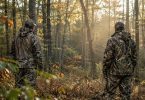
A hunter spending most of the season in eastern hardwood forests has different camouflage needs than a waterfowl hunter sitting in marsh vegetation or a western hunter operating in open terrain.
Understanding the environment first creates a more logical selection process and helps avoid unnecessary purchases.
For hunters new to camouflage selection, a complete hunting camouflage guide provides useful background on how major pattern families differ.
Start With Terrain, Not Brands
Terrain should be the primary factor when selecting hunting camouflage.
Every environment creates a different visual background. Trees, grass, shadows, rocks, brush, snow, and seasonal vegetation all influence which camouflage patterns perform best.
The purpose of camouflage is not to make a hunter invisible. The goal is to disrupt human outlines and help the hunter blend into surrounding terrain.
Because terrain varies significantly, no single pattern performs perfectly in every environment.
Hunters who evaluate terrain first typically make better camouflage decisions than hunters who begin with brand loyalty.
When comparing patterns, it helps to understand how different environments influence concealment. Guides covering best camo patterns by terrain can help narrow the decision.
Many hunters also benefit from reviewing broader recommendations for best camo for hunting before selecting a specific pattern.
Understanding How Camouflage Actually Works
Effective camouflage works by reducing visual recognition.
Animals often identify shapes, movement, contrast, and unusual visual patterns faster than specific colors.
Camouflage helps by:
- Breaking up the human silhouette
- Reducing recognizable outlines
- Blending with surrounding colors
- Mimicking natural textures
- Creating visual disruption at distance
Many hunters assume camouflage functions like invisibility. It does not.
A hunter wearing the perfect camouflage pattern can still be easily detected through movement, poor positioning, or exposure against the wrong background.
Understanding how camouflage works provides valuable context for making better camouflage decisions.
Hunters interested in the science behind concealment should also review whether does camouflage actually work for hunting under real-world conditions.
How Vegetation Changes Camouflage Effectiveness
Vegetation often matters more than the camouflage pattern itself.
Colors, shadows, density, and seasonal changes all affect how well a pattern blends into its surroundings.
Dense Hardwood Forests
Eastern forests often contain dark shadows, tree trunks, leaf litter, and layered vegetation.
Patterns featuring bark textures, darker earth tones, and woodland color palettes generally perform well in these environments.
Hunters operating in these conditions may benefit from studying woodland camouflage for hunting.
Pine Forests
Pine forests create different visual conditions than hardwood environments.
Darker greens, vertical tree structures, and needle-covered ground often favor patterns that emphasize darker tones and vertical disruption.
Hunters should pay attention to both canopy density and ground vegetation when selecting camouflage.
Brush and Transitional Areas
Transitional environments often contain a mixture of grasses, brush, saplings, and open areas.
These locations reward versatile camouflage patterns capable of functioning across multiple visual backgrounds.
Many hunters choose adaptable options such as multicam for hunting in these situations.
Marsh and Wetland Habitat
Marsh environments create unique concealment challenges.
Tall reeds, cattails, grasses, and reflective water surfaces often favor camouflage patterns specifically designed for waterfowl environments.
Hunters targeting ducks and other waterfowl may benefit from understanding marsh camouflage explained.
Choosing Camo by Hunting Environment
Once terrain and vegetation are understood, hunters can begin narrowing camouflage choices based on the environments they hunt most frequently.
The goal is not finding the perfect camouflage pattern. The goal is selecting a pattern that performs well within the conditions where most hunts occur.
Woodland Hunting
Woodland environments remain among the most common hunting locations across North America.
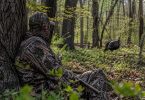
Hardwood forests, mixed forests, and heavily wooded areas often contain dark shadows, vertical tree trunks, fallen leaves, and dense vegetation.
Patterns designed for forest environments generally perform best because they incorporate earth tones, bark textures, and visual disruption that complements woodland terrain.
Hunters focusing primarily on forests may benefit from reviewing woodland hunting camouflage.
Open Fields and Agricultural Land
Open terrain creates different camouflage requirements.
Distance often becomes a more significant factor than close-range concealment.
Patterns that appear highly detailed at close range may lose effectiveness when viewed from hundreds of yards away.
In agricultural environments, seasonal crop changes also influence camouflage selection.
Harvested fields often require different camouflage than fields containing standing crops.
Marshes and Waterfowl Habitat
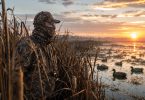
Waterfowl hunters frequently operate in environments dominated by reeds, cattails, grasses, and wetland vegetation.
Patterns specifically designed for marsh environments often perform better than general-purpose hunting camouflage.
Concealment within blinds, vegetation walls, and shoreline cover can significantly improve effectiveness.
Hunters pursuing ducks should also review recommendations for best camo for duck hunting.
Mountain and Rocky Terrain
Mountain environments often feature sparse vegetation, exposed rock, and changing elevation.
Because terrain can vary dramatically within a single hunt, versatile camouflage patterns frequently perform well.
Earth-tone color palettes often provide greater flexibility than highly specialized patterns.
Snow Conditions
Snow-covered environments create one of the most obvious camouflage challenges.
Traditional woodland and marsh patterns often become highly visible against snow-covered backgrounds.
Hunters operating in winter conditions should consider dedicated snow camouflage patterns when snow becomes a consistent factor.
Choosing Camo by Hunting Season
Many hunters focus exclusively on terrain while overlooking seasonal change.
The same environment can look dramatically different between early season and late season.
Early Season
Early-season hunting often occurs during periods of dense vegetation growth.
Green foliage, heavy cover, and lush vegetation typically favor patterns containing stronger green tones.
Visibility is often reduced because vegetation remains thick.
Mid-Season
As vegetation begins transitioning, camouflage requirements become more complicated.
Mixed colors often dominate the environment.
Patterns that combine greens, browns, tans, and earth tones frequently perform well during transitional periods.
Late Season
Late-season conditions often introduce bare trees, dead vegetation, and increased visibility.
Patterns optimized for green environments may become less effective as landscapes shift toward browns and grays.
Hunters should evaluate whether their camouflage continues matching the dominant environment.
Winter Hunting
Winter conditions vary significantly by region.
Some locations experience persistent snow coverage, while others remain dominated by dormant vegetation and exposed ground.
Adapting camouflage to seasonal conditions often produces better results than relying on a single pattern year-round.
Hunters interested in adapting their camouflage throughout the year should explore seasonal camouflage strategies.
Choosing Camo by Species
Although terrain remains the most important factor, target species can still influence camouflage decisions.
Deer Hunting
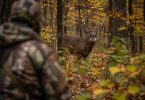
Deer hunting often places greater emphasis on movement discipline, scent control, and positioning than camouflage pattern selection.
A properly positioned hunter wearing average camouflage frequently outperforms a poorly positioned hunter wearing premium camouflage.
Hunters evaluating camouflage for whitetails should review both camouflage for deer hunting and best camouflage for deer hunting.
Turkey Hunting
Turkey hunting places unusually high demands on concealment.
Turkeys possess exceptional eyesight and frequently detect movement that many hunters underestimate.
Face coverings, gloves, and movement discipline often contribute more to success than selecting a specific camouflage brand.
Hunters should also review recommendations for best camo for turkey hunting.
Duck Hunting
Duck hunting combines camouflage selection with blind concealment and environmental integration.
The ability to blend a blind into surrounding vegetation frequently matters as much as the camouflage clothing being worn.
Patterns optimized for marsh environments generally outperform woodland patterns during waterfowl hunts.
Realtree, Mossy Oak, Woodland, and Multicam Compared
Many camouflage discussions eventually become brand comparisons.
While pattern selection matters, most of the differences between major camouflage families are smaller than many hunters assume.
The environment remains the primary factor.
Realtree
Realtree camouflage patterns are designed around realistic natural imagery and are available in numerous environment-specific variants.
Strengths include strong environmental realism and broad availability.
The primary tradeoff is that effectiveness depends heavily on selecting the appropriate Realtree pattern for the intended terrain.
Mossy Oak
Mossy Oak camouflage patterns follow a similar philosophy with multiple patterns optimized for specific hunting conditions.
Mossy Oak offers strong options for woodland, marsh, and transitional environments.
As with Realtree, selecting the correct pattern is usually more important than selecting the brand itself.
Woodland
Traditional woodland camouflage remains effective in many forested environments.
Its darker color palette performs particularly well in dense woods and heavily shaded terrain.
The tradeoff is reduced effectiveness in open terrain and lighter environments.
Hunters comparing forest-oriented patterns should review woodland vs multicam.
Multicam
Multicam was originally developed as a versatile camouflage pattern capable of functioning across multiple environments.
This versatility makes it attractive for hunters who move between different terrain types throughout the season.
The tradeoff is that a general-purpose pattern may not outperform specialized hunting camouflage in highly specific environments.
Hunters evaluating these tradeoffs should also review Realtree vs Mossy Oak and multicam for hunting.
Can One Camo Pattern Work Everywhere?
This question drives countless camouflage purchases.
Hunters often hope to find a single pattern capable of performing equally well in forests, marshes, fields, mountains, and transitional environments.
Unfortunately, no camouflage pattern is perfect everywhere.
Every design involves tradeoffs.
Patterns optimized for dense forests may appear too dark in open terrain. Patterns designed for grasslands may appear too light in heavily wooded environments.
Versatile patterns certainly exist, and many hunters successfully use them across multiple environments. However, versatility should not be confused with optimization.
The best camouflage is usually the pattern that most closely matches the terrain where the majority of hunting occurs.
What Matters More Than Camouflage
Many hunters overestimate the importance of camouflage while underestimating other concealment factors.
Movement
Movement remains one of the fastest ways to attract attention.
Animals that fail to notice a camouflage pattern often detect sudden movement immediately.
Remaining still frequently contributes more to concealment than upgrading camouflage.
Positioning
Background selection can dramatically improve concealment.
Using shadows, vegetation, terrain features, and natural cover helps reduce visibility regardless of camouflage pattern.
Scent Control
For many species, scent represents a greater threat to concealment than visual detection.
Deer hunters in particular often benefit more from wind awareness than from changing camouflage patterns.
Hunting Discipline
Patience, concealment habits, and environmental awareness frequently separate successful hunters from unsuccessful hunters.
Camouflage should support these skills rather than replace them.
Hunters interested in the broader discussion should review hunting camouflage effectiveness.
A Simple Framework for Choosing Hunting Camo
If choosing camouflage feels overwhelming, a simple decision framework can help.
- Identify the terrain where you hunt most often.
- Evaluate dominant vegetation and environmental colors.
- Consider seasonal changes throughout the hunting season.
- Match camouflage to hunting style and concealment needs.
- Decide whether versatility or specialization is more important.
- Focus on movement, positioning, and hunting discipline before upgrading camouflage.
Following this process often produces better results than choosing camouflage based solely on popularity or marketing claims.
Conclusion
Learning how to choose camo for hunting becomes much easier when the focus shifts from brands to environments.
The most effective camouflage is rarely the newest pattern or the most heavily advertised product. Instead, it is the camouflage that best matches the terrain, vegetation, seasonal conditions, and hunting style involved.
Hunters who understand these tradeoffs can make better purchasing decisions, avoid unnecessary upgrades, and build a camouflage system that performs consistently across the environments they hunt most often.
For hunters ready to compare products, evaluating available hunting camouflage clothing becomes much easier after understanding the environments those products are designed to serve.
Frequently Asked Questions
The best camouflage pattern depends on the terrain, vegetation, season, and hunting conditions. No single camouflage pattern performs perfectly in every environment.
Start by evaluating terrain, vegetation, and seasonal conditions. Select a pattern that closely matches the environment where you spend most of your hunting time.
Camouflage can help reduce visual detection, but movement control, scent management, positioning, and hunting discipline often have a greater impact on success.
Neither brand is universally better. The most important factor is selecting the pattern that best matches the environment being hunted.
Some patterns perform reasonably well across multiple environments, but no camouflage pattern is optimized for every terrain and season.
Movement control, positioning, environmental awareness, and scent management often influence hunting success more than camouflage selection.
Terrain should generally be the primary factor. Species-specific considerations matter, but environmental matching usually has the greatest impact on camouflage effectiveness.
Multicam can work well for hunting because it performs across a variety of environments. The tradeoff is that it may not be as optimized as specialized hunting camouflage designed for specific terrain.