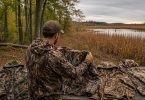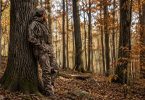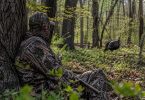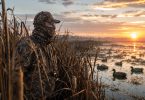



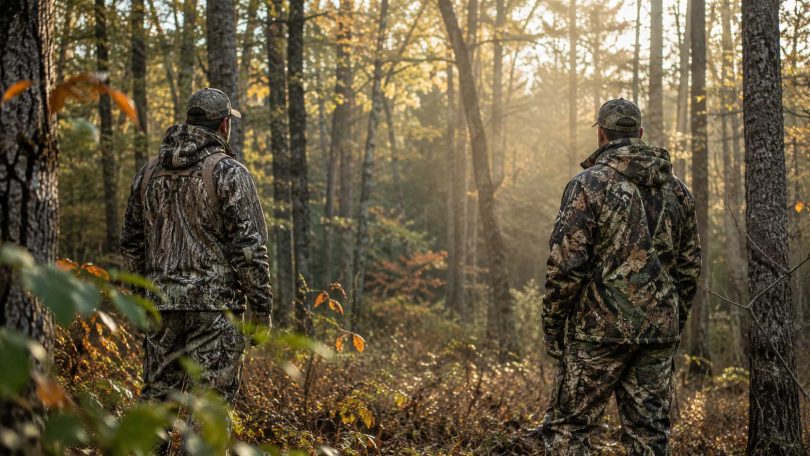

Few hunting gear debates have lasted longer than Realtree vs Mossy Oak. Both brands have built strong reputations among hunters, both offer extensive camouflage lineups, and both have proven themselves in the field across a wide range of game species and environments.
That creates an understandable question: which one is actually better?
The answer is that neither brand automatically wins. Effective camouflage depends on how well a pattern matches the environment where it is used. A poorly matched pattern from a respected brand can stand out more than a lesser-known pattern that closely matches the terrain.
Hunters often spend too much time comparing logos and not enough time evaluating background color, vegetation density, seasonal changes, and overall concealment strategy. Understanding the broader types of camouflage patterns available to hunters is often more valuable than focusing on brand names alone.
This guide compares Realtree and Mossy Oak through the lens of hunting effectiveness, terrain matching, species-specific applications, and practical field use. Rather than declaring a universal winner, the goal is to help you identify which camouflage approach makes the most sense for your hunting conditions.
Realtree vs Mossy Oak at a Glance
At a high level, Realtree and Mossy Oak share the same goal: helping hunters visually blend into their surroundings. Both companies produce patterns designed for deer hunting, turkey hunting, waterfowl hunting, and general outdoor use.
The difference is often found in how the patterns visually approach concealment.
| Category | Realtree | Mossy Oak |
|---|---|---|
| Visual Style | Often photorealistic and highly detailed | Often organic with strong natural breakup |
| Common Strength | Detailed environmental matching | Woodland texture and shadow blending |
| Popular Use Cases | Deer hunting, mixed timber, treestands | Turkey hunting, hardwoods, dark timber |
| Primary Selection Factor | Pattern-specific | Pattern-specific |
| Best Buying Strategy | Match pattern to terrain | Match pattern to terrain |
Many hunters assume the comparison should focus on which company makes better camouflage. In reality, selecting effective camouflage for hunting is usually a matter of terrain matching rather than brand loyalty.
The Main Difference Between Realtree and Mossy Oak
The most useful way to compare Realtree and Mossy Oak is through their overall camouflage philosophy.
While both companies produce multiple patterns, Realtree often emphasizes realistic visual detail, while Mossy Oak often focuses on natural texture, shadow, and breakup.
Realtree Generally Emphasizes Detailed Realism
Many Realtree patterns feature realistic branches, bark, leaves, shadows, and vegetation layers. The goal is to visually replicate elements commonly found in natural hunting environments.
When the terrain closely resembles the pattern, this approach can be highly effective. Hardwood forests, mixed timber, oak flats, creek bottoms, and treestand setups often provide backgrounds that complement this detailed style.
The tradeoff is that highly detailed patterns can become more terrain-specific. A pattern that blends exceptionally well in one environment may become less effective if the surrounding vegetation changes significantly.
This is one reason why understanding matching camouflage to terrain often matters more than selecting a particular brand.
Mossy Oak Often Focuses on Natural Breakup
Mossy Oak patterns frequently emphasize bark texture, shadowing, leaves, forest-floor elements, and visual disruption. Rather than attempting to recreate a specific scene, many patterns focus on breaking up the hunter’s outline against natural cover.
This approach has made Mossy Oak particularly popular among hunters who spend time in hardwoods, brush, timber, and traditional turkey woods.
Some hunters describe Mossy Oak as appearing more natural at moderate distances because the pattern relies heavily on texture and breakup rather than highly detailed imagery.
Like Realtree, however, effectiveness still depends on the specific pattern being used and how closely it matches the environment.
Hunters who spend most of their season in heavily wooded areas may benefit from exploring dedicated woodland camouflage patterns rather than evaluating brands in isolation.
Realtree Strengths and Weaknesses
Realtree’s greatest strength is its ability to create highly detailed patterns that visually resemble real-world hunting environments. When matched correctly, these patterns can blend effectively with trees, branches, leaves, and seasonal vegetation.
Where Realtree Performs Well
Realtree often performs particularly well in environments that contain strong visual structure. Hardwood forests, mature timber, creek bottoms, treestand locations, and wooded deer hunting setups are common examples.
Hunters pursuing whitetails from elevated stands frequently find that realistic bark and branch elements blend naturally with the surrounding environment.
Many successful hunters use Realtree-based systems for deer hunting camouflage because the visual detail can complement common whitetail habitats.
Where Realtree Can Be Less Ideal
The primary limitation of highly detailed camouflage is that it may become less versatile across dramatically different environments.
A pattern designed around hardwood forests may not perform as naturally in open grasslands, marshes, sparse brush, or lighter-colored terrain. The issue is not necessarily the quality of the pattern but whether it matches the hunting environment.
Hunters who move between multiple terrain types throughout the season should focus on selecting camouflage for hunting rather than assuming one specific pattern will solve every concealment challenge.
Mossy Oak Strengths and Weaknesses
Mossy Oak has earned a strong reputation among hunters who spend significant time in timber, hardwoods, and brush-covered environments. Its patterns often create strong visual breakup while maintaining a natural appearance.
Where Mossy Oak Performs Well
Mossy Oak patterns are commonly associated with hardwood forests, mature timber, brushy cover, and traditional turkey hunting environments. Many hunters appreciate how the patterns blend into shadows, bark textures, and forest-floor elements.
This reputation has made Mossy Oak a frequent choice for turkey hunting camouflage, where close-range visual concealment can be particularly important.
The emphasis on breakup and texture can help reduce recognizable human outlines when sitting against trees, brush piles, and wooded terrain.
Where Mossy Oak Can Be Less Ideal
Like Realtree, Mossy Oak patterns are not universally effective across every environment. Some woodland-focused patterns can appear too dark in open terrain, dry grasslands, agricultural fields, or other lighter-colored landscapes.
Hunters should avoid evaluating Mossy Oak as a single pattern. Different Mossy Oak options perform differently depending on terrain, season, and hunting style.
When comparing camouflage systems, evaluating the intended environment is usually more productive than focusing on marketing claims. Studying camouflage by environment can often reveal better choices than simply comparing brands.
Realtree vs Mossy Oak for Deer Hunting
Deer hunting is one of the most common reasons hunters compare Realtree and Mossy Oak. Both brands have built strong reputations among whitetail hunters, and both have patterns designed specifically for wooded environments.
What often gets overlooked is that deer are not evaluating camouflage brands. They react to movement, silhouette, contrast, sound, scent, and pressure. Camouflage helps reduce visual detection, but it works best when combined with good hunting fundamentals.
The goal is not to find the most popular pattern. The goal is to choose camouflage for whitetail hunting that matches the environment where you spend most of your season.
Treestand Deer Hunting
Treestand hunting often places hunters against trees, limbs, bark textures, and elevated woodland backgrounds. This can create conditions where detailed camouflage performs well because the pattern naturally blends with surrounding structure.
Many Realtree patterns excel in these conditions because of their realistic bark, branch, and leaf elements. When the visual detail closely matches the surrounding trees, the pattern can help reduce obvious contrast between the hunter and the environment.
Mossy Oak can perform equally well when the selected pattern complements the timber, shadows, and forest-floor colors common in the area. In many situations, the difference between the two becomes difficult to detect beyond a relatively short distance.
Hunters should focus on background matching rather than assuming one logo automatically provides better concealment.
Ground Blinds and Still-Hunting
Ground hunting creates a different concealment challenge. Hunters often sit against trees, brush, vegetation, or terrain features that place them closer to a deer’s line of sight.
In these situations, outline breakup becomes especially important. Patterns that create visual disruption against the surrounding environment often perform better than patterns chosen solely because of brand recognition.
Whether using Realtree or Mossy Oak, hunters should evaluate how the pattern interacts with brush, leaf litter, bark, and vegetation found in their hunting area.
Those building a complete deer hunting system should consider camouflage as only one piece of overall hunting camouflage selection. Quiet fabrics, layering systems, scent control, and movement discipline often have a greater impact on success than small differences between camouflage brands.
Realtree vs Mossy Oak for Turkey Hunting
Turkey hunting creates one of the most demanding visual concealment challenges in hunting. Unlike deer, turkeys rely heavily on vision and can quickly detect unnatural movement or contrasting shapes.
Because of this, many hunters place greater emphasis on camouflage when pursuing spring gobblers.
Why Pattern Detail Matters More for Turkey Hunting
Turkey hunters frequently hunt from ground level. They may sit against trees, brush piles, fence rows, field edges, or natural cover while calling birds into close range.
At these distances, complete concealment becomes important. Jackets, pants, gloves, face masks, hats, and even footwear can contribute to reducing visual detection.
This is one reason why dedicated spring turkey camouflage often receives more attention than camouflage used for many other game species.
Which Brand Makes More Sense for Turkey Woods?
Mossy Oak has long maintained a strong association with turkey hunting. Many hunters appreciate how certain patterns blend with hardwood forests, mature timber, and darker woodland settings.
Realtree also offers patterns that perform well in spring woods, particularly when fresh vegetation, leaves, and branch structure dominate the landscape.
The deciding factor should not be which brand appears more frequently in advertisements. Instead, hunters should evaluate how the specific pattern interacts with local vegetation, bark texture, shadow conditions, and seasonal foliage.
Hunters who spend most of their season in hardwood forests may benefit from exploring additional guidance on wooded hunting environments before selecting a pattern.
Realtree vs Mossy Oak by Terrain
The most effective way to compare camouflage systems is by evaluating terrain. The same pattern can perform exceptionally well in one environment and poorly in another.
This reality is why experienced hunters often prioritize terrain matching over brand loyalty.
Hardwood Forests
Hardwood forests remain one of the strongest environments for both Realtree and Mossy Oak. Bark texture, leaves, shadows, limbs, and natural woodland colors create backgrounds that complement many popular patterns from both brands.
Hunters should focus on seasonal changes, color tones, and vegetation density rather than assuming one company dominates hardwood environments.
Pine Woods and Dark Timber
Pine forests and dark timber often contain deeper shadows and less visual variation than hardwood forests. Patterns that emphasize shadow, bark texture, and natural breakup can perform well in these conditions.
Both Realtree and Mossy Oak offer options capable of blending into darker woodland settings when properly matched to local conditions.
Evaluating terrain-specific camouflage is usually more productive than comparing brands in isolation.
Open Fields and Transitional Cover
Open fields, agricultural edges, brush lines, and transitional terrain often require a different camouflage approach than dense timber.
Patterns that are too dark or too heavily detailed may create unnecessary contrast against lighter backgrounds. In these environments, hunters should prioritize overall color matching and pattern density rather than specific brand preferences.
Learning how various camouflage styles interact with open terrain can help avoid costly purchasing mistakes.
Wetlands and Marshes
Hunters pursuing waterfowl or spending time around marsh vegetation face a different concealment challenge altogether.
Neither Realtree nor Mossy Oak should be judged solely on woodland performance. Marsh grass, reeds, cattails, and wetland vegetation often require patterns specifically designed for those environments.
Choosing a marsh-specific pattern generally produces better results than forcing a woodland pattern into an environment it was never designed to match.
Which Is More Versatile: Realtree or Mossy Oak?
Versatility is one of the most common reasons hunters compare these brands. Many hunters want a single camouflage system capable of handling multiple seasons, species, and environments.
Unfortunately, camouflage does not work that way.
The most versatile pattern is rarely the one with the most detail or the strongest branding. Instead, versatility comes from balance. Moderate contrast, adaptable coloration, and broad environmental compatibility tend to create patterns that remain useful across multiple hunting situations.
Some Realtree patterns offer strong versatility because they avoid becoming too dark or too terrain-specific. Some Mossy Oak patterns achieve similar versatility through effective breakup and natural coloration.
The better question is not whether Realtree or Mossy Oak is more versatile. The better question is whether the pattern fits most of the environments where you actually hunt.
Hunters who frequently change terrain throughout the season should focus on choosing hunting camouflage rather than searching for a universally perfect camouflage pattern.
In most cases, a well-balanced pattern that reasonably matches several environments will outperform a highly specialized pattern used outside its intended setting.
How to Choose Between Realtree and Mossy Oak
If you are trying to decide between Realtree and Mossy Oak, start by ignoring the logos.
Both companies produce effective camouflage. Both have patterns that perform well in the field. The question is not which brand wins. The question is which pattern best matches your hunting conditions.
Start With Where You Hunt Most
Your primary hunting environment should drive the decision.
If you spend most of your time in hardwood forests, look for patterns that complement bark, leaves, shadows, and woodland vegetation. If you hunt field edges, agricultural land, or transitional cover, evaluate how the pattern interacts with lighter backgrounds.
Hunters who move between multiple environments should focus on adaptable camouflage pattern categories rather than highly specialized patterns designed for only one setting.
Match Pattern Density to Your Background
Dense environments often support busier camouflage patterns. Open environments usually reward lighter patterns with less visual clutter.
This is where many purchasing mistakes occur. Hunters often buy the most visually impressive pattern without considering whether it matches their actual hunting conditions.
Evaluating matching camouflage to terrain before making a purchase can help avoid selecting a pattern that looks impressive online but performs poorly in the field.
Prioritize Clothing Quality Before Brand Loyalty
Camouflage matters, but garment quality matters too.
Quiet fabrics, proper layering, weather protection, breathability, fit, and durability often influence hunting success more than small differences between camouflage brands.
A hunter wearing comfortable, weather-appropriate gear can often remain still longer and hunt more effectively than someone wearing uncomfortable clothing with a slightly better camouflage pattern.
This is why experienced hunters frequently evaluate complete hunting camouflage selection systems rather than focusing exclusively on camouflage patterns.
Final Verdict: Realtree or Mossy Oak?
Realtree and Mossy Oak both make effective hunting camouflage.
Realtree often appeals to hunters who prefer realistic visual detail and patterns built around bark, branches, leaves, and natural vegetation structure. When matched to the proper environment, these patterns can blend extremely well.
Mossy Oak often appeals to hunters who prefer natural texture, shadow integration, and strong visual breakup. Many hunters find these patterns particularly effective in timber, hardwoods, and traditional turkey hunting environments.
Neither brand is automatically superior.
The most effective camouflage is the one that matches your terrain, season, vegetation, and hunting style. A perfectly matched pattern from either company will usually outperform a poorly matched pattern from the competing brand.
Before making a purchase, evaluate your hunting conditions, identify the environments you encounter most often, and choose the pattern that best fits those conditions.
For most hunters, the smartest decision is not choosing Realtree or Mossy Oak. The smartest decision is choosing the right camouflage for where you hunt.
FAQ
No. Realtree is not universally better than Mossy Oak. Both brands produce effective camouflage. The better choice depends on how well a specific pattern matches the terrain, vegetation, and hunting conditions where it will be used.
Mossy Oak can work extremely well for deer hunting, particularly in hardwood forests, timber, and wooded environments. However, Realtree can be equally effective when the selected pattern matches the surrounding habitat.
Both brands offer patterns capable of performing well during turkey season. The best choice depends on the local vegetation, terrain, and how closely the pattern matches the background where the hunter is set up.
Both Realtree and Mossy Oak are among the most recognized camouflage brands in hunting. Popularity varies by region, hunting style, and personal preference, but popularity alone should not determine camouflage selection.
Yes. Many hunters mix camouflage garments from different brands. As long as the colors, contrast levels, and overall appearance blend naturally with the environment, mixing brands is not a problem.