



For many buyers, a PSA vs BCM comparison is not really about brand loyalty. It is about deciding how much refinement, quality control, and long-term confidence you actually need in an AR-15 setup. Both companies occupy important places in the market, but they do not solve the same problem in the same way. PSA tends to win attention by making the platform more accessible, while BCM has built its reputation around a more tightly controlled, professional-grade standard.
That difference matters because an AR-15 is a system, not a single part. Your decision affects everything from rail fit and barrel profile to how much trust you place in assembly consistency and component selection. A reader trying to understand the platform at a broad level should start with an AR platform overview, while someone still sorting through the major assemblies may need an AR-15 parts overview before a brand comparison becomes useful.
This article takes a narrower, more practical angle. Instead of asking which company is “better” in the abstract, it looks at where PSA and BCM fit in a real buying decision. That includes what each brand is trying to deliver, where the performance gap actually shows up, where it does not, and which type of shooter is likely to benefit from spending more. The goal is not to flatten both brands into the same category. The goal is to help you make a durable decision that matches your use case, budget, and expectations.
What a PSA vs BCM comparison is really measuring
A useful PSA vs BCM comparison is not just a price comparison. It is a comparison of manufacturing philosophy, assembly standards, feature choices, and intended buyer. PSA is built around value and broad access. BCM is built around consistency, hard-use credibility, and a more deliberate parts standard. That means you are not simply comparing two logos on the side of an upper. You are comparing two ways of approaching the AR-15 market.
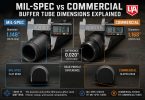
In practical terms, that usually means PSA is trying to offer a workable entry point into the platform with a wide range of configurations, while BCM is trying to deliver a more controlled product with fewer compromises in inspection, materials selection, and assembly. Understanding AR-15 parts compatibility basics helps here, because some buyers assume every upper that looks similar offers the same level of refinement. It does not. The same is true when people reduce the issue to brand prestige without understanding mil-spec vs commercial AR parts.
That is why the best way to frame this decision is not “cheap versus expensive.” A better frame is value-first versus standard-first. PSA is often good enough for many civilian use cases. BCM is usually chosen by buyers who want less uncertainty in the details. Why this matters is simple: if your intended use is casual range time, that gap may feel small. If you are building around reliability margin, training volume, or defensive confidence, it starts to matter more.
Build philosophy and where the two brands separate
PSA’s core advantage is that it makes the AR-15 platform easier to enter. The catalog is wide, pricing is aggressive, and buyers can get into a functional setup without treating the project like a premium build. That is a real strength, not a flaw. For a first rifle, a range gun, or a general-purpose setup that does not need to live at the edge of performance expectations, that value proposition is hard to ignore.
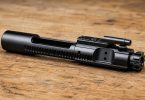
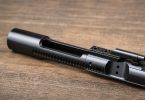
BCM takes a different approach. The company has built its identity around tighter control over the parts that matter most, especially in upper assemblies. That shows up in the way buyers talk about BCM: not as a bargain, but as a confidence purchase. The appeal is not that BCM offers exotic design. It is that the company tends to focus on execution, consistency, and a reputation for getting the basics right at a high level. That sits naturally beside topics like how the bolt carrier group works and how the AR-15 gas system works, because those systems reveal how much quality in an AR depends on disciplined assembly rather than marketing language.
The result is that PSA often makes more sense when price discipline is part of the build requirement, while BCM makes more sense when the buyer wants stronger confidence in execution out of the box. Why this matters is that many readers are not deciding between “usable” and “unusable.” They are deciding between “good enough for me” and “worth paying more to remove doubt.”
Upper quality, rail design, and component consistency
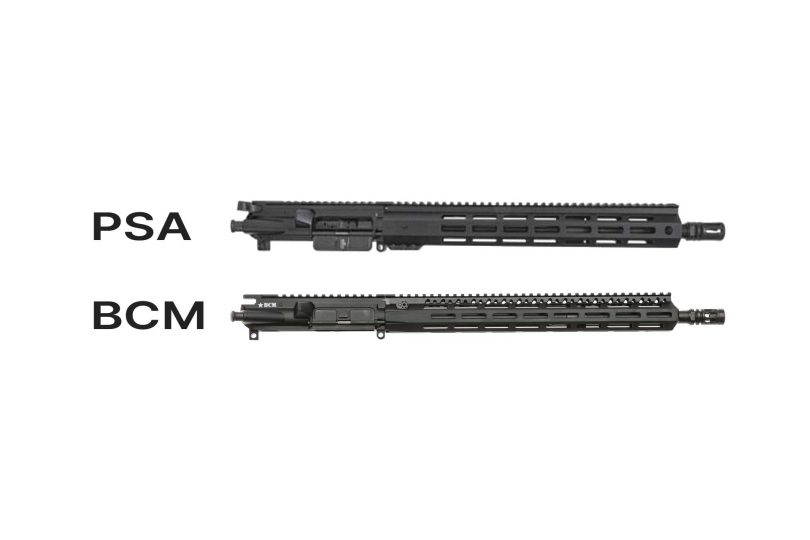
If you compare matched 16-inch mid-length uppers from both brands, the most important differences are not flashy. You are looking at fit, machining consistency, rail execution, finish quality, assembly confidence, and how much trust the brand inspires in the unseen details. PSA’s better upper configurations can offer a lot of value, especially for buyers who want modern handguards, practical barrel lengths, and a decent starting point without premium pricing. BCM’s comparable upper is usually where the more refined feel becomes obvious.
That refinement is not just aesthetic. It shows up in the confidence buyers have in interface quality, barrel and gas system execution, and the overall standard of the assembly. Someone comparing upper assemblies in more detail may also need bolt carrier group compatibility and a complete AR-15 parts breakdown because a “brand comparison” often turns into a component question once you start identifying where performance actually comes from.
That does not mean every PSA upper is a poor choice or every BCM upper is automatically the right choice. It means BCM is more likely to appeal to a buyer who wants fewer lingering questions about execution. PSA is more likely to appeal to a buyer who is willing to accept a lower assurance ceiling in exchange for stronger price-to-performance value. Why this matters is that most buyers do not need the absolute highest standard in every dimension. They need the right standard for what they will realistically do with the rifle.
Reliability, recoil behavior, and practical performance
Reliability conversations around PSA and BCM can become exaggerated in both directions. PSA is sometimes dismissed too quickly by people who equate lower price with automatic failure. BCM is sometimes discussed as if premium standards make the rifle operate in a completely different universe. The truth is more measured. A sound PSA setup can work well for many shooters, while BCM tends to offer a stronger reliability margin and a more established reputation for consistency under harder use.
This is where platform mechanics matter. If you do not understand how AR rifles cycle, it is easy to over-credit or under-credit the brand name. If you have not sorted through direct impingement vs piston systems, it is also easy to confuse operating system debates with assembly-quality debates. In a typical 16-inch mid-length configuration, both PSA and BCM can offer a sensible, usable shooting experience, but BCM more often earns its price through how consistently it executes that pattern.
Why this matters is that reliability is not just “does it fire on day one.” It is about how much confidence you have in the rifle over time, through training, maintenance cycles, part wear, and imperfect conditions. If your use case is occasional range work, PSA may meet the requirement without forcing extra spend. If your use case includes heavier round counts or a lower tolerance for uncertainty, BCM’s reputation starts to make more sense as a practical purchase rather than an emotional one.
Who PSA is for, and who BCM is for
PSA is usually a strong fit for the buyer who wants to enter the platform without overspending, who can accept a value-oriented brand philosophy, and who is not treating the purchase like a professional-duty standard benchmark. That includes first-time AR owners, budget-conscious builders, casual range shooters, and buyers who would rather spread their money across ammunition, magazines, and training than spend it all in the initial upper purchase. A practical build path may eventually extend into complete AR build kits or even choosing optics for an AR rifle once the base setup is settled.
BCM is better suited to the buyer who already knows the platform, expects a higher standard from the upper assembly, and sees value in paying more for confidence rather than just features. That does not require military or law-enforcement use. It simply means the buyer is more concerned with consistency, long-term trust, and a reputation built around hard-use credibility. Those readers often overlap with the audience for best upper receivers and best bolt carrier groups, because once you care about the standard of the upper, you usually start caring more about the supporting parts standard as well.
Who are these brands not for? PSA is not ideal for the buyer who wants to minimize doubt and is already mentally committed to a more premium standard. BCM is not ideal for the buyer who mostly needs a capable range rifle and would be financially better served by putting the price difference into ammunition and use. Why this matters is that an expensive choice is not automatically a smart choice, and a cheaper choice is not automatically a compromise you will regret.
Tradeoffs that actually matter in a buying decision
The most important PSA vs BCM tradeoff is not whether one can produce a functional AR-15 upper and the other cannot. Both can. The real tradeoff is how much you are paying for confidence in consistency, parts execution, and assembly standard. PSA’s value becomes compelling when the buyer is disciplined about use case. BCM’s higher price becomes compelling when the buyer is disciplined about standards.
That is also why some buyers make mistakes at the wrong stage of the decision. They overspend on brand before understanding common AR build mistakes, or they underspend without understanding what the upper contributes to the rifle as a system. Buyers who are still sorting through the major assemblies may need what an AR-15 is and how it’s structured, while those trying to avoid legal misunderstandings may need which firearm parts are serialized before purchasing mixed components.
Another meaningful tradeoff is psychological. PSA leaves more room in the budget, which can be the smarter move if the buyer will actually use that margin well. BCM reduces more uncertainty at purchase, which can be the smarter move if the buyer knows that doubt will keep resurfacing after the order is placed. Why this matters is that a good buying decision is not just technically sound. It also survives second-guessing.
How to choose between PSA and BCM
If your goal is a practical AR-15 that gives you solid function for the money, PSA is often the better answer. If your goal is a more confidence-driven upper purchase with a stronger reputation for consistency, BCM is usually the better answer. That is the cleanest version of the comparison.
Choose PSA when budget matters, when your use case is moderate, and when value is part of the build requirement. Choose BCM when you are comfortable paying more to reduce uncertainty, when you place a premium on upper quality and assembly reputation, and when you view the purchase as a longer-term standard rather than a lower-cost entry point.
There is also a middle-ground lesson in this comparison: the “right” answer is often not the brand with the best reputation in the abstract. It is the brand whose strengths line up with the rifle you are actually building. For some buyers, that will mean starting with PSA and upgrading selectively over time. For others, it will mean buying BCM once and avoiding the churn of incremental dissatisfaction. If your decision is starting to turn from theory into product selection, it is worth reviewing best upper receiver options alongside reliable bolt carrier groups so the final purchase reflects the same standard across the upper assembly.
PSA vs BCM FAQ
Is BCM better than PSA for most AR-15 buyers?
Not for every buyer. BCM is usually better for the buyer who values consistency, upper assembly standards, and long-term confidence enough to justify the higher price. PSA is often better for the buyer who wants a practical AR-15 without spending premium money. The better choice depends on whether your decision is driven more by budget discipline or by a stronger preference for reduced uncertainty.
Is PSA good enough for a first AR-15?
In many cases, yes. PSA can make a lot of sense for a first AR-15 if the buyer understands what the rifle is meant to do and keeps expectations realistic. For range use, general familiarity with the platform, and budget-conscious ownership, PSA often provides enough value to be the smarter first step. The key is matching the purchase to the use case instead of buying solely on price.
Why does BCM cost more than PSA?
BCM generally costs more because buyers are paying for a stronger reputation in parts selection, assembly consistency, inspection standards, and hard-use credibility. That does not mean every shooter will feel the value gap equally. It means BCM has positioned itself around a higher confidence standard, especially in upper assemblies, and prices accordingly.
Should I compare PSA and BCM by complete rifles or by uppers?
Upper-to-upper is usually the cleaner comparison. The upper assembly carries many of the differences that buyers actually care about, including barrel configuration, handguard design, gas system execution, and overall assembly quality. Comparing matched uppers removes some of the noise created by lower components, furniture, and bundled rifle configurations.
Is BCM worth it over PSA for a range rifle?
Sometimes, but not automatically. If the rifle will mostly see casual range use, PSA may deliver the better value because it leaves more of the budget available for ammunition, magazines, and practice. BCM becomes easier to justify when the buyer wants a higher-confidence standard regardless of whether the rifle will be pushed hard immediately.
What matters more in this comparison: features or quality control?
Quality control matters more. Features can be added, changed, or upgraded later, but the trust you place in the upper assembly starts with how well the rifle or upper was built in the first place. In a PSA vs BCM comparison, the most meaningful difference is usually not a flashy feature list. It is how much confidence the buyer has in execution.
Conclusion
A good PSA vs BCM comparison does not end with a winner declared in the abstract. It ends with a clearer understanding of what each brand is trying to do. PSA is the value-first answer for many shooters who want a usable, modern AR-15 setup without paying premium prices. BCM is the standard-first answer for buyers who want a stronger confidence margin in the upper assembly and are willing to pay for that margin.
The better choice depends on what kind of decision you are actually making. If you need a practical rifle and want to preserve budget for the rest of the ownership experience, PSA is often the smarter path. If you want a higher-confidence upper and place more weight on execution than on savings, BCM is often worth the spend. Either way, the strongest decision comes from aligning the purchase with the role of the rifle rather than with internet status language. That is what makes the choice durable.