



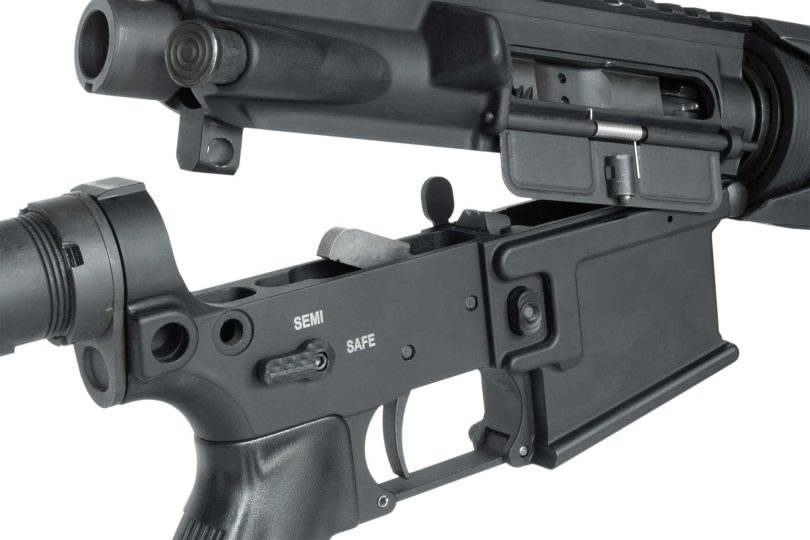

If you are new to the AR platform, the terms upper receiver and lower receiver can sound more interchangeable than they really are. They connect directly, they are often discussed together, and many buyers first encounter them while comparing complete rifles, stripped parts, or upgrade paths. But they do not do the same job, and understanding that difference matters earlier than most people think.
The short version is this: the upper receiver houses the operating side of the system, while the lower receiver houses the control side. One contains the barrel interface, bolt carrier group area, and sighting or optics mounting surface. The other contains the fire control group, grip, stock interface, and magazine well. Together, they form the core of the rifle’s structure, but they matter in different ways depending on whether you are trying to understand the platform, choose parts, or decide where to spend money first.
That distinction becomes easier to see once you understand AR platform fundamentals and how the rifle’s major assemblies divide labor between control, support, and cycling functions. It also becomes easier to evaluate upgrades once you can separate questions about performance from questions about fit, legal status, and configuration.
This guide is for readers trying to understand how the two receivers differ in function, what each one actually affects, and which one deserves more attention for a given goal. It is not a step-by-step build guide, and it is not a buying list dressed up as a definition page. The goal here is simpler: make the distinction durable enough that future choices start making more sense.
What the upper and lower receiver actually are
At a basic level, the AR platform is built around two major assemblies that pin together: the upper receiver and the lower receiver. If you already understand what an upper receiver is and what a lower receiver is, this section will feel familiar. If not, this is the cleanest way to think about them.
The upper receiver is the top assembly that supports the barrel, handguard mounting arrangement, charging handle path, and bolt carrier group travel. It is where the rifle’s operating cycle is housed and guided. When people talk about gas system length, dwell time, barrel configuration, and whether a rifle uses direct impingement or piston operation, they are usually talking about decisions that live primarily in the upper half of the rifle.
The lower receiver is the bottom assembly that holds the trigger components, safety selector, magazine well, grip interface, and stock or brace interface through the receiver extension area. It is the structural base for how the rifle is held, how the trigger is controlled, and how magazines seat and release. That is why lower receiver components matter even when the rifle’s accuracy or gas behavior is not changing.
Together, the two parts are easiest to understand through an AR-15 parts overview, because the platform is modular by design. That modularity is one reason the AR remains so configurable. It is also why modular rifle design is not just an abstract concept. The platform’s architecture encourages different decisions to live in different assemblies.
How the upper and lower receiver differ in function
The upper receiver matters most for how the rifle operates and what it can physically support at the front end. The lower receiver matters most for how the rifle is controlled, configured, and categorized as a core assembly. That difference sounds simple, but it has real consequences for how readers should think about upgrades.
If your question is about barrel length, rail space, gas system behavior, muzzle-end configuration, or what supports the bolt carrier group during cycling, you are mostly asking an upper-receiver question. Those topics connect naturally to AR-15 gas system function and to the way the rifle cycling process plays out inside the operating assembly. They also shape how readers think about bolt carrier group compatibility when matching parts or evaluating reliability questions.
If your question is about trigger feel, selector controls, grip angle, stock attachment, magazine fit, or what forms the serialized core of the rifle, you are mostly asking a lower-receiver question. That is why which firearm parts are serialized belongs in this comparison. The lower is not just another housing. It is the assembly that governs control layout and legal identity within the platform’s structure.
A useful way to frame the difference is this: the upper is more performance-facing, while the lower is more control- and configuration-facing. That is not absolute, and it should not be oversimplified, but it is a strong starting point. The upper tends to drive more of what the rifle does at the front end. The lower tends to drive more of how the user interfaces with the rifle at the control and support level.
Why the distinction matters when choosing parts or planning upgrades
Many readers do not need a full technical breakdown. They need a decision filter. The upper vs lower distinction matters because it prevents category mistakes.
For example, if someone wants a better rail setup, a different barrel configuration, or a different front-end layout, that is usually not the moment to focus on the lower. If they want improved trigger quality, a preferred grip interface, or a cleaner base for a future configuration, the lower becomes more relevant. Confusion starts when buyers assume every change should begin with the same assembly.
That is also where AR-15 parts compatibility basics become useful. The platform is modular, but modular does not mean every part choice is equally interchangeable across every configuration. Readers who blur the line between upper-driven and lower-driven decisions are more likely to make common AR build mistakes even before they reach an actual build or upgrade stage.
The distinction matters for budgeting too. Many buyers instinctively want to start with the more visible half of the rifle, but the smarter starting point depends on use case. Someone prioritizing front-end features may be better served by studying best upper receiver options because those choices affect configuration and intended role more directly. Someone who wants a cleaner foundation for controls, fit, and future assembly decisions may care more about best lower receiver choices.
This is also why the distinction matters before you move into more commercial or build-oriented content. When readers understand the difference between these assemblies first, later pages about upgrades, complete kits, or compatibility are easier to use well.
Which one matters more depends on the use case
There is no universal winner between the upper and lower receiver. The more accurate answer is that each one matters more under different decision conditions.
If you are trying to understand how the rifle behaves as a shooting system, the upper usually deserves more attention first. That is the half more closely tied to barrel profile, gas system arrangement, rail space, sighting setup, and cycling behavior. Someone comparing front-end performance or configuration fit is asking a different question than someone choosing a receiver as a base component.
If you are trying to understand how the rifle is controlled and configured at the rear half, the lower becomes more important. Trigger placement, selector use, grip fit, magazine insertion, and stock interface all live there. That becomes easier to visualize once you look at AR-15 lower receiver function and how that assembly supports the user’s controls rather than the rifle’s forward operating geometry.
If the use case is building a coherent package rather than evaluating a single part, then neither assembly should be isolated for too long. At that point, broader context from a complete AR parts list and complete AR build kits starts to matter more than trying to crown one receiver as “more important.”
This article is for readers who need a durable comparison framework. It is not for readers looking for legal advice, step-by-step assembly instruction, or a list of the best individual products without context. For those readers, adjacent pages will carry the next decision farther than this one should.
Common misunderstandings about upper vs lower receiver
One common mistake is assuming the upper and lower are just two equal halves that differ only by position. They are not. They serve different categories of function, and once you understand that, the platform becomes much easier to navigate.
Another mistake is treating “receiver” as if it means the same thing in every conversation. Sometimes the reader is really asking about the lower because that is the legally central part. Sometimes they are really asking about the upper because that is where most of the visible front-end configuration lives. Sometimes they are asking about both without realizing it. That ambiguity is one reason comparison pages like this are useful.
A third mistake is assuming that any discussion of compatibility applies equally to both halves. It does not. Questions involving buffer tube types and differences or stock compatibility in the AR-15 platform lean more heavily into the lower-side support structure. Questions involving barrel, handguard, gas path, or bolt movement lean more heavily into the upper. Compatibility is real, but it is still assembly-specific.
A fourth mistake is thinking the comparison is mainly about stripped parts. In practice, many readers are trying to decide where to focus attention first. That is why AR-10 versus AR-15 differences can be a useful neighboring topic. Once the platform family changes, receiver assumptions often change with it.
Finally, readers sometimes treat the lower as less important because it appears less performance-oriented. That misses the point. The lower may not govern front-end behavior in the same way, but it still defines the rifle’s control environment and foundational structure. That matters.
Frequently asked questions about upper vs lower receiver
Is the upper receiver more important than the lower receiver?
Not in an absolute sense. The upper usually has more influence over front-end configuration and operating characteristics, while the lower has more influence over controls, support interfaces, and the rifle’s central base assembly. If your goal is performance-oriented configuration, the upper often gets attention first. If your goal is control layout or foundational configuration, the lower matters more.
Which receiver affects compatibility more?
Compatibility depends on what you are trying to match. Upper-side compatibility tends to involve the operating assembly, front-end configuration, and interface choices tied to the barrel and bolt carrier path. Lower-side compatibility tends to involve controls, stock interface, and support hardware. That is why the buffer tube compatibility chart belongs to a different compatibility conversation than an upper-side parts question.
Is the lower receiver the part people focus on for legal identification?
In the AR platform, the lower receiver is typically the central serialized assembly readers are referring to when they ask which part counts as the regulated core. That does not make the upper unimportant. It simply means the two assemblies carry different weight in different contexts.
Which one should a beginner learn first?
A beginner should understand both, but the easiest starting point is usually the distinction between operating functions and control functions. Once that clicks, the rest of the platform becomes easier to map. Readers who start there usually have an easier time understanding how the bolt carrier group works and how it relates to the upper rather than the lower.
Does the stock attach to the upper or the lower receiver?
The stock interface belongs with the lower-side support structure through the receiver extension area, which is why how AR-15 stocks attach is a lower-side relationship, not an upper one. That matters when readers start comparing control, fit, and rear-end configuration questions.
If I am choosing between parts first, where should I start?
Start with your use case, not with the part that seems more important on forums or product pages. If you care most about front-end configuration, sighting space, or operating setup, start on the upper side. If you care most about controls, trigger environment, and support interface, start on the lower side. If you are not sure yet, it is often smarter to stay at the platform level before moving into product comparisons.
Conclusion
The clearest way to think about upper vs lower receiver is not as a contest, but as a division of responsibility. The upper receiver carries more of the operating and front-end configuration burden. The lower receiver carries more of the control, support, and foundational burden. Both matter, but they matter for different reasons.
That is why this comparison works best as a decision framework rather than a verdict. If the reader understands where each receiver fits, what each one changes, and what kind of question belongs to each half, the next step becomes easier. Product comparisons make more sense. Compatibility questions become narrower. Build decisions stop feeling random.
In practical terms, this article should leave you with one durable takeaway: ask what kind of decision you are making before deciding which receiver deserves more attention. Once that question is clear, the platform becomes much easier to navigate.