


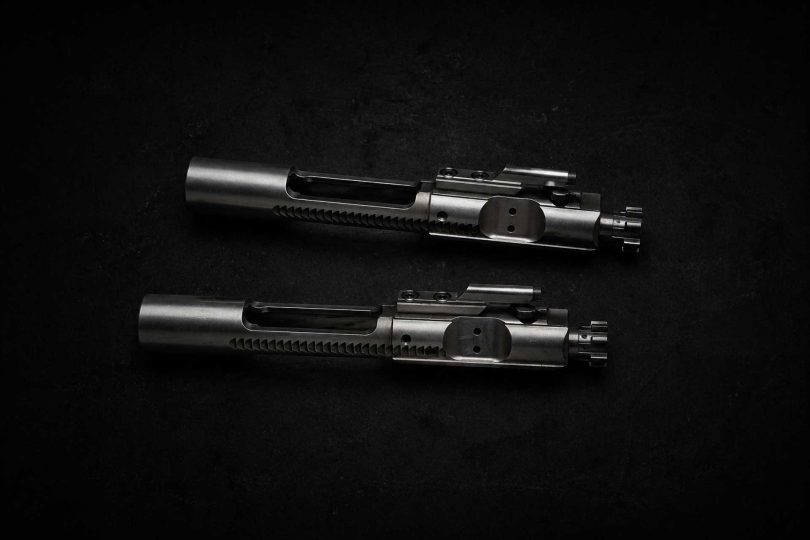

A bolt carrier group (BCG) is often treated as a drop-in component. In reality, it’s one of the most sensitive parts in the AR-15 system when it comes to compatibility. A BCG that “fits” is not necessarily a BCG that works correctly within a given build.
The reason is simple: the BCG doesn’t operate independently. It interacts directly with gas pressure, buffer weight, carrier speed, and chamber timing. Those interactions determine whether a rifle cycles smoothly or becomes inconsistent, overgassed, or unreliable.
To understand that interaction properly, you need to start with AR platform fundamentals, where modularity is defined within mechanical limits. From there, the BCG becomes less of a standalone part and more of a central control point in the rifle’s operating system.
This guide explains what actually makes a BCG compatible, how it affects system behavior, and where most compatibility issues originate. It’s designed for builders who want predictable performance—not just parts that assemble.
What BCG Compatibility Actually Means
BCG compatibility is not about whether the carrier slides into the upper receiver. It’s about whether the system cycles correctly under pressure.
Every time a round is fired, the rifle follows a sequence defined by the AR-15 cycle of operations. The BCG is responsible for several of those steps: unlocking, extracting, ejecting, and chambering the next round.
That movement must be synchronized with gas pressure and buffer resistance. If the carrier moves too fast, the system becomes harsh and unreliable. If it moves too slowly, the rifle may fail to cycle completely.
Understanding how the bolt carrier group works is essential here. Compatibility is about ensuring that function aligns with the rest of the system—not just physical dimensions.
The Gas System and BCG Interaction
The most critical compatibility relationship in an AR-15 is between the BCG and the gas system.
When a round is fired, gas is redirected back into the carrier through the gas key. That energy drives the carrier rearward, initiating the cycle. The amount and timing of that gas is explained in how the AR-15 gas system works.
If the gas system delivers too much pressure for the carrier configuration, the rifle becomes overgassed. This results in increased wear, harsher recoil, and faster component fatigue.
If the gas system delivers too little pressure, the carrier may not travel far enough to complete the cycle.
These dynamics also change depending on whether the rifle uses direct impingement vs piston systems. Each system transfers energy differently, which directly affects carrier speed and timing.
BCG compatibility, therefore, is not static—it depends on how the gas system behaves under real conditions.
Buffer System Influence on Compatibility
The buffer system plays a critical role in how the BCG behaves once it begins moving.
After gas pressure drives the carrier rearward, the buffer and spring absorb that energy and return the carrier forward. This interaction determines how quickly the system resets and whether it remains stable during rapid fire.
Differences in buffer tube types and differences affect how the buffer system is configured. Weight, spring tension, and tube length all influence carrier movement.
Stock configuration also plays a role through stock compatibility in the AR-15 platform, since certain setups require specific buffer systems.
A BCG that performs well in one buffer setup may behave very differently in another. Compatibility is not just about the carrier—it’s about the system it moves within.
Interchangeability vs True Compatibility
One of the most common mistakes in AR builds is confusing interchangeability with compatibility.
The platform’s modular nature, described through modular rifle design, allows parts to be swapped easily. But that doesn’t mean all combinations will perform well.
A complete list of components can be seen in a complete AR-15 parts breakdown, but understanding how those parts interact is what determines success.
True compatibility requires balanced gas pressure, appropriate buffer resistance, proper carrier timing, and reliable lockup and extraction.
Without those, the rifle may still function—but not consistently.
Common BCG Compatibility Issues
Most compatibility problems show up as performance issues rather than obvious failures.
These include short-stroking (insufficient rearward movement), overgassing (excessive carrier speed), premature wear, and extraction or ejection problems.
Many of these issues originate from decisions covered in common AR build mistakes.
Gas key alignment is another factor. Improper staking or alignment can affect how gas enters the carrier, which is why gas key staking explained becomes relevant in compatibility discussions.
Troubleshooting these issues often leads back to system-level analysis, as covered in bcg troubleshooting guide.
Maintenance and Compatibility Over Time
Compatibility is not fixed—it changes as parts wear.
Carbon buildup, lubrication levels, and general wear affect how the BCG moves and seals gas. Proper care, including how to clean a bolt carrier group and routine bolt carrier group maintenance, ensures the system continues to operate as intended.
Neglecting maintenance can create compatibility issues even in otherwise well-matched systems.
How Compatibility Affects BCG Selection
Choosing a BCG is not just about material or coating—it’s about how the carrier will function within your build.
Options listed in best bolt carrier groups vary in weight, construction, and intended use. Some are designed for standard gas systems, while others are optimized for suppressed or tuned setups.
If your priority is consistent function, focusing on best BCG for reliability helps narrow down options that align with stable system behavior.
A structured selection approach is outlined in the bolt carrier group buying guide, where compatibility is treated as a primary decision factor.
FAQ
What makes a BCG compatible with an AR-15?
A BCG is compatible when it cycles correctly within the rifle’s gas and buffer system. This means proper timing, consistent movement, and reliable chambering and extraction.
Can you use any bolt carrier group in an AR-15?
Most BCGs will physically fit, but not all will function correctly in every setup. Compatibility depends on gas pressure, buffer weight, and system tuning.
Does the BCG need to match the gas system?
Yes. The gas system determines how much energy is applied to the carrier. A mismatch can cause overgassing or short-stroking.
What causes BCG compatibility problems?
Common causes include incorrect buffer setup, gas system imbalance, poor gas key alignment, and lack of maintenance.
Is BCG compatibility more important than coating or material?
Yes. A properly matched BCG will outperform a higher-end carrier that does not fit the system correctly.
How do you fix BCG compatibility issues?
Fixes usually involve adjusting the gas system, buffer weight, or replacing components that are out of spec or improperly matched.
Conclusion
BCG compatibility is not about fit—it’s about function within a system.
The bolt carrier group operates at the center of the AR-15’s cycling process, interacting directly with gas pressure and buffer resistance. When those elements are balanced, the rifle performs consistently. When they are not, problems appear quickly.
Understanding compatibility allows you to build with intention rather than guesswork. It reduces trial-and-error, improves reliability, and creates a rifle that performs the way it was designed to.
In the end, the BCG is not just another component—it’s the part that reveals whether your entire system works as one.