



Building a reliable AR-15 on a budget is not about finding the cheapest parts. It is about understanding where cost matters, where it doesn’t, and how the system works as a whole. A well-planned budget build can perform consistently, remain upgradeable, and avoid the common pitfalls that lead to wasted money later.
To do that properly, you need a working understanding of AR platform fundamentals. The AR platform is modular by design, which means every component decision affects the next one. That flexibility is what makes budget builds possible—but it is also what makes poor decisions expensive if you approach it without structure.
This guide is designed for first-time builders and cost-conscious users who want a practical, reliable setup without unnecessary spending. It is not aimed at precision builds, competition setups, or high-end custom rifles. Instead, it focuses on building a functional, durable AR that covers general-purpose use.
If you understand the system and prioritize correctly, a budget build can deliver far more value than a poorly planned premium setup. The goal here is to give you a framework that makes those decisions clear and repeatable.
What a “Budget AR Build” Actually Means
A budget AR build is not about cutting corners on critical components. It is about allocating money where it matters and simplifying where it does not.
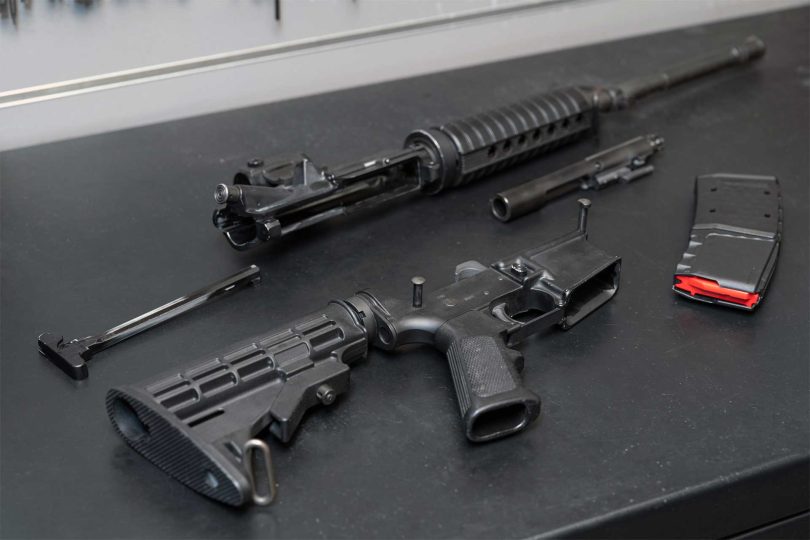
The AR-15 is best understood through an AR-15 parts overview, because it shows how each part contributes to function. Some components directly affect reliability and performance, while others are largely ergonomic or cosmetic.
A proper budget build focuses on:
- Reliability over aesthetics
- Proven configurations over experimental setups
- Compatibility over customization
This approach works because of the platform’s modular rifle design. You are not building a fixed system. You are building a base that can evolve over time.
Why this matters: overspending early on non-critical features reduces your ability to fix real problems later. Budget builds succeed when they are structured, not when they are stripped down blindly.
The Core Build Framework
A budget AR should be approached as a system, not a parts list. Each major component group has a role, and cost should be distributed accordingly.
Lower Receiver Group
The lower receiver forms the base of the rifle. Understanding what a lower receiver is and AR-15 lower receiver function helps clarify its role in control, structure, and compatibility.
For a budget build:
- Choose a reliable, standard lower
- Avoid unnecessary upgrades early
- Focus on proper assembly and fit
The internal parts can be reviewed through lower receiver components, which helps prevent missing critical pieces during the build.
Upper Receiver Group
The upper receiver determines most of the rifle’s performance. It controls barrel length, gas system behavior, and front-end configuration.
If needed, revisit what an upper receiver is and the difference between upper and lower receivers to understand how responsibilities are divided.
For budget builds:
- A complete upper is usually the safest choice
- Stick to standard configurations (16” barrel, mid-length gas)
- Avoid over-specialized setups
When comparing options, reviewing best upper receiver options can help identify reliable configurations without overpaying.
Bolt Carrier Group (BCG)
The bolt carrier group drives the rifle’s cycling. It is directly tied to how the rifle feeds, fires, and resets.
Understanding how the bolt carrier group works makes it clear why this component should not be underfunded.
For a budget build:
- Prioritize reliability over coatings or branding
- Ensure compatibility with your upper
- Avoid unknown or untested options
A good starting point is reviewing best bolt carrier groups to identify proven choices.
Supporting Components
Supporting parts include:
- Buffer system
- Stock
- Charging handle
- Magazine compatibility
These parts affect usability more than core performance, but they still matter for overall function.
Understanding how AR rifles cycle and direct impingement or piston operation helps clarify how these components interact with the rest of the system.
Budget Allocation Strategy
A strong budget build is defined by how money is distributed—not how little is spent.
Spend More On:
- Upper receiver assembly
- Bolt carrier group
- Barrel quality
Spend Less On:
- Cosmetics
- Non-essential accessories
- Overbuilt rail systems
This structure aligns with how the rifle actually functions. It also prevents one of the most common issues: overspending on visible parts while underfunding critical ones.
If you want a simplified path, complete AR build kits can reduce decision complexity, but they should still be evaluated carefully.
Common Budget Build Mistakes
Budget builds fail when decisions are made without understanding tradeoffs.
Typical mistakes include:
- Over-customizing early
- Ignoring compatibility
- Choosing parts based on appearance
- Underfunding critical components
These are covered in common AR build mistakes, and they are worth reviewing before committing to purchases.
Another common issue is misunderstanding how parts fit together. That is where AR-15 parts compatibility basics becomes important. A mismatched build can cost more to fix than doing it correctly the first time.
Where Budget Builds Fit in the AR Platform
Budget builds exist because the AR platform is adaptable. The system is designed to allow component-level changes without replacing the entire rifle.
This is easier to understand when comparing AR-10 versus AR-15 differences, since expectations around cost, weight, and configuration shift depending on the platform.
From a structural standpoint:
- The upper defines performance
- The lower defines control
- Supporting parts define usability
Legal considerations may also apply depending on location, which is why understanding which firearm parts are serialized is part of a complete build perspective.
When to Upgrade Instead of Rebuild
Not every improvement requires a full rebuild. In many cases, targeted upgrades provide better value.
For example:
- Control issues → evaluate best lower receiver choices
- Cycling issues → consider BCG or gas system
- Front-end performance → evaluate upper options
This is why reviewing a complete AR parts list can help identify which part of the system actually needs attention.
Budget builds should remain flexible. The goal is not to lock into a configuration—it is to create a foundation that can improve over time.
Frequently asked questions about the budget AR build guide
What is a realistic budget for an AR-15 build?
A realistic budget varies, but most functional builds prioritize reliability over cost cutting. Spending should focus on core components rather than accessories.
Is it cheaper to build or buy a complete rifle?
Building can be cheaper if parts are chosen carefully, but it also requires more knowledge. Complete options simplify the process but may limit customization.
What part should I spend the most money on?
The upper receiver and bolt carrier group typically deserve the largest portion of the budget because they directly affect performance and reliability.
Can a budget AR be reliable?
Yes. Reliability depends more on part quality and compatibility than total cost. A well-structured budget build can perform consistently.
Should I upgrade parts immediately?
No. It is better to build a complete, functional system first, then upgrade based on actual performance needs.
Do I need to worry about compatibility?
Yes. Compatibility issues are one of the most common causes of build failure. Ensuring parts work together is critical to reliability.
Conclusion
A budget AR build works when it is approached as a system, not a shortcut. The goal is not to spend as little as possible. The goal is to spend intelligently.
By focusing on core components, understanding how the rifle functions, and avoiding unnecessary upgrades, you can build a reliable setup that performs well and remains flexible.
The platform is designed to evolve. A strong budget build is simply the first step in that process.