


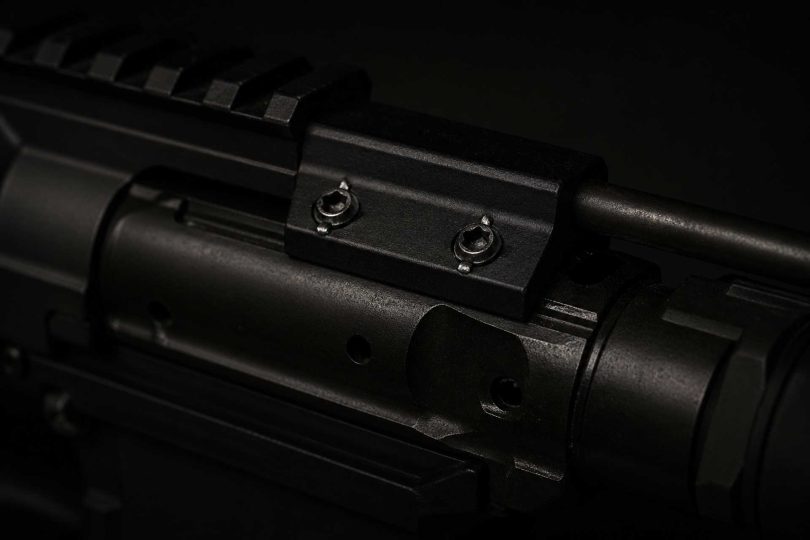

Gas key staking is one of those details that looks minor until it fails. At a glance, it’s just a pair of screws on top of a bolt carrier. But those screws control whether your rifle maintains proper gas pressure during operation—and that directly affects reliability.
To understand why staking matters, you have to place it in the context of AR platform fundamentals. The AR-15 is a gas-operated system. It depends on controlled pressure moving through specific pathways at the right time. If that pressure leaks, even slightly, the system begins to fall apart.
The gas key is one of those critical pathways. And staking is what keeps it sealed under repeated stress.
This article breaks down what gas key staking actually does, why it matters, how to evaluate it, and how it fits into broader reliability decisions.
What Gas Key Staking Is
Gas key staking is the process of deforming metal around the screws that secure the gas key to the bolt carrier. This deformation locks the screws in place so they cannot loosen during operation.
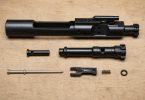
To understand the role of the gas key itself, it helps to see how the bolt carrier group works. The gas key sits on top of the carrier and channels gas from the gas tube into the carrier body. That gas pressure drives the entire cycling process.
If the screws holding the gas key loosen—even slightly—the seal breaks. Gas escapes before it can do its job.
That’s where staking comes in. It doesn’t improve performance. It prevents failure.
Why Gas Key Staking Matters for Reliability
The AR-15 relies on controlled gas pressure to cycle correctly. That pressure originates from the barrel, travels through the gas system, and enters the carrier through the gas key. You can see the full path by understanding AR-15 gas system function.
If the gas key is not properly secured:
- Gas leaks at the carrier
- Pressure drops below optimal levels
- Cycling becomes inconsistent
This leads to issues like:
- Short-stroking
- Failure to extract
- Failure to feed
These problems often get misdiagnosed as buffer or ammo issues. But in many cases, the root cause is a loose or improperly staked gas key.
This is also why staking becomes critical when comparing systems like direct impingement vs piston systems. Direct impingement rifles rely heavily on that sealed gas path. Any loss of pressure directly affects function.
How Gas Key Staking Works Mechanically
Staking works by physically displacing metal from the gas key into the screw heads. This creates a mechanical lock that resists vibration and recoil forces.
During operation, the bolt carrier cycles rapidly under high pressure. The repeated impact and motion create conditions that can loosen fasteners over time.
That movement is part of how AR rifles cycle. Every cycle applies stress to the gas key and its screws. Without staking, those screws rely only on torque to stay in place.
Torque alone is not enough.
Staking adds:
- Mechanical resistance
- Vibration protection
- Long-term retention
It turns a simple fastener into a secured system component.
What Proper Gas Key Staking Looks Like
Proper staking is not subtle. You should see visible deformation of metal pressed into the screw heads from both sides.
A properly staked gas key will show:
- Metal displaced into the screw heads
- Symmetrical staking marks
- No visible gap between the key and carrier
Poor staking often looks like:
- Light marks that don’t contact the screws
- Incomplete deformation
- Cosmetic indentations with no real locking effect
This distinction matters because many reliability issues trace back to overlooked details during assembly. These kinds of mistakes fall into the same category as common AR build mistakes.
If staking isn’t doing its job, the system is already compromised.
Gas Key Staking and System Compatibility
Gas key staking doesn’t exist in isolation. It interacts with the entire operating system.
If you’ve already looked at bolt carrier group compatibility, you know that reliability depends on how components work together. Gas pressure, buffer weight, and carrier mass all play a role.
A poorly staked gas key disrupts that balance.
Even a well-matched setup can fail if:
- Gas leaks at the carrier
- Pressure timing changes
- Energy transfer becomes inconsistent
That’s why staking is not just a maintenance detail—it’s part of compatibility.
When Gas Key Staking Becomes a Problem
Gas key issues usually show up indirectly. You won’t always see a loose screw right away. Instead, you’ll notice symptoms.
These include:
- Weak ejection
- Inconsistent cycling
- Increased fouling around the carrier
Many of these symptoms overlap with broader issues covered in a bcg troubleshooting guide.
Over time, a loose gas key can worsen:
- Screws back out further
- Gas leakage increases
- Cycling becomes unreliable
At that point, the rifle is no longer operating within its intended parameters.
Maintenance and Inspection
Gas key staking should be checked during regular maintenance. It doesn’t require adjustment unless something has failed—but it does require inspection.
Routine care like bolt carrier group maintenance should include:
- Visual inspection of staking
- Checking for carbon leakage
- Ensuring screws remain secure
Cleaning also matters. Excess carbon can hide early signs of leakage, which is why knowing how to clean a bolt carrier group helps maintain visibility into the system.
Gas Key Staking and Buying Decisions
Not all bolt carrier groups are built the same. One of the easiest ways to evaluate quality is by inspecting the staking.
When reviewing best bolt carrier groups, proper staking is a baseline expectation—not a premium feature.
Reliable carriers will have:
- Deep, effective staking
- Consistent screw engagement
- Clean gas key alignment
If staking is weak or inconsistent, it raises questions about overall quality control.
This is also why guides like the bolt carrier group buying guide emphasize construction details over surface features like coatings.
Staking is not visible in marketing—but it shows up in performance.
Gas Key Staking in the Bigger System
Gas key staking connects directly to how the entire rifle functions.
To fully understand its importance, it helps to step back and look at AR-15 parts overview. The AR platform is a system of interdependent components. No single part operates independently.
The gas key:
- Receives pressure
- Transfers energy
- Enables cycling
Staking ensures that connection remains intact.
Without it, the system becomes unstable—even if every other component is functioning correctly.
FAQ
What does gas key staking actually do
Gas key staking locks the screws that hold the gas key in place by deforming metal into them. This prevents loosening under recoil and maintains a proper gas seal.
Can a rifle function without gas key staking
It may function temporarily, but reliability will degrade over time as screws loosen and gas begins to leak.
How do you know if gas key staking is good
Look for metal pushed into the screw heads from both sides. The staking should physically contact and restrict screw movement.
What happens if the gas key comes loose
Gas leaks from the carrier, reducing pressure and causing cycling issues such as short-stroking or failure to feed.
Is gas key staking something you need to fix often
No. If properly done, it should last the life of the bolt carrier group. It only becomes an issue if poorly executed or damaged.
Does gas key staking affect accuracy
Not directly. It affects reliability and cycling, which indirectly impacts consistency during operation.
Conclusion
Gas key staking is a small detail with a large impact. It doesn’t change how the rifle performs at its best—but it determines whether the rifle continues to perform over time.
In a system built on controlled gas pressure, even minor leaks matter. Staking ensures that the gas key remains sealed, secure, and capable of doing its job under repeated stress.
If you’re evaluating reliability, troubleshooting issues, or selecting components, staking is not optional. It’s foundational.
Understanding it gives you a clearer picture of how the rifle works—and where failures begin.