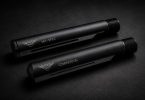



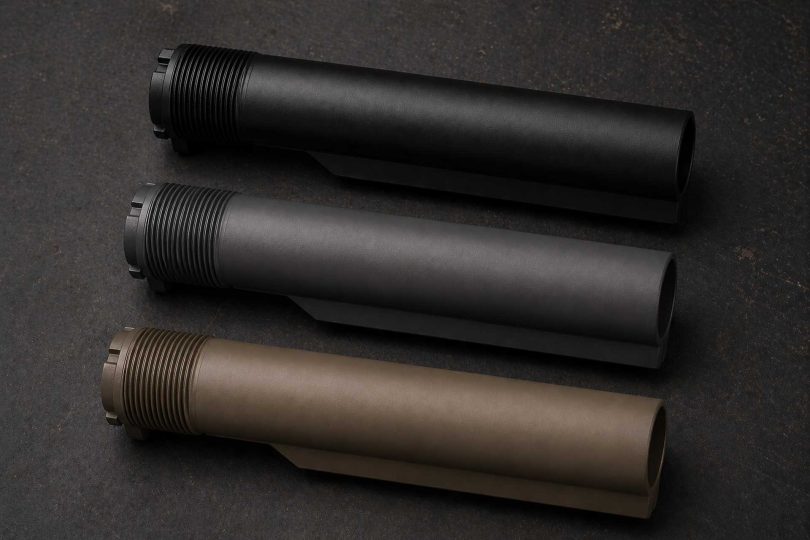

Buffer tubes are often treated as simple hardware, but they play a central role in how an AR-15 functions, fits, and performs. They define how the stock attaches, influence recoil behavior, and determine whether key components will actually work together as intended.
At a glance, most buffer tubes look similar. They thread into the rear of the lower receiver and house the buffer and spring. But the differences between them—especially between mil-spec and commercial patterns—have real consequences for compatibility and reliability.
To understand why buffer tube selection matters, it helps to step back and look at AR platform fundamentals. The AR-15 is a system where each part depends on the others to manage energy correctly. The buffer tube is part of that system, controlling how the rifle absorbs and returns energy during cycling.
If the buffer tube is mismatched with the stock, buffer, or receiver extension, you don’t just get poor fitment—you can create functional issues that show up during firing.
This guide explains what buffer tube types are, how they differ, and how to choose the right one based on compatibility, build goals, and system balance.
What a Buffer Tube Does in the AR-15 System
A buffer tube—more accurately called a receiver extension—serves two core purposes:
- It provides the mounting interface for the stock
- It houses the buffer and recoil spring
When the rifle fires, gas pressure drives the bolt carrier rearward. That movement is explained in how AR rifles cycle. As the bolt carrier moves back, it compresses the buffer and spring inside the tube.
This is where the buffer tube becomes critical.
It controls:
- how far the carrier can travel
- how energy is absorbed
- how consistently the system returns forward
That interaction ties directly into AR-15 cycle of operations, where timing and movement must remain consistent for reliability.
If the tube is out of spec or mismatched:
- the carrier may overtravel
- the system may short-stroke
- the rifle may cycle inconsistently
This is why buffer tube selection is not just about stock fitment—it is part of the rifle’s operating system.
Primary Buffer Tube Types Explained
There are two main buffer tube types in the AR-15 platform:
Mil-Spec Buffer Tubes
Mil-spec tubes are the standard used in military-pattern rifles. They have:
- a slightly smaller outer diameter
- thicker wall construction
- tighter dimensional tolerances
Because of this, they are generally considered more consistent across manufacturers.
Most modern aftermarket components are designed around this standard, which is why many compatibility discussions start here—similar to how mil-spec vs commercial AR parts explains broader specification differences.
Commercial Buffer Tubes
Commercial tubes differ in several ways:
- slightly larger diameter
- thinner wall thickness
- more variation between manufacturers
They are often found on older or budget rifles.
The key issue is not that commercial tubes are inherently bad—it’s that they introduce more variability. That variability can affect stock fitment and, in some cases, system consistency.
Why the Difference Exists
The difference between these two types comes down to manufacturing standards rather than function. Both perform the same basic role, but they are not interchangeable when it comes to external compatibility.
Understanding these distinctions is similar to understanding difference between upper and lower receivers, where physical compatibility defines what works together.
How Buffer Tube Differences Affect Compatibility
The most immediate impact of buffer tube type is stock compatibility.
Stocks are designed to fit either:
- mil-spec tubes
- commercial tubes
They are not cross-compatible without adapters.
This becomes especially important when considering how AR-15 stocks attach, because the buffer tube defines the interface.
If you mismatch:
- the stock may not fit at all
- it may feel loose or unstable
- it may not lock into position correctly
Beyond fitment, compatibility also affects the broader system.
The buffer tube interacts with:
- buffer weight
- spring tension
- gas system output
These relationships are part of how the AR-15 gas system works, where energy is introduced into the system.
If those elements are not balanced, problems show up during cycling.
Where Buffer Tubes Fit in the Full Rifle System
To understand why buffer tubes matter, you need to see where they sit in the overall architecture.
The AR-15 operates as a chain of energy transfer:
- Gas system drives the bolt carrier
- Carrier moves rearward
- Buffer system absorbs and redirects energy
That middle stage is detailed in how the bolt carrier group works.
The buffer tube is the final stage of that movement.
It determines:
- how energy is slowed
- how the system resets
- how consistently the rifle cycles
This is why buffer tube selection is connected to direct impingement vs piston systems. Different systems deliver energy differently, which affects how the buffer system needs to respond.
Common Problems Caused by Buffer Tube Mismatch
Buffer tube issues rarely show up as obvious failures. Instead, they create subtle problems that affect reliability.
Common issues include:
- inconsistent cycling
- excessive recoil impulse
- poor stock lockup
- compatibility limitations
Many of these problems overlap with common AR build mistakes, where mismatched components create performance issues.
In more advanced cases, buffer tube mismatches can contribute to problems addressed in bcg troubleshooting guide.
The key takeaway is that the buffer tube is not isolated—it affects the entire system.
Choosing the Right Buffer Tube for Your Build
For most builds, the recommendation is straightforward:
- Use mil-spec unless you have a specific reason not to
This simplifies:
- stock selection
- compatibility decisions
- long-term upgrades
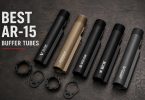
If you are evaluating options, it helps to look at best AR-15 buffer tubes, where build quality and material differences matter.
When choosing, consider:
- stock compatibility
- intended use (range, duty, build project)
- consistency across components
If your build involves multiple upgrades, it’s also worth reviewing AR-15 parts compatibility basics to avoid mismatches.
How Buffer Tubes Connect to Stock and Build Decisions
Buffer tubes don’t exist in isolation—they directly affect stock selection and overall ergonomics.
That connection is explored in stock compatibility in the AR-15 platform, where tube dimensions determine what stocks will fit.
For builders, this becomes a sequencing issue:
- choose buffer tube type
- choose compatible stock
- confirm system balance
Ignoring this order often leads to rework.
This ties into the broader concept of modular rifle design, where parts are interchangeable—but only within compatible standards.
Tradeoffs Between Buffer Tube Types
Mil-Spec Advantages
- wider compatibility
- more consistent dimensions
- better aftermarket support
Mil-Spec Tradeoffs
- slightly higher cost in some cases
Commercial Advantages
- sometimes lower cost
- acceptable for basic builds
Commercial Tradeoffs
- reduced compatibility
- less consistent manufacturing
- limited stock options
The tradeoff is not about performance alone—it is about ecosystem compatibility.
FAQ: Buffer Tube Types and Differences
What is the difference between mil-spec and commercial buffer tubes?
Mil-spec tubes are slightly smaller in diameter with tighter tolerances, while commercial tubes are larger and more variable. This affects stock compatibility and consistency.
Can you use any stock on any buffer tube?
No. Stocks are designed for specific tube types. A mil-spec stock will not properly fit a commercial tube, and vice versa.
Does the buffer tube affect rifle performance?
Indirectly, yes. It controls how the buffer and spring interact with the bolt carrier, which affects cycling consistency and recoil behavior.
Are buffer tubes interchangeable between rifles?
They are interchangeable only if the receiving rifle uses the same specification. Compatibility must match the tube type and thread standard.
What happens if you use the wrong buffer tube?
You may experience poor stock fitment, inconsistent cycling, or compatibility limitations with other components.
Is mil-spec always the better choice?
For most builds, yes. It offers better compatibility and consistency, which simplifies future upgrades and reduces potential issues.
Conclusion
Buffer tube types may seem like a minor detail, but they influence far more than stock attachment. They sit at the intersection of fitment, compatibility, and system performance.
Understanding the difference between mil-spec and commercial tubes allows you to avoid common mistakes and build with confidence. It also ensures that your rifle functions as a complete system rather than a collection of loosely matched parts.
As you evaluate your setup, think in terms of system balance. The buffer tube is not just a mounting point—it is part of how the rifle manages energy and maintains reliability.
Choosing correctly at this stage simplifies everything that comes after.